Technology
Voyager 1: NASA invites the public to send light in Morse code on November 17 and holds a talk at JPL for “one light-day”
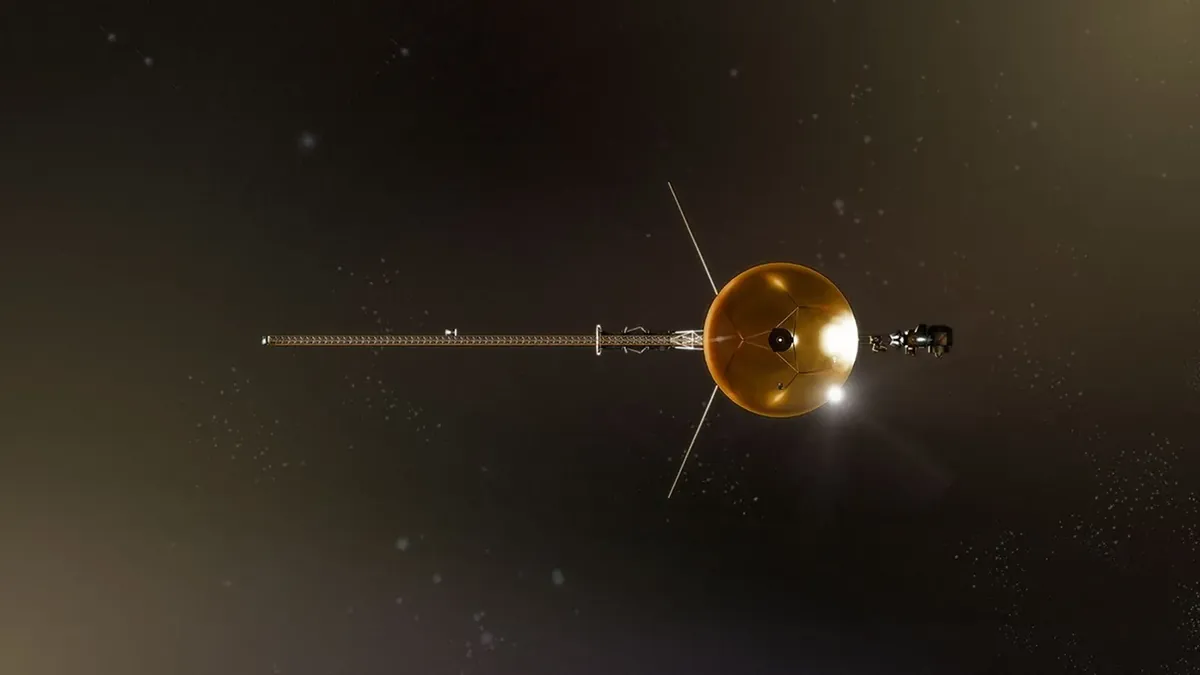
On November 18 Voyager 1 will be one light-day from Earth, more than 16 billion miles away; NASA asks people to flash “VGR” in Morse code on the evening of November 17 and holds an event at JPL on November 19.

NASA is inviting people to send light towards Voyager 1 on the evening of Tuesday, November 17, and invites journalists and the public to an event at the Jet Propulsion Laboratory (JPL) in California on Thursday, November 19. The occasion is Wednesday, November 18, when the spacecraft launched in 1977 will be one light-day from Earth, more than 16 billion miles (25.9 billion km) away. Voyager 1 is the most distant human-made object, and a signal from Earth would take 24 hours to reach it.
A light-day measures distance, not time: it is the distance light travels in 24 hours. On the mission page at science.nasa.gov, NASA places the moment of the milestone at 5:16 a.m. U.S. Eastern Time on Wednesday, November 18, that is 12:16 p.m. in Greece. The two Voyagers were designed to explore the outer planets, taking advantage of a planetary alignment that repeats once every 176 years. Voyager 1 entered interstellar space, beyond the heliosphere (the protective bubble created by the Sun), in 2012 and Voyager 2, following a different trajectory, in 2018.
Light in Morse code
The first activity, titled “Shine Bright for Voyager’s Light-Day”, begins after sunset on Tuesday, November 17, wherever each person is, so that a wave of golden light forms symbolically around the planet. NASA has built a web page that turns phones and tablets into a flashlight that blinks “VGR”, the mission’s call sign, in Morse code. Anyone who prefers a simple flashlight repeats for about a minute: three short flashes and one long for V, two long and one short for G, one short, one long and one short for R. Participants are asked to share photos or video on social media tagging @NASA. Instructions are at go.nasa.gov/shinebright.
The event at JPL
The second event is a moderated discussion at JPL on Thursday, November 19 at 12:00 p.m. Eastern Time (9:00 a.m. Pacific), that is 19:00 in Greece. It will take place in the von Karman auditorium, where the laboratory briefed the press on the Voyagers when the spacecraft were visiting the outer planets. Mission members and NASA officials will speak about the state of Voyager 1 and 2, the scientific data they continue to collect in interstellar space, and the difficulties of operating them for so long and from such a distance. Questions from journalists and the public will follow, and a preview of the Voyager documentary being prepared for NASA+ and scheduled for 2027, the mission’s 50th anniversary year, will be shown.
On the panel will be Nicky Fox, associate administrator of NASA’s Science Mission Directorate; Jonathan Lunine, JPL chief scientist and professor of planetary science at Caltech; Suzanne Dodd, Voyager project manager; Kareem Badaruddin, mission manager; and Jamie Rankin, deputy project scientist, from Princeton University.
The event will be streamed online and NASA refers to nasa.gov/live for viewing points. Journalists who want to attend at JPL register in advance: U.S. media by Monday, November 16, and foreign journalists, who need accreditation to enter the site, by Thursday, November 12. Remote participants register up to two hours before the start, that is by 17:00 Greek time on November 19.
The spacecraft were built and are operated by JPL, which is managed by Caltech in Pasadena, communicating through NASA’s Deep Space Network, and the mission is funded by the agency’s Heliophysics Division. The announcement (M26-086) was issued on Tuesday, November 10 and is on NASA’s official website.