Analysis
Blue Homeland explained: what Turkey’s maritime doctrine claims
The Blue Homeland (Mavi Vatan) is a Turkish naval doctrine claiming vast maritime zones in the Aegean and Eastern Mediterranean. Here is where it came from and how it clashes with UNCLOS.

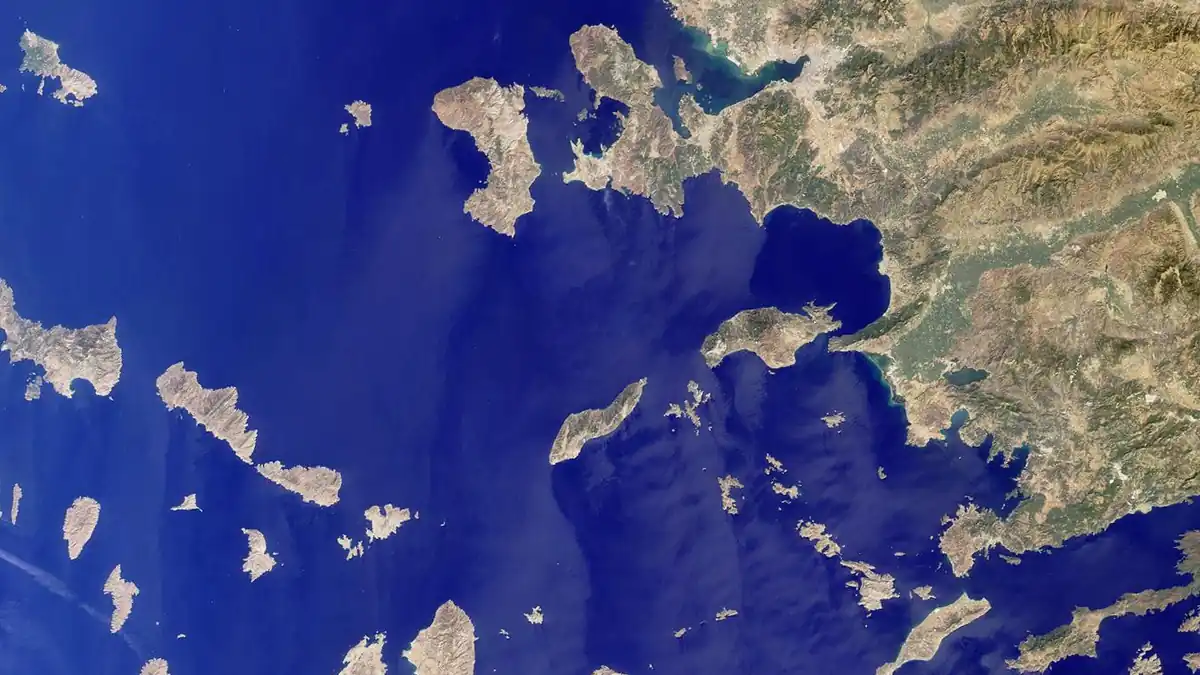
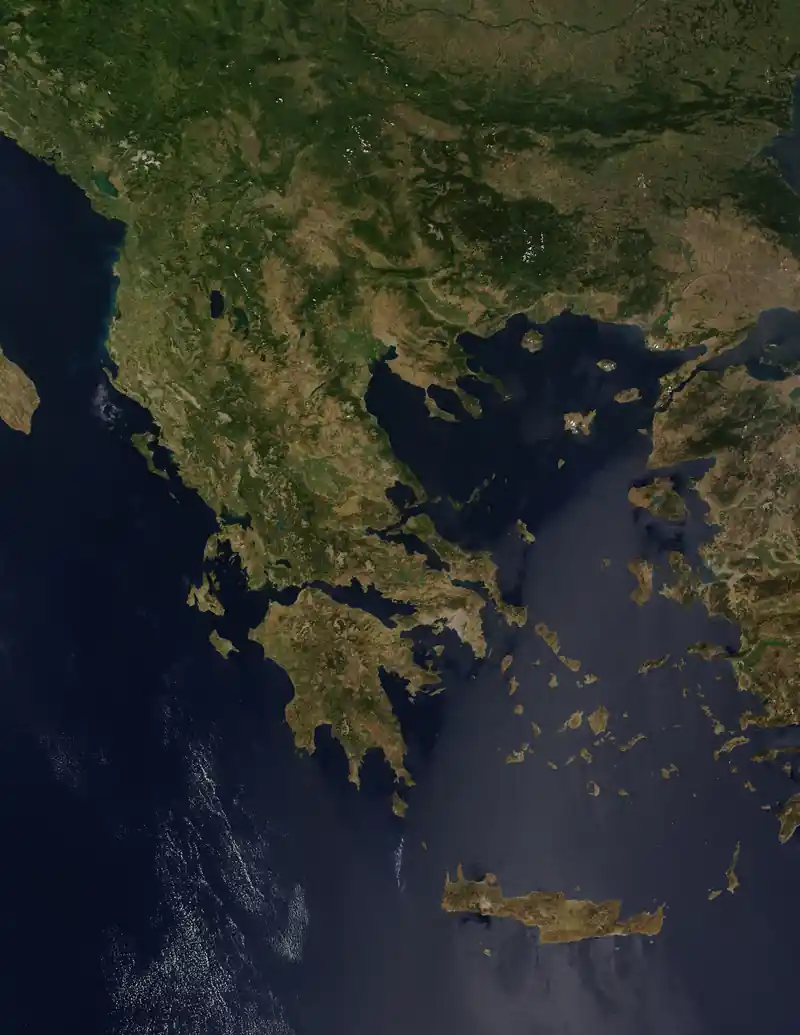
The Blue Homeland (Mavi Vatan) is a maritime doctrine developed by Turkish naval officers from 2006 onwards. It asserts a very large Turkish zone of maritime jurisdiction across the Black Sea, the Aegean and the Eastern Mediterranean, at the expense of the zones that Greece and the Republic of Cyprus derive from the law of the sea. It matters now because it sits behind the Turkish-Libyan memorandum, the Aegean disputes and the textbook row that the European Commission raised in its latest report.
Key points
- The doctrine was first presented by Turkish admirals in 2006 and developed into a body of maritime claims, according to a University of Athens scholar writing in a 2021 academic volume.
- Its claims collide with the UN Convention on the Law of the Sea (UNCLOS), under which islands generate maritime zones and zone disputes are settled by agreement or by a court.
- The European Commission’s 4 November 2026 report on Turkey calls the doctrine’s inclusion in Turkish school textbooks “a cause of concern”.
- The EU’s position, restated in that report, is that the 2019 Turkish-Libyan memorandum is “null and void” and cannot produce legal consequences for third states.
What is the Blue Homeland doctrine?
“Mavi Vatan” means Blue Homeland. Anthony Deriziotis of the University of Athens, in a 2021 chapter published by the University of Belgrade, writes that Admiral Cem Gürdeniz presented the idea in 2006 and that it was later refined into a state doctrine by Rear Admiral Cihat Yaycı. He describes its aim as increasing Turkey’s control of the three seas around it and describes the doctrine as “a nationalist, irredentist approach to Turkey’s maritime position”.
The same study traces the trigger to a 2006 academic map of the maritime zones of EU member states, which, the study says, validated Cyprus’s claims and was criticised in Turkey as serving Greek and Cypriot interests. Gürdeniz called on Turkey to defend a far larger zone, which he named the Blue Homeland. In 2009 Yaycı extended the idea to a common maritime border between Turkey and Libya, and in 2011 he co-authored a book on the law of the sea for naval officers.
The doctrine is not only legal. Deriziotis identifies three ideas inside it: expanded maritime boundaries, a repositioning of Turkey as a naval power, and a turn away from the West. He notes that the Turkish government shares the first two with its supporters. Turkey has also staged a “Blue Homeland 2019” naval exercise.
What does the law of the sea say?
UNCLOS sets the rules the doctrine runs into. Under Article 3, every state has the right to set the breadth of its territorial sea “up to a limit not exceeding 12 nautical miles”. Under Article 57, the exclusive economic zone may extend up to 200 nautical miles from the baselines.
The decisive provision for the Aegean is Article 121. Paragraph 2 says the territorial sea, contiguous zone, exclusive economic zone and continental shelf of an island “are determined in accordance with the provisions of this Convention applicable to other land territory”. Paragraph 3 withholds an economic zone and shelf only from “rocks which cannot sustain human habitation or economic life of their own”. Inhabited Greek islands are not rocks in that sense, so on the text of the Convention they generate full zones.
Where coasts face each other, Article 74 requires delimitation “by agreement on the basis of international law”, and if no agreement is reached the states concerned resort to the dispute-settlement procedures of Part XV. Unilateral maps are not part of that procedure. For more on the treaty, see our explainer UNCLOS explained: sea zones, islands and the Aegean dispute.
Where does it collide with Greece and Cyprus?
The Commission’s 2026 report is the most recent official EU assessment. It records that the unresolved continental shelf and exclusive economic zone issue “continued to strain bilateral relations” and that Turkey “continued to systematically issue unauthorised general navigational warnings” and to make demilitarisation claims about the Eastern Aegean islands, “thereby implicitly disputing Greek sovereignty, sovereign rights and jurisdiction”.
It also lists what Greece faces on the ground: a higher number of Turkish military jet flights over Greek islands, including inhabited ones, a significant rise in violations of Greek airspace and territorial waters, and an increase in illegal, unreported and unregulated fishing by Turkish vessels. It notes that the 1995 declaration of the Turkish Grand National Assembly, which would treat any Greek extension of territorial waters to 12 nautical miles as a casus belli, “still holds”. The Commission also notes that Turkey is not a party to UNCLOS. Our explainer on the threat of war is here: Casus belli explained: Turkey’s 1995 threat of war against Greece.
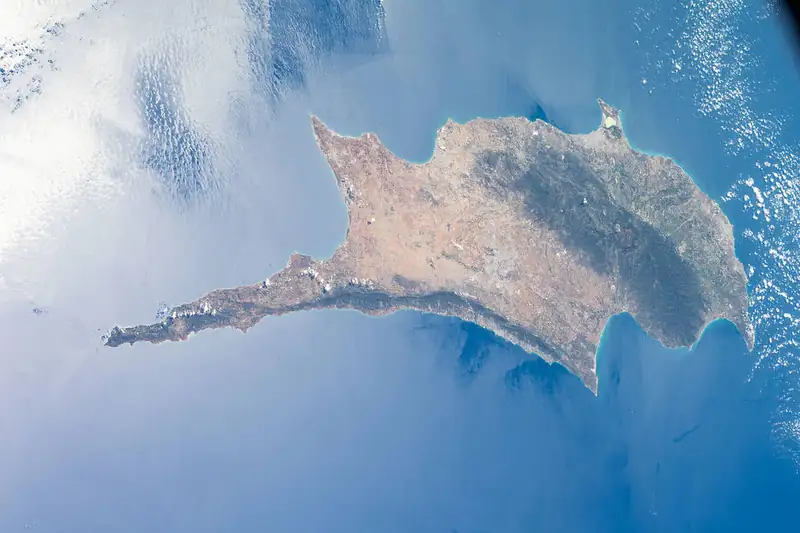
On Cyprus, the Commission states that Turkey “has continued to refuse to recognise the Republic of Cyprus” and has repeatedly advocated a two-state solution, “contrary to UN Security Council Resolutions”. On Varosha it says Turkey must reverse the unilateral actions taken since October 2020 and calls for respect for Security Council Resolutions 550, 789 and 1251.
How does the Libya memorandum fit in?
The 2019 memorandum between Turkey and Libya’s Government of National Unity is the doctrine’s clearest practical use, and it follows the common-border idea Yaycı wrote about in 2009. The Commission’s report says the Benghazi-based House of Representatives ratified it in October 2026, and that it “infringes the sovereign rights of third states, and does not comply with the Law of the Sea”. It recalls the joint statement by the Presidents of the European Commission and the European Council that the agreement is “null and void” and cannot produce legal consequences for third states, as also stated in the European Council conclusions of June 2025.
For the detail of the memorandum itself, read The Turkey-Libya maritime memorandum explained.
What does the EU ask of Turkey?
The Commission expects Turkey to make an “unequivocal commitment to good neighbourly relations, international agreements and the peaceful settlement of disputes having recourse, if necessary, to the International Court of Justice”. It asks Ankara to respect the sovereignty of all EU member states over their territorial sea and airspace, and their sovereign rights, including the right to explore and exploit natural resources “in accordance with EU and international law, in particular the UNCLOS”.
The same report says Turkey declared two marine parks in the northeastern Aegean and eastern Mediterranean by presidential decree of 15 August 2026, extending mostly beyond Turkish territorial waters into the high seas. Our coverage of the report is here: European Commission report on Turkey: casus belli, “Blue Homeland” in school textbooks, more violations and obstruction of the cable.
Ankara’s case
Turkish supporters present the doctrine as a legitimate defence of Turkish maritime interests. According to Deriziotis, the narrative also serves to justify the government’s Eastern Mediterranean policy at home, around the perceived threat that Turkey is being confined to Anatolia and its territorial waters. These are Ankara’s arguments; they rest on a treaty Turkey has not joined, and the same study calls the doctrine’s analysis flawed and lacking coherence.
Sources
This explainer rests on the European Commission’s Turkey 2026 report (SWD(2026) 696), the text of UNCLOS on the UN website (Part II, Part V and Part VIII) and a 2021 academic chapter by Anthony Deriziotis.