Cyprus
Iran: Greece and Cyprus named among possible targets by hardline daily Kayhan, as army and Basij officials issue new threats
Iran’s hardline daily Kayhan has named military facilities in Cyprus, Greece and other European countries as possible targets if US and Israeli strikes resume, while army and Basij officials speak of a wider war.

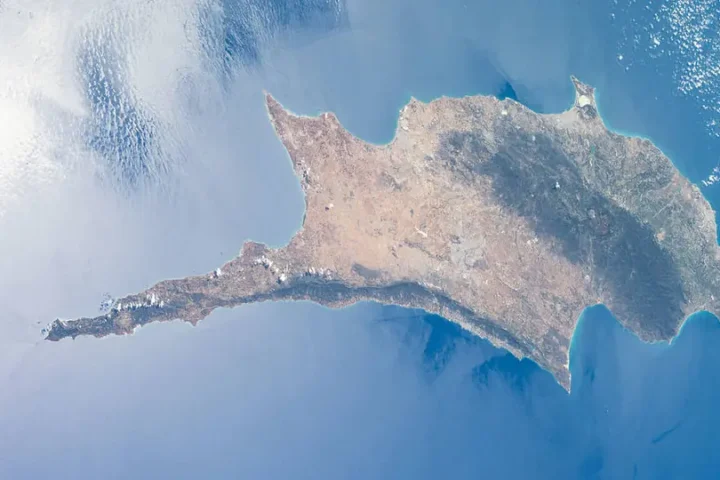
Greece and Cyprus appear by name in a list of possible targets promoted by the hardline Iranian daily Kayhan, should US and Israeli strikes on Iran resume. Kayhan claimed that American and NATO facilities “in the heart of Europe” could become targets, naming military installations in Cyprus, Greece, Romania, Albania, Italy and Britain, as well as the joint US-British base at Diego Garcia in the Indian Ocean.
The escalation in rhetoric was recorded on Tuesday, November 3, by Iran International and Voice of Emirates. These are claims by newspapers and statements by officials, not an announced military decision. The threats follow a statement attributed to Supreme Leader Mojtaba Khamenei on Saturday, in which he ordered the armed forces to prepare for retaliation without geographical limits and to widen the list of possible American and Israeli targets.
“The geography of the war may extend beyond West Asia”
Iranian army spokesman Mohammad Akraminia said a new round of fighting could go beyond the countries and territories involved in earlier ones. “In the recent war the conflict extended from the occupied territories to American bases in countries of the region, but if there is a new attack, the geography of the war may extend beyond West Asia,” he said, adding that Iran is updating its list of possible American and Israeli targets.
A senior Basij commander, Ghasem Gorayshi, said the armed forces would no longer be bound by earlier limits on missile range, target selection and the scale of operations, limits he attributed to decisions taken under the former Supreme Leader Ali Khamenei. Hassan Ghashghavi, a spokesman for the Iranian parliament’s National Security and Foreign Policy Committee, warned that a new conflict could spread far beyond the countries already hit, with a “geography almost on the scale of a Third World War”, although he said he did not want to use the term. He also hinted that Iranian retaliation could affect civilian infrastructure and daily life in countries involved in attacks on Iran: “If they leave your people in the dark, you must leave their people in the dark too.”
Missiles of 4,000-5,000 km? What the experts say
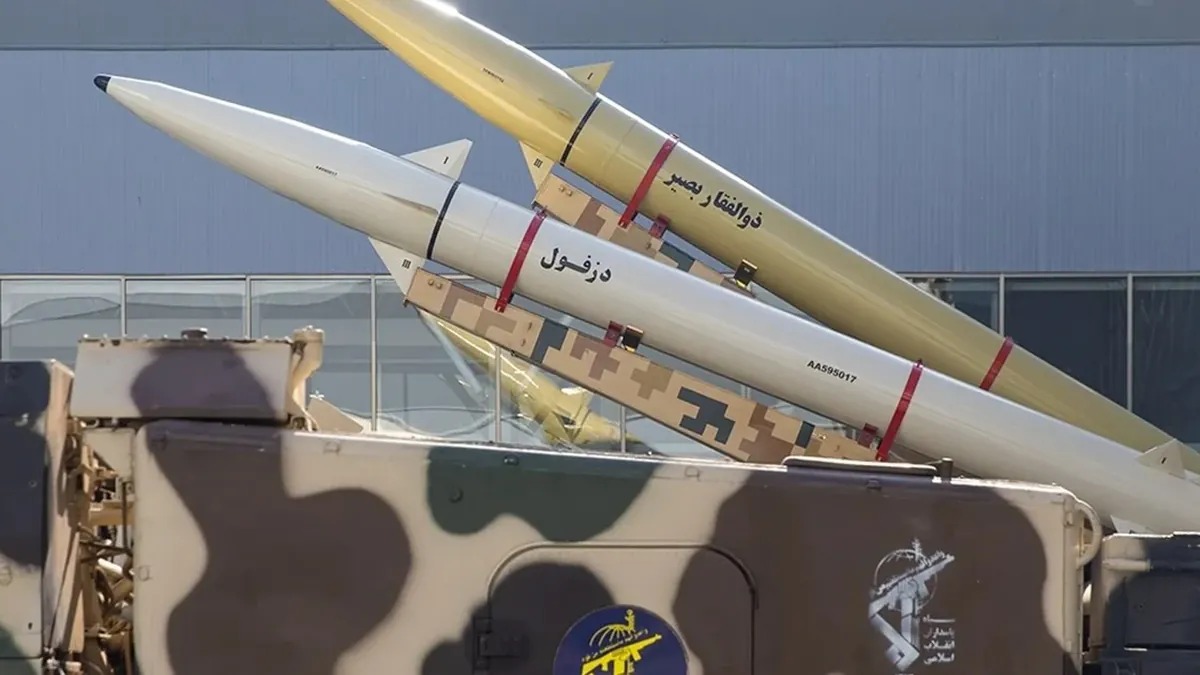
Kayhan claimed that Iranian missiles can reach NATO bases 4,000 to 5,000 kilometres away, while the daily Hamshahri published maps of NATO bases as possible targets. These claims of a longer range are disputed. MP Manouchehr Motaki added Germany and Portugal to that range, and Mohsen Heydari, a member of the Assembly of Experts, said on Tuesday that Tehran’s response would not be limited by “specific geographical limits” and that strikes could reach US territory.
Western defence analysts are more restrained. The US Center for Strategic and International Studies (CSIS) lists Iran’s main ballistic missiles with a range of around 2,000 kilometres, while some versions may reach 3,000. The UK’s Royal United Services Institute (RUSI) considers a strike as far as Britain theoretically possible, but with smaller and less accurate warheads that would have to pass through protected airspace. Military experts and observers note that the declared and operationally verified range of Iranian missiles is only about 2,000 kilometres, which covers parts of southern and south-eastern Europe but not the rest of the continent. Claims of an intercontinental ballistic missile test have not been confirmed by independent sources. The statements alone do not prove that Iran has deployed new long-range missiles or officially changed its military doctrine.
Threats alongside diplomacy
The threats coincide with diplomatic efforts to end the war, involving Qatar and other mediators. Parliament Speaker Mohammad Bagher Ghalibaf said Tehran has handed Washington a “decisive and rational response” and that “the ball is now in America’s court” to prevent a new conflict, while armed forces chief Ali Abdollahi set out five conditions for lasting regional security, among them war reparations and recognition of Iranian authority in the Strait of Hormuz.