Asia-Pacific
South Korea’s defence minister denies the Cheonghae unit’s expansion means indirect involvement in the war with Iran
South Korean Defence Minister Kang Shin-chul denies that extending the Cheonghae naval unit's area of operations off Oman amounts to indirect participation in the war between the US, Israel and Iran.

South Korea’s Defence Minister Kang Shin-chul denied on Monday, November 23 that the expansion of the Cheonghae naval unit toward the waters off Oman amounts to indirect military involvement in the war of the US and Israel with Iran. Speaking to the National Assembly’s National Defense Committee, which began examining the government proposal, he cited the rise in piracy and the need to protect South Korean ships and citizens. “Piratical activity in the Gulf of Aden area more than tripled this year compared with last year,” he said. “Our forces are deployed to protect our ships and our citizens abroad, based on the principle of non-involvement in the war.”
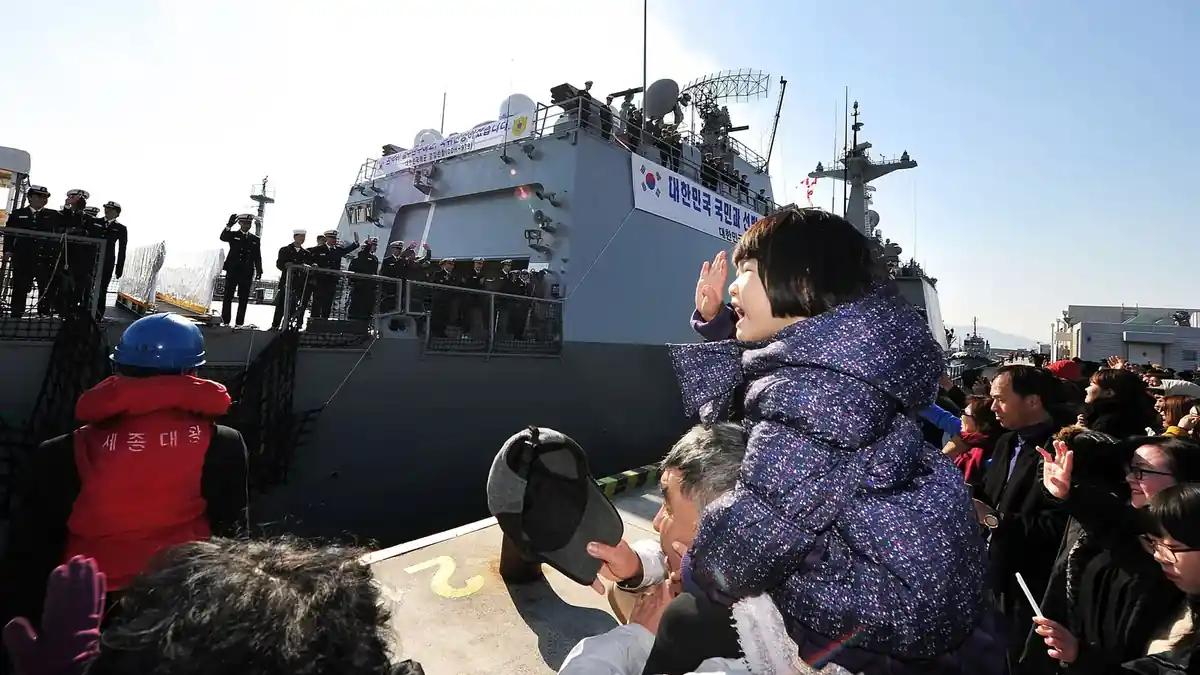
According to coverage of the session by the Seoul Economic Daily, the proposal extends the mission by one year, to the end of 2027, and doubles the area of operations. From the Gulf of Aden off Somalia, about 600 nautical miles, the unit would cover waters as far as south of Oman, about 1,200 nautical miles, at a distance of 650 kilometres from the Strait of Hormuz. Personnel increases by 75, to 395 at most. Besides the 4,400-tonne DDH-II-class destroyer already operating in the area, the unit would add a P-8A Poseidon maritime patrol aircraft, an explosive ordnance disposal team and unmanned mine-countermeasure assets, on the surface and underwater.
Questions in the Assembly
Kim Byung-joo of the ruling Democratic Party asked directly whether the forces would be drawn into the war inside the Strait of Hormuz, and the minister said no. Kim announced his party will attach a supplementary opinion, so that the National Assembly’s consent is required for any deployment of patrol aircraft to Hormuz, even after the war ends. The main opposition, the People Power Party, supports the extension but questioned the piracy data for the new area. The party’s committee coordinator Lim Jong-deuk said the ministry had told him there were no incidents there, while Kang spoke of some cases.
Asked what happens if the lives and property of South Koreans in the Strait are at risk, the minister drew a distinction. “The war and the fighting we will not be involved in is a matter between Iran and the United States or those forces. A situation in which we come under fire is a different matter,” he said. The debate follows reports of tankers hitting mines in the Strait of Hormuz.
There is also resistance within the pro-government camp. Lawmakers of the Rebuilding Korea Party and the Progressive Party speak of an “indirect mission to the Strait of Hormuz”. The report of the committee’s expert advisers, released on Sunday, November 22, asks for it to be explicitly stated that the unit will not take part in US operations against Iran nor, directly or indirectly, provide reconnaissance and surveillance information (Yonhap). The proposal was referred to a subcommittee, which will examine it on Tuesday, November 24, and returns to the full committee on Thursday, November 26. The Cheonghae unit has operated in the Gulf of Aden since 2009 on anti-piracy missions and convoy escorts.