Middle East & North Africa
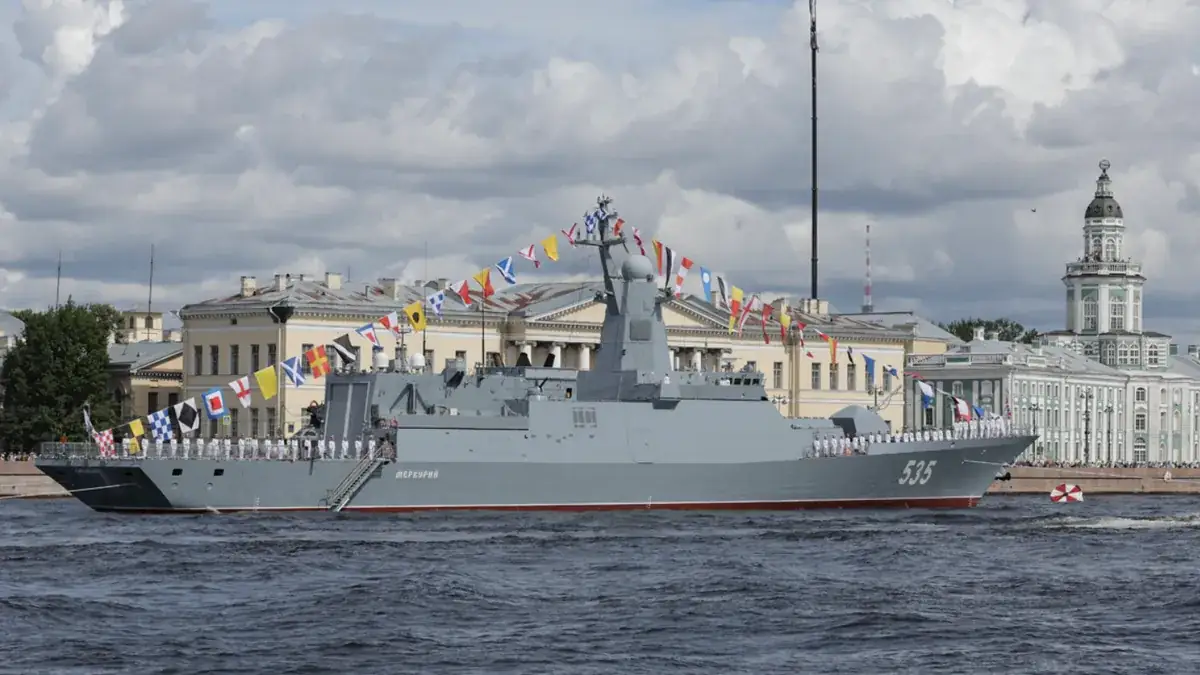
Benghazi installs permanent anti-sea-drone barriers around the Russian corvette Merkury; eastern Libya to seek compensation from Ukraine
Satellite images from November 28 analyzed by RFE/RL show a permanent floating barrier at the harbor entrance and around the half-sunk Russian ship.

Permanent floating barriers against sea drones have been installed at the entrance of Benghazi harbor and around the half-sunk Russian guided-missile corvette Merkury, which Ukrainian forces struck on November 22. This is shown by November 28 satellite images analyzed by Radio Free Europe/Radio Liberty (RFE/RL).
According to the analysis, the small boats lashed together right after the Ukrainian attack to crudely close the harbor entrance have now been replaced by a permanent floating barrier. It closely resembles those Russian forces use to protect Black Sea ports and the approaches to the Crimean Bridge.
The images also show more clearly the damage to the Russian cargo ship Angara, hit by a Ukrainian sea drone in the same operation; another civilian vessel is now moored beside it. RFE/RL had already recorded that the day after the attack a Russian military An-124 transport, one of the largest cargo aircraft in the world, landed at the Al Khadim air base near Benghazi, which Russia uses.
The operation took place more than 1,600 kilometers from Ukrainian territory and, according to the New York Times, used seven Ukrainian sea drones. President Zelensky confirmed that Ukraine struck the Russian warship, and Kyiv has argued it was “self-defense” under the UN Charter.
The diplomatic fallout continues. On Saturday, November 28, the foreign minister of the eastern Libya administration, Abdul Hadi al-Huwaij, announced that Benghazi will ask Ukraine for financial compensation for the human losses and material damage at the port. Earlier, the Tripoli government had also condemned the strike and asked for official explanations.
In Europe, Italian Prime Minister Giorgia Meloni conveyed her concerns to Mr. Zelensky on Friday, November 27, after Rome summoned Ukraine’s military attaché to explain a strike in the Mediterranean carried out without coordination with allies. Italian Foreign Minister Antonio Tajani had already said the war must not be moved to the Mediterranean. French Foreign Minister Jean-Noël Barrot, by contrast, defended Kyiv’s right to target Russian warships and arms shipments.
The permanent barriers show that Moscow and the authorities of eastern Libya now treat the risk of new attacks as lasting. Benghazi is a critical hub for the Russian military presence in Libya and Africa, and sea drones, which changed the picture in the Black Sea, now reach the central Mediterranean.