Drones
Ukrainian FP-1 drone explodes in a tea field in Rize, Turkey, apparently undetected by air defenses
The governor's office says it began searching only after being alerted that something had fallen in the village of Sirt.

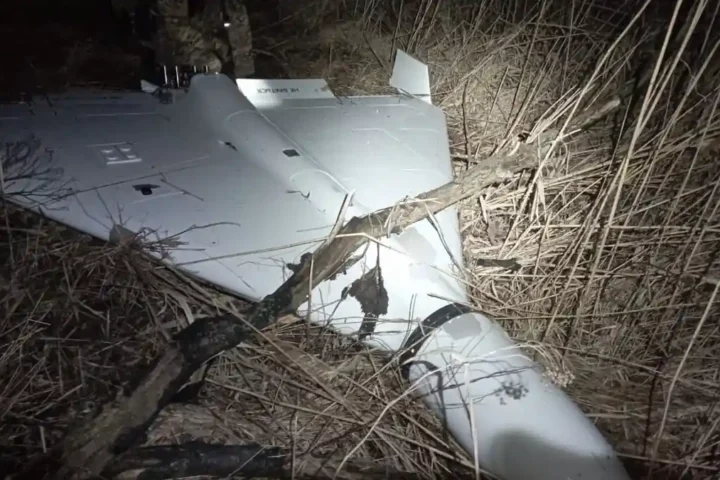
A long-range Ukrainian FP-1 drone flew over Turkish territory, crashed and exploded in a tea plantation in northeastern Turkey, apparently without Turkish air defenses noticing. According to the official statement of the Rize Governor’s Office, authorities mobilized only after receiving an alert that something had fallen in the village of Sirt, in the Çayeli district on the Black Sea coast.
“On November 29, 2026, at around 01:30, after a notification that an unmanned aircraft fell in Sirt village in Çayeli district, investigation and inspection began in the area,” the statement says. The probe showed it was a kamikaze drone of the FP-1 type, of Ukrainian origin. The statement names the maker as “Fair Point,” apparently a mistake for Ukraine’s Fire Point, which builds the FP-1.
The blast broke the window of a nearby house, with no casualties, injuries or other damage, according to the statement. Early Turkish reports spoke of broken windows in four houses. Gendarmerie sealed off the area, and a bomb-disposal team from Trabzon collected the debris.
The governor’s office describes only what happened after the crash. Nothing is said about radar detection, scrambled fighters or an interception attempt, and authorities have not said where the drone came from, what route it followed, how long it flew in Turkish airspace or why it came down. The incident is awkward for Ankara, which has long advertised its “Steel Dome” (Çelik Kubbe), the multilayer air-defense system for which ASELSAN won a record €2.46 billion contract.
It is not the first such incident. In July a warhead-carrying drone, also believed to be Ukrainian, fell near Trabzon, and in December 2025 Turkish authorities examined another damaged drone found in Kocaeli province. Ankara then asked Moscow and Kyiv to show more caution in the Black Sea. Romania, Bulgaria and Turkey recently agreed to set up a trilateral coordination mechanism in the Black Sea after a series of drone incidents.
The FP-1 is a fixed-wing long-range strike drone, unveiled in May 2025 but used by Ukrainian forces since 2024. Early versions had a range of about 1,600 km, while the improved version shown at Eurosatory 2026 reaches 2,700 km, according to the manufacturer. It is designed for low-cost mass production and Ukraine uses it mainly against military and strategic facilities inside Russia.
Turkey is trying to keep its role as a mediator between the two countries. Mr. Zelensky has told CNN Türk he is ready to meet Mr. Putin in Turkey, while Moscow has rejected a new moratorium on Black Sea attacks.