BOFORS ARCHER: The pride of the Swedish Artillery

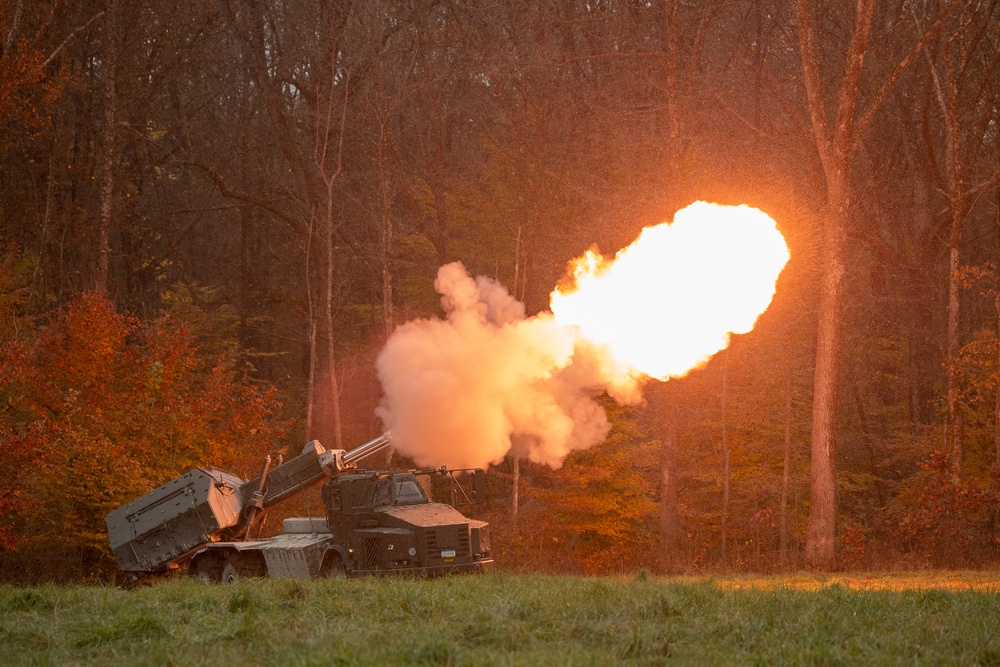
The Bofors ARCHER is one of the most capable and well know self-propelled guns fielded by modern armies. Sweden has already fielded it, a number of them has been donated to Ukraine while the UK will likely also acquire a number of systems too.

Development and integration into service

In 1995 the Swedish military began development of the ARCHER following a study to build a self-propelled gun based on the FH-77, which was already in service in large numbers.
The prototype was built by BAE Systems Bofors 8 years later, which began test firing in 2005.
Sweden and Norway signed a contract to acquire 48 (24+24) ARCHER in 2008 while in the same year they signed a cooperation agreement to further improve the system. Due to financial problems, in 2013 Norway canceled its order.
Finally, the ARCHER joined the force of the Swedish military in 2013 after some technical problems were solved. Three years later, Sweden also bought the ARCHERS that were originally meant for Norway’s order.

BOFORS ARCHER: The pride of the Swedish Artillery
Photo By Ibaril – Own work, CC BY-SA 3.0, https://commons.wikimedia.org/w/index.php?curid=7017423

Technical features and capabilities

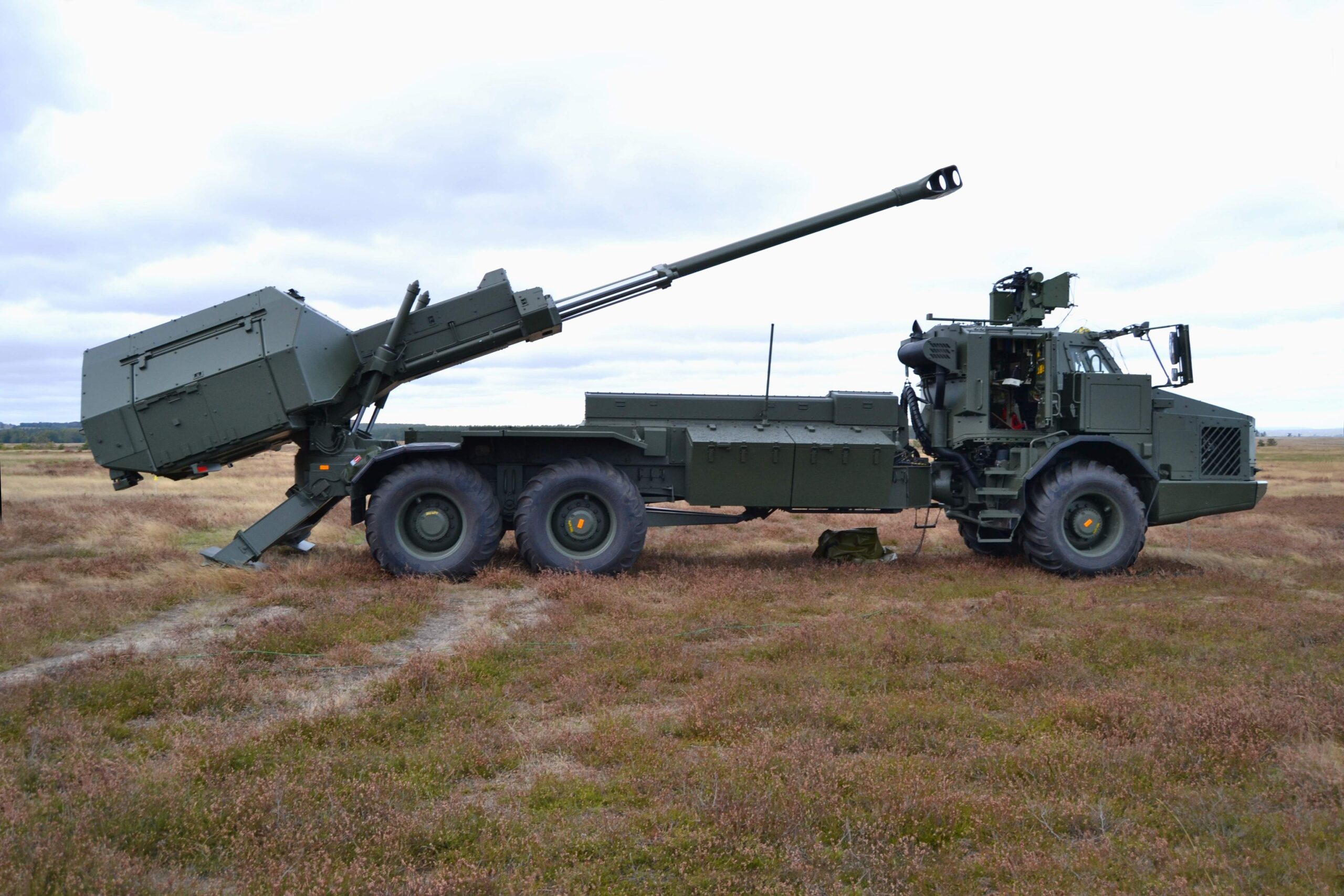
The ARCHER is a modern 155mm self-propelled gun and is the spearhead of Swedish artillery, harmoniously combining high mobility, firepower and easy deployment on the battlefield.
It is 13 meters long, 3 meters high and weighs 33 tons. It is mounted on a truck (10×10 OSHKOSH/6×6 VOLVO/8×8 RMMV) which can operate in a radius of 500km and uses a 440hp engine, allowing it to reach a speed of 90km/h.
The truck has an armored cabin which protects the crew of three from mines, shrapnel, bullets as well as adverse weather conditions. It is worth noting that the crew fights inside the vehicle away from the ammunition, so the chances of injury from an explosion are greatly reduced.

Armament

In terms of armament, using the already successful and fully automated FH-77 type gun, it can engage ground targets with various types of projectiles. While also being able to use “smart” artillery shells like the BONUS and EXCALIBUR rounds, it can target threats, with accuracy, at a range of 35 and 50 km respectively.
All of this works in conjunction with state-of-the-art navigation and ballistic calculation systems, making it capable of hitting targets with high precision.

However, the feature that makes ARCHER unique is its increased speed. According to the manufacturer, it can fire 9 rounds per minute and “empty” its magazine (21 rounds) in 3.5 minutes.
Along with the ARCHER it tends to operate a support vehicle, which carries up to 100 shells. This way it can be reloaded with ammo within 5 minutes.
The vehicle’s self-defense is based on a 12.7 mm remote-controlled weapon station (RWS) or a 40 mm grenade launcher.

Final conclusions

ARCHER is a modern artillery platform that gives the operator unprecedented target engagement capabilities.
It is worth considering as a possible replacement for the older M-109s in service with many armies around the world that are in immediate need of acquiring modern guns.

Tell us what you think in the comments!

For more military articles click here!

Copyright: GEOPOLITIKI.COM

Latest

Chikli Frames Israel–Greece–Cyprus Partnership as Counterweight to Turkey

Israeli Diaspora Affairs Minister Amichai Chikli has portrayed cooperation with Greece and Cyprus as a united front against regional extremism that he attributes to Turkey. The remarks reflect widening tensions between Israel and Ankara.

d-Matrix Brings Raptor AI Chips Into Nvidia’s NVLink Fusion Ecosystem

d-Matrix plans to integrate its Raptor AI inference processors with Nvidia’s NVLink Fusion and MGX rack architecture. The move illustrates how strategic competition in AI hardware is shifting from individual chips to tightly connected systems.

BRICS Summit Faces Iran War Test as UAE-Tehran Rift Deepens

The BRICS summit in New Delhi will test whether the expanded bloc can maintain consensus amid the Iran war and a widening UAE-Tehran rift. Energy security and disruption around the Strait of Hormuz are raising the stakes.

Canada Commits C$350 Million for Ukraine Air-Defence Interceptors

Canada has announced C$350 million for air-defence interceptors as Ukraine faces an intensifying Russian missile and drone campaign. Ottawa also plans to send Kyiv one-third of millions of drones it aims to produce over two years.

Saab Wins SEK 2.9 Billion Order for Sweden’s Future Fighter System

Sweden’s FMV has awarded Saab a SEK 2.9 billion order to develop future fighter-system concepts through 2028. The work covers crewed and uncrewed designs, demonstrators and technologies intended to preserve Stockholm’s strategic options.

Check Also

NASA and IBM Release Open-Source AI Model to Map the Moon

NASA and IBM have released an open-source AI foundation model trained on multiple lunar datasets. It can help scientists map ice, craters and volcanic features as mission planning accelerates around the Moon’s south pole.

NATO Allies Disrupted Russian Undersea Cable Operation Near Svalbard, Report Says

British, Norwegian and US forces disrupted a reported Russian deep-sea exercise near critical cables serving Svalbard. No cable was damaged, but the episode highlights intensifying competition over Arctic infrastructure.

Yemen: Houthis Move on Zuqar and Perim/Mayun in Lightning Attack to ‘Close’ Bab el-Mandeb

Houthi forces advance toward Mayun after capturing Zuqar and Mocha, escalating fears for control of the Bab el-Mandeb and global shipping.

MEDUSA-15: Greece, Cyprus, Egypt, France and Italy Send Message of Strength South of Crete

Greece, Egypt, Cyprus, France and Italy launch MEDUSA-15 south of Crete, combining air, naval, special-operations and unmanned-system training in the Eastern Mediterranean.

IPERION: Greece’s New C-UAS System Against Drone and USV Swarms

The IPERION / ΥΠΕΡΙΩΝ system, developed by the Hellenic Aerospace Industry...

Analysis