Greece
Coastal Exocet MM40: the Navy’s hidden batteries that “close” the passages of the Aegean
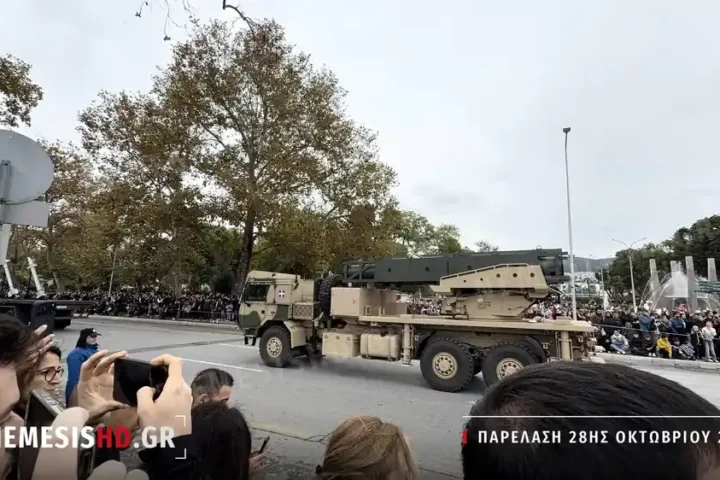
The Hellenic Navy’s coastal Exocet MM40 Block 2 launcher passed in the October 28 parade. How the two Greek batteries work, their limits, and why an upgrade or MM40 Block 3 matters for the Aegean.

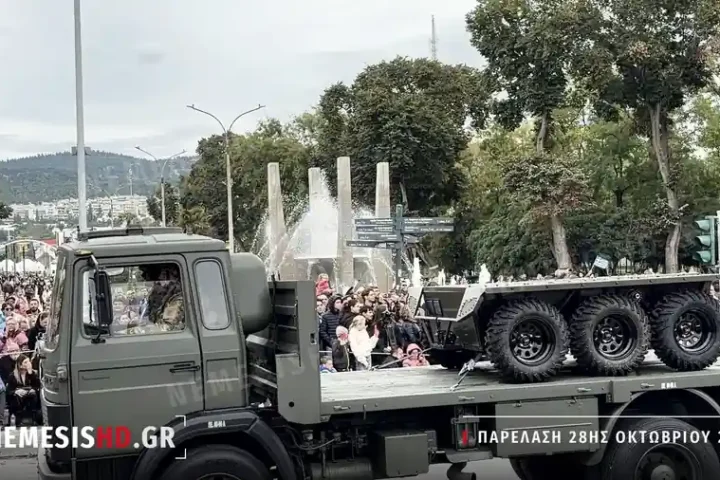
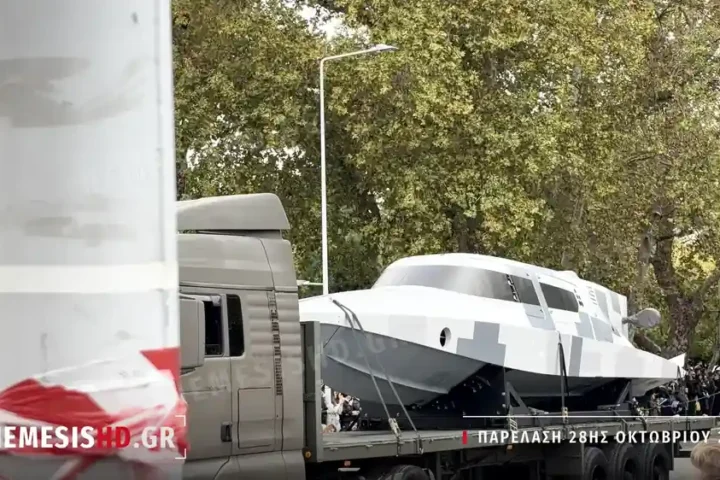
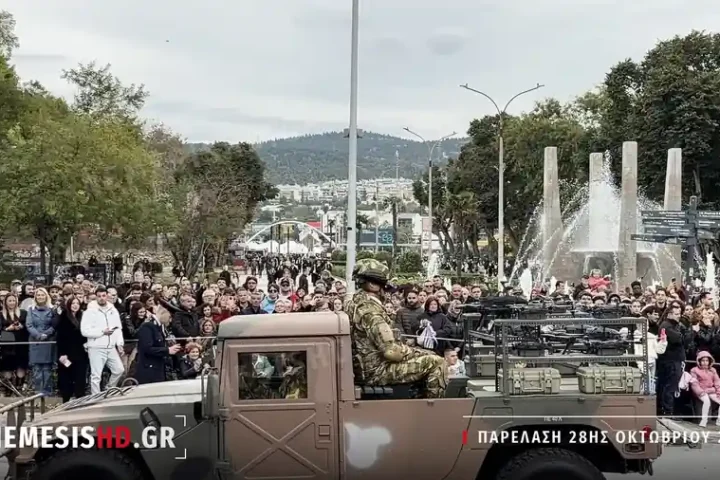
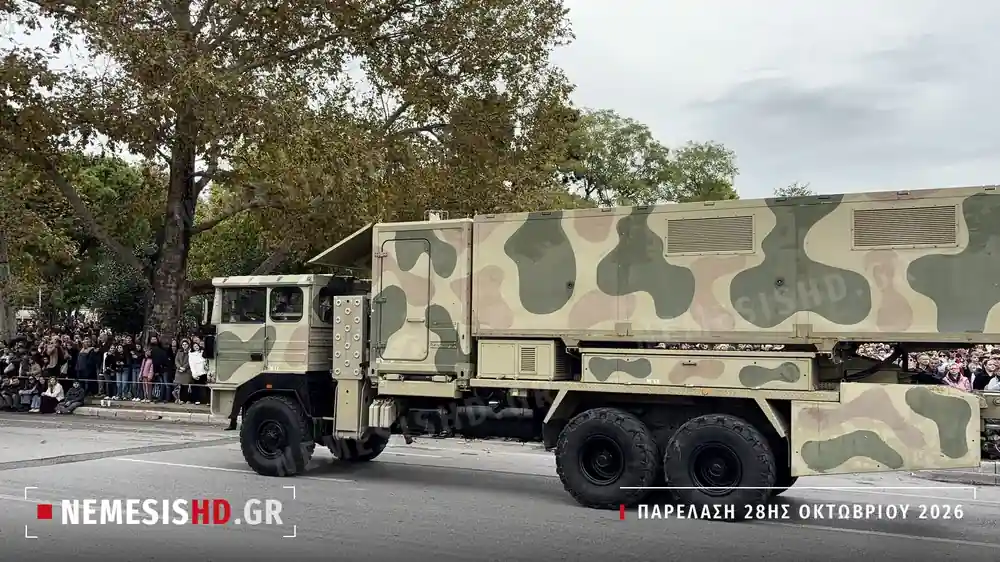
The Hellenic Navy’s coastal Exocet batteries are among the least known and at the same time most logical weapons Greece has for the Aegean: anti-ship missiles that need no ship to launch, only a truck hidden on a coast or an island. The coastal Exocet MM40 Block 2 launcher passed in the military parade of October 28, 2026 in Thessaloniki with its closed canister carrier covered and painted in camouflage, and to anyone who did not know what he was looking at it resembled a simple military truck with a box. That is precisely its value: a launcher that looks like anything else, moves on the road network and can fire from a spot the adversary does not know is a far harder target than a frigate or a fast missile boat.
The Navy’s two MM40 Block 2 batteries
The Navy has two coastal Exocet MM40 Block 2 batteries, acquired in the 1990s. The MM40 is the surface-launched version of the Exocet, with a booster motor and a sustainer motor, and the Block 2 version has a range of about 70 kilometres. After launch the missile descends to sea-skimming flight a few metres above the waves, is guided inertially toward the target area and in the terminal phase switches on its own radar to detect and lock on to the target. It is the same missile carried by the Fleet’s fast missile boats, which means common support, common training and common stocks with the surface units. The Air Force, for its part, uses the airborne AM39 on the Rafale, so the Exocet is the common anti-ship missile of two branches.
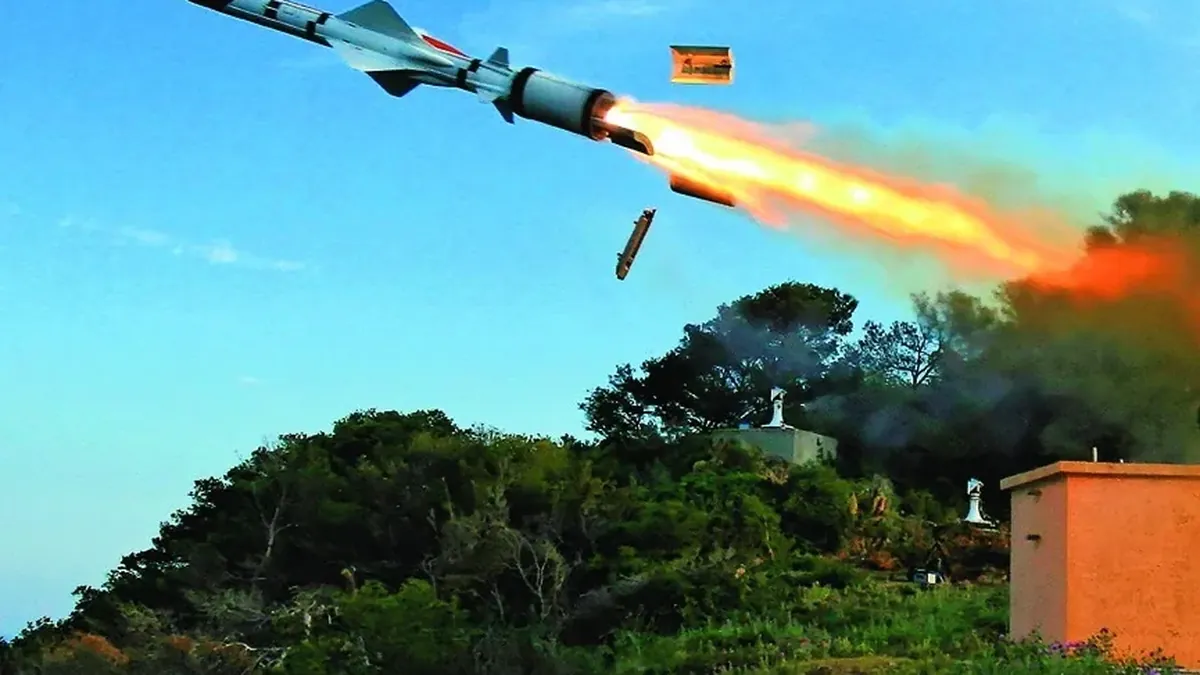
The strength of a coastal battery lies not only in the missile but in mobility and dispersal. A launcher truck can move from position to position, take target data from a coastal radar, a ship or an aircraft and fire without ever emitting with its own radar, and so without giving away its position. For an adversary this means every passage between Greek islands can be covered by a launcher he cannot see, and that to neutralise it he must first find it. The Navy itself has shown what the Exocet can do in firings in the Ionian Sea, where the missiles carried out sharp manoeuvres in the terminal phase, which makes them particularly hard for a ship’s air defence to counter.
The limit of Block 2 and the MM40 Block 3 option
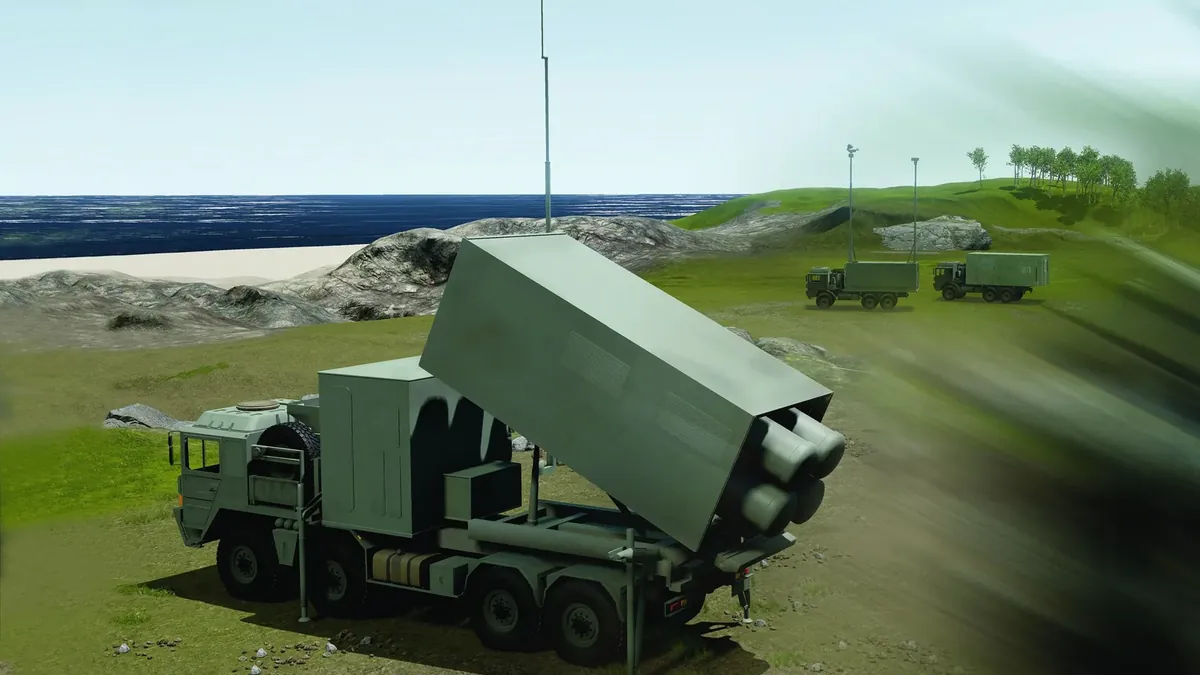
The main drawback of the Greek batteries is their age and range. The 70 kilometres of the Block 2 are enough to cover a strait or a passage, but not to keep away a modern Turkish ship carrying longer-range missiles. MBDA today offers the mobile coastal Exocet system with the MM40 Block 3, which flies on a turbojet instead of a sustainer rocket motor and has an operational range of the order of 200 kilometres. It navigates with an inertial system and GPS through three-dimensional waypoints, can attack a target simultaneously with other missiles from different directions, and carries an active J-band radar for the sea, while using GPS for coastal targets. The basic battery, according to the company, consists of a sensor vehicle, a control vehicle and up to three launch vehicles with four missiles each, that is up to 12 missiles ready to fire.
Cyprus has already taken this step: the National Guard acquired coastal batteries of the new-generation MM40 Block 3. The Hellenic Navy, for its part, already has the MM40 Block 3 on its ships, with the FDI frigates also bringing the newer Block 3c. The logical solution is to combine the upgrade of the existing batteries with the purchase of new MM40 Block 3c systems, so that the Navy exploits the support and training it already has. At a time when Greece is setting up an access-denial network on its islands with the PULS, drones and the Achilles Shield, and when island defence is now planned with the cooperation of all branches, coastal anti-ship missiles are the piece that closes the sea. The presence of the old MM40 in Thessaloniki was a reminder that the capability has existed for decades, but it now needs longer range and more launchers.