Europe
First Sea Lord announces counter-drone Kraken boats and Northrop Grumman TALON trials for the Royal Navy
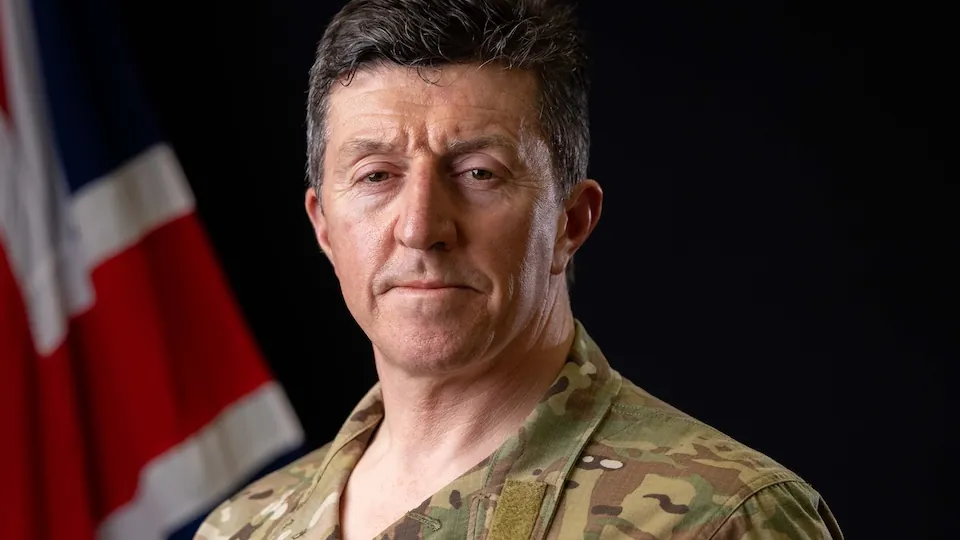
At the International Sea Power Conference in Oslo, Royal Navy chief Gen. Sir Gwyn Jenkins said Kraken scout boats will get a counter-drone capability and that a Northrop Grumman TALON demonstrator will be prepared for carrier trials.

First Sea Lord General Sir Gwyn Jenkins used the International Sea Power Conference in Oslo on 10 November to announce that the Royal Navy will fit a counter-drone capability to its Kraken uncrewed scout boats in the new year, and that he will sign a statement of intent with Northrop Grumman to prepare its TALON demonstrator for trials under Project VANQUISH.
According to the transcript published by the UK government, Jenkins spoke after he and fellow chiefs of the Joint Expeditionary Force navies signed the Northern Navies Initiative. Readers can find the signing in our report UK and JEF allies sign Northern Navies Initiative on HMS Prince of Wales in Oslo.
What the First Sea Lord announced
Jenkins said the “Hybrid Navy”, which pairs crewed ships with uncrewed systems, is “no longer” a vision on paper. He said the Royal Navy commissioned its 1st Autonomous Squadron in Portsmouth last week, giving autonomy “a permanent operational home in the Fleet”, and that the squadron’s first task will be coastal defence: monitoring approaches, protecting critical infrastructure and responding faster to hostile activity.
The counter-drone fit for the Kraken scouts is meant, he said, to give a lower-cost way of defeating airborne threats and to preserve “our most advanced missiles” for threats that need them. He described it as a lesson learned from Ukraine. In a separate speech at the same event, UK defence readiness and industry minister Luke Pollard said the Ministry of Defence has contracted Saab UK to integrate lightweight counter-drone radar systems into the Kraken K3 fleet.
Uncrewed aircraft and undersea sensing
The TALON demonstrator, which Jenkins said was on the stage with him, is a jet-powered uncrewed aircraft of the kind the Royal Navy calls a Collaborative Combat Aircraft. The First Sea Lord said the statement of intent would be signed two days after the speech, on the carrier, and would work towards a demonstration in UK waters in 2027, including a launch from the carrier. He said the aim is to learn how uncrewed combat aircraft can operate safely alongside the existing air wing.
Jenkins also said the Royal Navy opened a Capability Accelerator Hub in Portsmouth last week, bringing operators, engineers and industry together to test and field technology faster. On the undersea side, he said the first phase of Atlantic Bastion, called Atlantic Net, will become operational within months, working with Ocean Infinity. The funding behind it is covered in UK commits £90 million to “Atlantic Net” drones and sensors to hunt Russian submarines and guard undersea cables.
The wider rebuild
On the wider fleet, Jenkins listed 13 new frigates already in build, including the Type 26 ships the Royal Navy will operate alongside Norway, followed by six Common Combat Vessels designed to command uncrewed systems. He also pointed to four Dreadnought submarines, four new amphibious ships and four Fleet Solid Support ships, and said the programme amounts to about 280,000 tonnes of new steel, rising to around 450,000 tonnes when planned programmes are included.
He recalled that the Royal Navy had mobilised quickly in response to the situation in the Strait of Hormuz to form a multinational coalition, converting RFA Lyme Bay into a mothership for autonomous minehunting systems and securing “several dozen” Kraken uncrewed surface vessels in a few months.
Jenkins said the Defence Secretary has made clear the Navy must be ready within 1,000 days, and that the risk of conflict is rising, adding that “war is not inevitable – not if our enemies believe that we are serious.” He told industry he wants it “alongside us from the start”, with technology tested in realistic conditions. He said more than 80 industry partners and more than 700 delegates attended the Oslo conference and the Atlantic Future Forum held alongside it.