Air Force
France awards Airbus and Thales Alenia Space more than €1.5 billion for the IRIS military satellites – what they replace
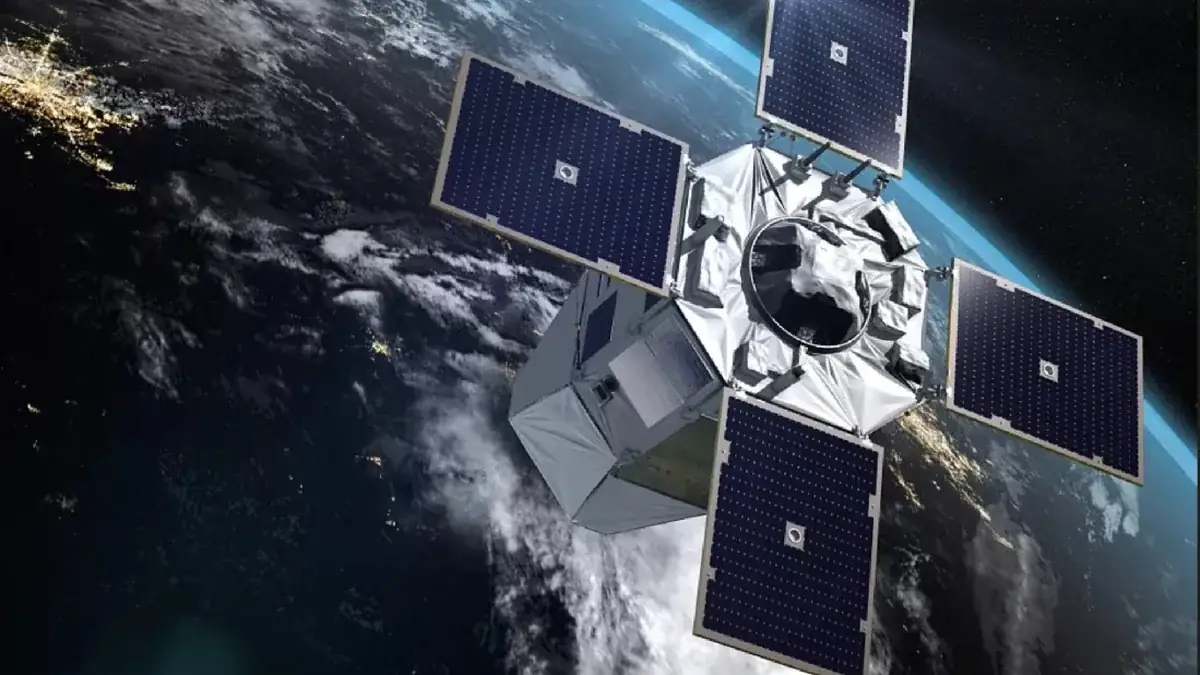
France’s procurement agency DGA has awarded the IRIS programme to Airbus Defence and Space, with Thales Alenia Space as co-contractor, in a contract worth more than €1.5 billion for two optical observation satellites to replace the CSO.

France has moved ahead with the succession of its reconnaissance satellites. The Directorate General of Armaments (DGA) formally awarded on November 5 the contract to build the IRIS programme, with Airbus Defence and Space as lead and Thales Alenia Space as co-contractor. Its value, which Airbus disclosed on Monday, November 9, exceeds €1.5 billion for the whole consortium, around $1.7 billion, and the contract covers work to the end of the 2030s.
IRIS, an acronym that in French stands for “intelligence and space imaging instruments”, has no relation to the European satellite communications network IRIS². It concerns two optical observation satellites that will take the place of the three CSO satellites of the MUSIS programme, launched in 2018, 2020 and 2025. Under the revised 2024–2030 military programming law, the first is expected in service around 2033 and both in orbit by 2035.
What the new satellites will do
The system will be operated by the Space Command of the French Air and Space Force. It will take images, day and night, in the visible and infrared spectrum, of any point on the Earth’s surface at very high resolution. Paris wants clearer shots and faster delivery to units. The satellites will also image objects in orbit, offering data for space surveillance and for detecting threats there, at a time when competitors such as China are multiplying their own reconnaissance satellites, as the DIA report showed.
The division of labour is clear. Airbus takes the platforms of both satellites, a large part of the optical payload of the first and the ground segment. Thales Alenia Space will develop a new-generation payload for the second, supply critical subsystems for the first and take part in the ground segment. The contract includes detailed design, manufacture and testing, the ground control, user and image-quality segments, and operation and maintenance in orbit. The French firms Lynred, Pyxalis, Sodern, Safran Reosc and Air Liquide Advanced Technologies are also in the supply chain.
Alain Faure, head of space systems at Airbus Defence and Space, linked the programme to France’s “sovereignty and strategic autonomy” and to strengthening the domestic industry in optical imaging from space. The DGA describes the satellites as an essential tool so that the country can assess situations by itself and decide without depending on third parties.
Like MUSIS, which has eight European partners, IRIS remains open to allied countries that want access to its images. That also concerns Athens, which has just inaugurated its own Space Operations Command and is planning satellite capabilities for the Armed Forces.