Military & Defense
France launches Pégase 26 global air-power mission
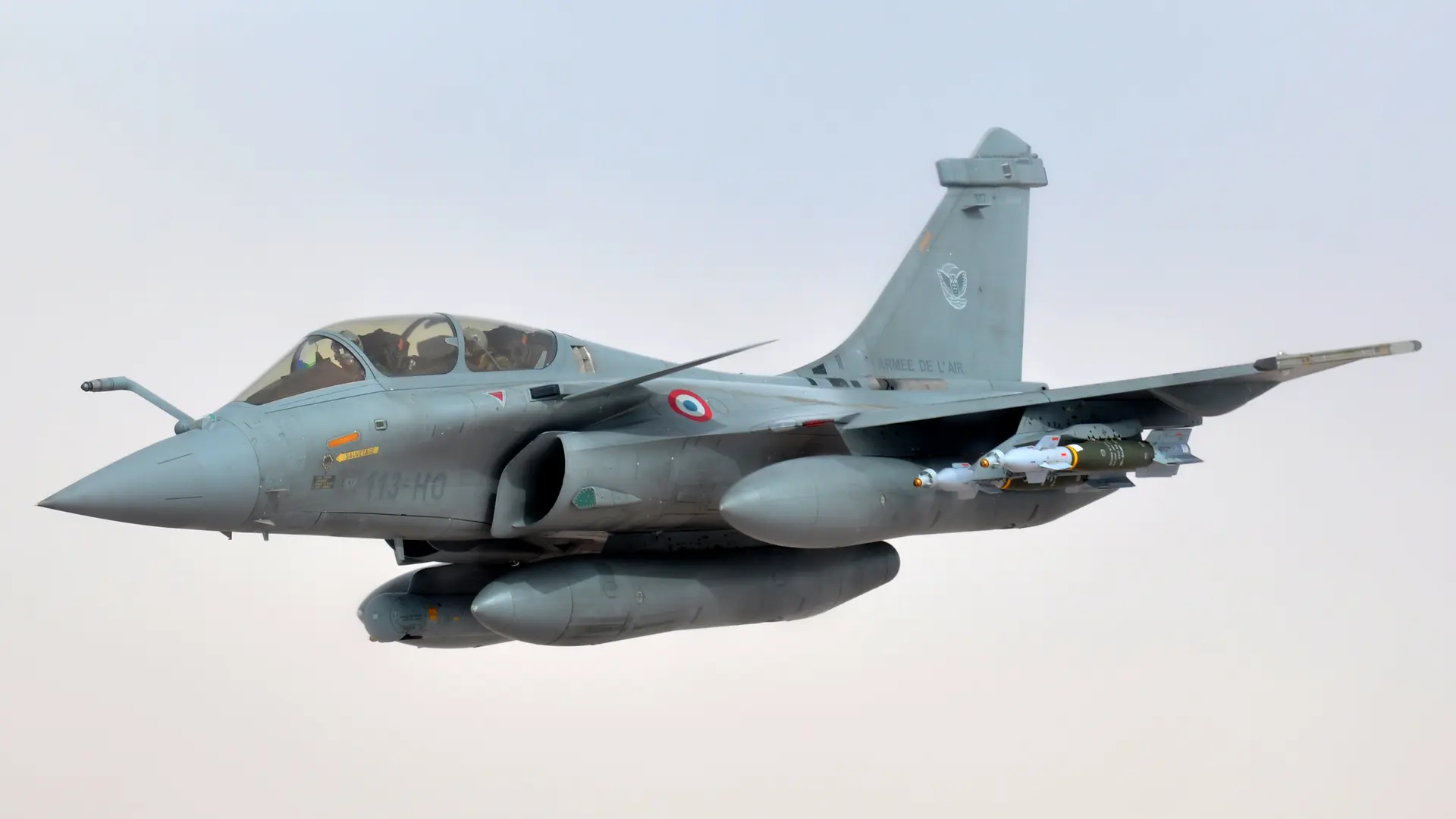
Four Rafale fighters, three A330 MRTT tankers and two A400M transports have departed France for Pégase 26, a 40-day deployment spanning the Arctic, Indo-Pacific and Middle East.

France has launched Pégase 26, a 40-day global air-power deployment intended to demonstrate the French Air and Space Force’s ability to move combat aircraft rapidly across the Arctic, Indo-Pacific and Middle East while operating alongside a broad network of partners.
The force departed Istres Air Base on September 7 and 8 with four Rafale fighters, three A330 MRTT tanker-transports, two A400M airlifters and almost 300 personnel. According to the French Ministry of the Armed Forces, the aircraft will cover more than 40,000 kilometres in approximately 40 days and make nine principal stops.
The route begins with Greenland, Canada and Alaska before continuing through Japan, South Korea, Indonesia and India. The formation is also scheduled to visit Réunion and Egypt, participating in the multinational Tarang Shakti exercise in India and the Amun exercise in Egypt.
According to the French Ministry of the Armed Forces, the deployment is designed to test the logistical structure required to operate fighter aircraft far from metropolitan France, including tanker support, strategic and tactical airlift, maintenance, spare parts, communications, force protection and access to partner airfields.
The Arctic phase has a stated political and military dimension. France links the deployment to European responsibility in Greenland and to participation in Denmark’s Arctic Endurance exercise. Melting sea ice, expanding access to resources and growing Russian, American and Chinese interest have made the region increasingly relevant to European defence planning.
In the Indo-Pacific, the mission supports France’s position that it is a resident power rather than an occasional European visitor. France has territories, citizens and permanently stationed forces across the Indian and Pacific oceans. Pégase 26 connects those sovereign interests with relationships involving the United States, Japan, South Korea, Indonesia and India.
The participating Rafales are supported by the A330 MRTT, which combines aerial refuelling with passenger and cargo transport, and by the A400M, capable of operating from more austere airfields. Together, the three aircraft types form the core package for an expeditionary combat-air deployment. The package is intended to support long-range deployments and coalition interoperability.
Delegated Armed Forces Minister Alice Rufo told personnel at Istres that concepts such as sovereignty, strategic autonomy and operational credibility have meaning only when forces can turn them into operational reality. Rufo presented the mission as part of France’s wider effort to support European strategic ambition with deployable military capability.
Pégase 26 is a conventional mission and does not involve France’s nuclear forces in a deterrent patrol. Personnel and aircraft associated with the country’s strategic air arm are participating in the long-range deployment.
The final leg through the Middle East and Egypt will involve another set of partnerships and operating conditions. The French Ministry of the Armed Forces lists sustained readiness, interoperability and command continuity among the operational objectives of the wider deployment.