Land Forces
Gaza: Israeli army launches a ground operation west of the “Yellow Line”, the first since the ceasefire began in October
The Israeli army began a ground operation in central Gaza west of the Yellow Line, the first since the October 2025 ceasefire. Hamas calls it a flagrant violation; the Board of Peace warned the truce risks collapse.

The Israeli army began a ground operation on Wednesday, November 18 in the central part of the Gaza Strip, west of the “Yellow Line” that separates the areas under Israeli control from those controlled by Hamas. It is the first ground operation since the ceasefire began in October 2025. The army said it was acting “to eliminate a threat to the troops operating in the Gaza Strip”, that “Hamas infrastructure exists in the area” and that agents of Israel’s Security Agency (Shin Bet) are taking part. It presented the move as a response to Hamas violations of the ceasefire. An army spokesman told NBC News that the operation targets “Hamas infrastructure” west of the Yellow Line.
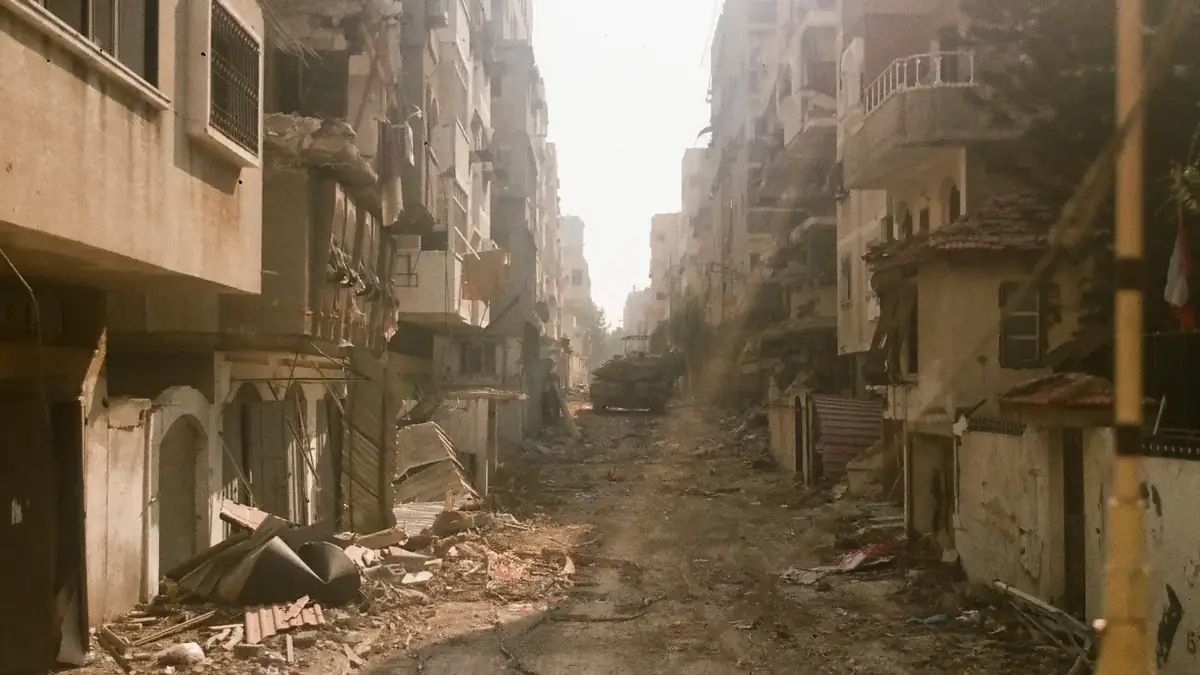
Before it began, the Coordinator of Government Activities in the Territories (COGAT) called, in an Arabic-language message, on residents of three city blocks in the Bureij and Nuseirat area to leave. The Salah al-Din road, Gaza’s main north-south artery, remains closed in that section for the duration of the operation, and humanitarian organisations were told to avoid any movement in the area. Eyewitnesses saw Israeli tanks moving along the Salah al-Din axis. A correspondent of Turkey’s Anadolu agency reported the advance of Israeli vehicles, including bulldozers, in the al-Mughraqa area, near the Wadi Gaza bridge, and in the al-Daawa neighbourhood north of Nuseirat, under heavy fire and artillery shelling.
Casualties and reactions
Palestinian doctors said one person was killed in an Israeli air strike near the operation area and two more in separate strikes in Deir al-Balah and Gaza City earlier the same day. Families fled the al-Daawa neighbourhood. Hamas called the operation a “flagrant violation of the ceasefire agreement” and asked the mediators to intervene at once, saying the evacuation orders are a “new crime against civilians”. Israel maintains that Hamas is regrouping and rearming, and it has stepped up its attacks, such as the strike that killed the commander of Hamas’s Rafah Brigade. Gaza’s health authorities speak of at least 1,600 dead since the start of the ceasefire. These figures have not been independently verified.
The Board of Peace warning
The operation began a day after a warning from the Board of Peace, the body chaired by Donald Trump that oversees the implementation of the Gaza plan, that the ceasefire risks collapse. In its report to the UN Security Council, submitted on Tuesday, November 17 and seen by Reuters, it notes that “a ceasefire that brings no visible result cannot be maintained indefinitely”. “If it collapses, there will be no roadmap to return to, no administration that can be deployed, and no favourable conditions for reconstruction,” it warns.
The Board criticises both sides. It accuses the Israeli government of an “absence of decisions” on training and deploying a Palestinian police force in Gaza, while saying Hamas continues military activity and collects taxes on goods entering the enclave. Every day Israel continues strikes on Hamas targets delays establishing whether the group accepts the disarmament roadmap, the report says. For the civilian population, facing winter without adequate shelter, the report speaks of “another winter in tents and rubble”, with Israeli restrictions on the entry of supplies making preparations harder.