Asia-Pacific
Japan’s 2026 Defense White Paper: China the “greatest strategic challenge”, North Korea a threat “more serious and imminent than ever”, strong concern over Russia
Japan’s Ministry of Defense released its 2026 White Paper on October 26, calling the security environment the most severe and complex since the end of World War II and saying a Ukraine-type crisis cannot be ruled out in East Asia.

China is for Japan “an unprecedented and the greatest strategic challenge”, North Korea poses a threat “more serious and imminent than ever”, and Russia’s activities, combined with its strategic relationship with Beijing, cause “strong concern” for security. That is the triptych of the 2026 Defense White Paper of Japan’s Ministry of Defense, released on Monday, October 26, with its English translation published by USNI News. The document assesses that a serious situation comparable to Russia’s invasion of Ukraine cannot be ruled out in East Asia either.
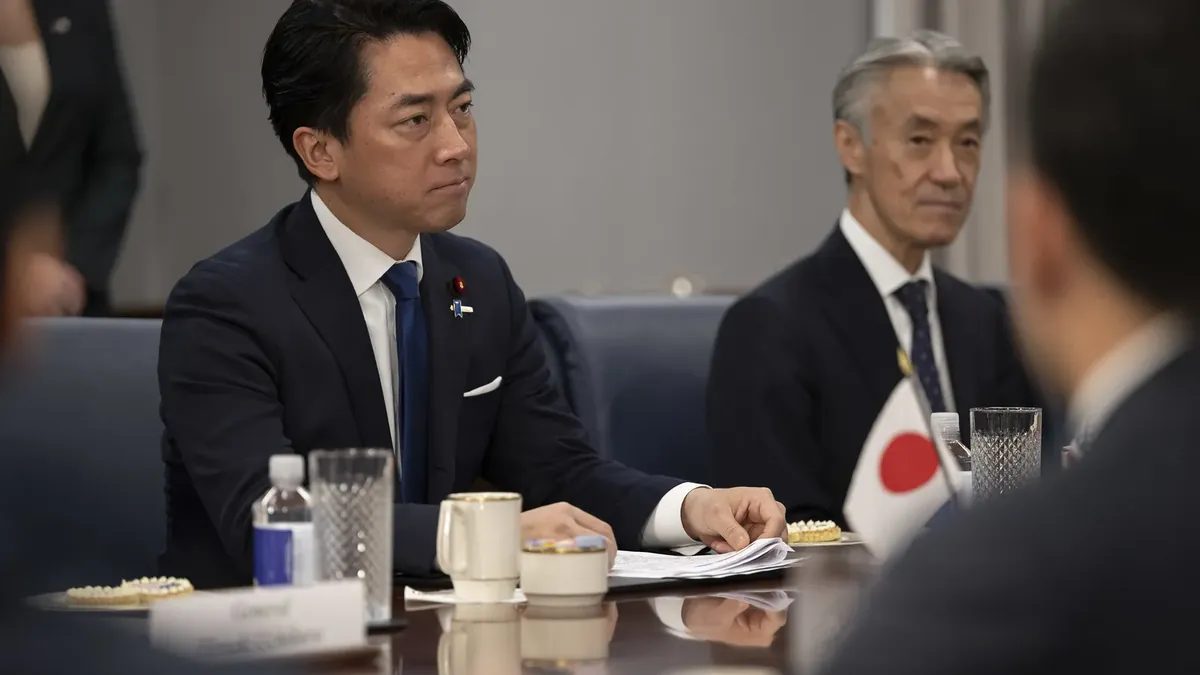
In his foreword, Defense Minister Shinjiro Koizumi writes that the security environment around Japan is the most severe and complex since the end of World War II. He notes that the government reached ahead of schedule the target of defence spending at 2% of GDP and that in the fiscal 2026 budget spending exceeded 9 trillion yen for the first time, together with funds for Okinawa and the realignment of US forces. The country’s three strategic documents, starting with the National Security Strategy, will be revised within 2026, earlier than originally planned.
China: from the first to the second island chain
The chapter on China stresses that for more than 30 years Beijing has been increasing its defence budget at high rates and without transparency, with emphasis on nuclear weapons, missiles, the navy and the air force. Its activity is intensifying in the East China Sea, around the Senkaku Islands, in the Sea of Japan and the western Pacific, beyond the first and up to the second island chain.
The White Paper records a series of 2025 incidents: carrier operations east of Iwo To and the simultaneous presence of two carriers in the Pacific in June, unusually close approaches by a Chinese fighter (June) and a fighter-bomber (July) to Japanese aircraft, and in December the intermittent radar illumination by a Chinese fighter of a Japanese aircraft for about 30 minutes, as Geopolitiki has covered the continuing pattern. Tokyo calls it a dangerous act, beyond what safe flight requires. On Taiwan, the military balance is “tilting rapidly” toward China, and it cannot be excluded that China could impose a “gray zone” blockade of the island by advancing its Coast Guard vessels.
Air Self-Defense Force fighters scrambled 595 times in fiscal 2025, 366 against Chinese aircraft and 214 against Russian aircraft.
North Korea and Russia
North Korea, with six nuclear tests to its name, is judged to have the technological ability to place a nuclear warhead on ballistic missiles covering the Japanese archipelago. It is developing at a rapid pace irregular-trajectory missiles and so-called “hypersonic” missiles, as well as long-range cruise missiles for a nuclear payload. The 9th Congress of the Workers’ Party of Korea, in February 2026, set as the goal of the next five years the continued strengthening of nuclear forces, together with unmanned and electronic warfare systems. Tokyo fears that military cooperation with Moscow will strengthen Pyongyang in the medium term.
On Russia, the text notes that it is deploying its newest equipment in the Far East and has increased its troop strength since the start of the war in Ukraine. In the Northern Territories, which Tokyo considers inalienable Japanese territory under illegal occupation, Moscow is building facilities, has deployed coastal anti-ship missiles and fighters, and holds large exercises. The White Paper recalls the September 2025 event for the 80th anniversary of victory in the Chinese People’s War of Resistance against Japanese Aggression, where Xi Jinping, Vladimir Putin and Kim Jong Un were seen side by side, and characterises the joint bomber flights and joint naval voyages of China and Russia near Japan as an “obvious demonstration” of force against the country.
Japan’s response
In response, Japan is proceeding with operational deployment of the Type-25 anti-ship missile, the Type-25 high-velocity gliding projectile and hypersonic missiles, acquisition of the SM-3 Block IIA, and construction of Aegis system equipped vessels (ASEV). The Air Self-Defense Force will be reorganised into an Air and Space Self-Defense Force, while the goal is a coastal defence system with a large number of inexpensive unmanned assets (SHIELD) by fiscal 2027. The White Paper’s digest also notes that the US Department of War has shown an intention to focus on the Indo-Pacific while also prioritising the defence of the homeland.