Middle East & North Africa
Qeshm and Isfahan: Iranian air defense targets US drones, as the US and Iran trade fire around the island
The US and Iran are now exchanging fire regularly around Qeshm island, while Iranian air defenses were also active near Isfahan on Friday, most incidents without official confirmation.

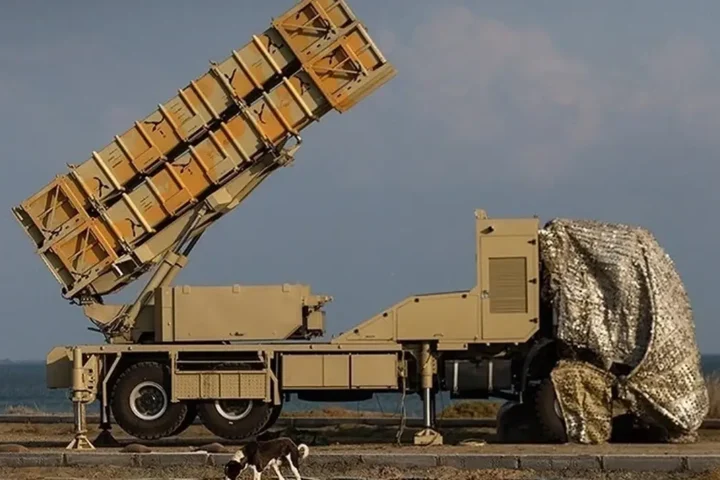
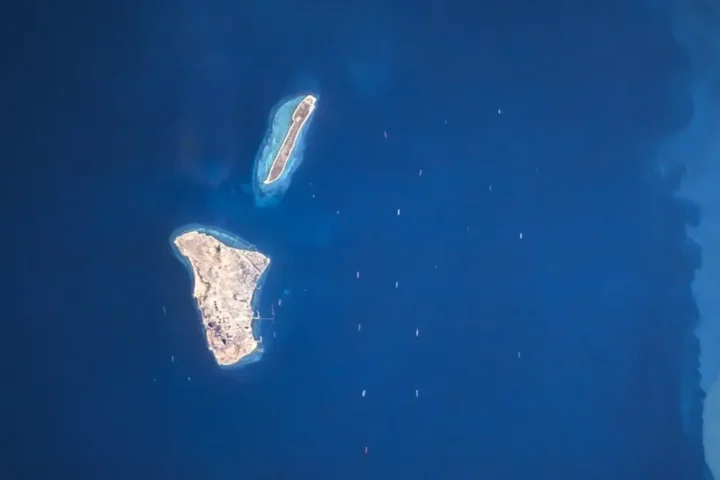
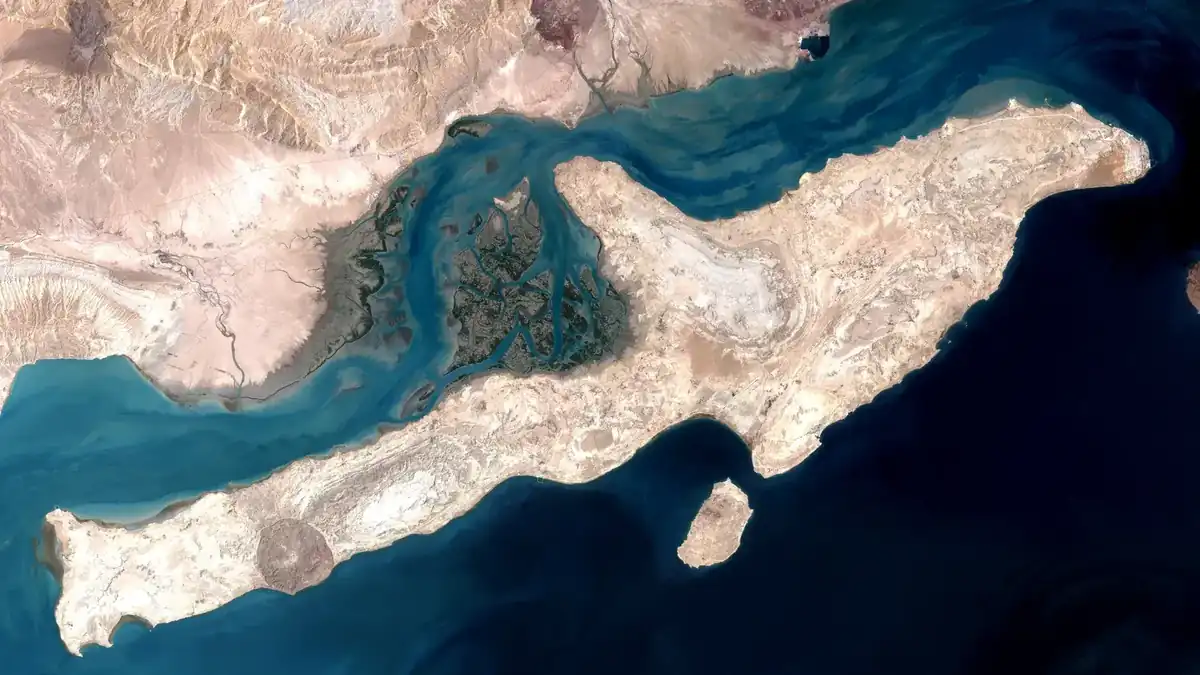
The US and Iran are now trading fire regularly around the island of Qeshm, while air defenses are also active in the Isfahan area. Tehran is trying to shoot down the American unmanned aircraft flying over its positions and missile launchers, and the US responds with strikes, like the one on November 17 on a launch site on Qeshm. On Friday, November 20, new incidents were recorded at both locations, most without official confirmation.
Early in the afternoon, accounts tracking military activity in the area reported a missile launch from Qeshm, in Hormozgan province. Residents spoke of fighter flights. Images that circulated show the missile’s smoke trail, which according to the BeamTracker account is most probably a surface-to-air missile (SAM) and not an anti-ship one. A little later the same account posted a photo that, it claims, shows an American F-16 over the island.
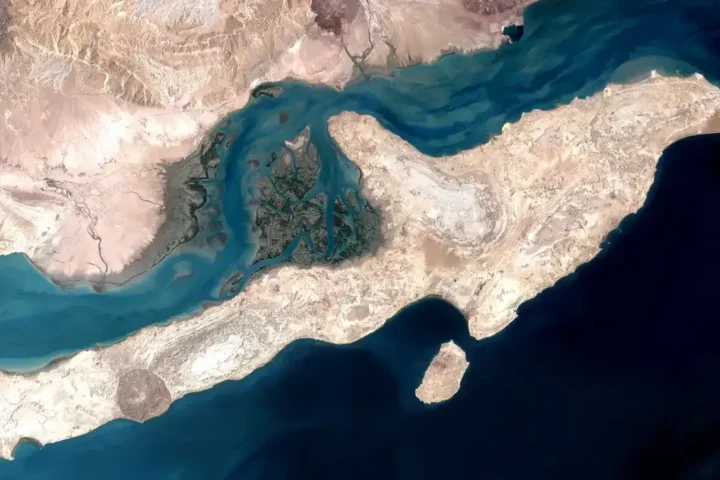
At 16:45 Iran time (15:15 Greek time) a missile launch was reported from Meymeh, north of the city of Isfahan. Earlier, the IRNA agency had reported, in a story reproduced by ABNA, that the Iranian army’s air defense detected and destroyed a US MQ-9 Reaper drone over the eastern part of the Strait of Hormuz.
A fireball over Qeshm
In the afternoon an explosion occurred over Qeshm. The Fars agency, which is controlled by the Revolutionary Guards (IRGC), wrote that residents of the south of the island saw a fireball in the sky. Local sources attributed it to the interception of a “hostile target”, that is, a drone, but there was no official announcement. A local source said the video that circulated does not show a launch. A few minutes later, air defense activity was reported at the “15 Khordad” base in Isfahan province. Shortly after 18:00 Greek time residents heard jets also over Ahvaz, the capital of Khuzestan province in the southwest, near the border with Iraq. We covered the Iranian media report of a US missile strike separately in our main report on Qeshm.
Not isolated incidents
The incidents are not isolated. On November 16 the Revolutionary Guards claimed they captured an intact American MQM-170 drone near Qeshm, while the army spoke of shooting down an MQ-1. The same evening air defenses in Isfahan were activated with no official explanation. On Tuesday, November 17, US fighters struck an IRGC missile launch site on Qeshm with precision weapons. A US official told Fox News the strike was carried out in self-defense. The Guards, for their part, presented their drone attacks on American bases in the Gulf as a response to violations of Iranian airspace by American drones.
US forces in the region
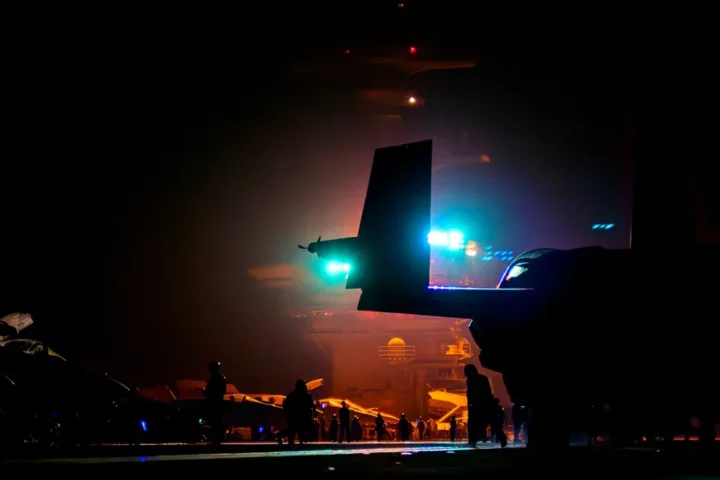
At the same time the US maintains strong forces in position in the region. US Central Command (CENTCOM) confirmed on Monday, November 16, that with the arrival of the USS Theodore Roosevelt there were three carrier strike groups in the area: the USS Theodore Roosevelt, USS George H.W. Bush and USS George Washington. Since then the George Washington has left for the 7th Fleet in the Indo-Pacific, so two carriers remain in the region, the Theodore Roosevelt and the George H.W. Bush. An analysis by Israel’s Institute for National Security Studies (INSS) estimates that the US naval presence in the Gulf of Oman, the Arabian Sea, the Red Sea and the Mediterranean is larger than the force deployed in Operation Epic Fury, at the peak of hostilities, with 12 destroyers in the Arabian Sea (CBS News).
Bloomberg writes that new US strikes on Iran are becoming more likely, although President Donald Trump has not yet made a final decision. The New York Times reports that Israeli Prime Minister Benjamin Netanyahu is pressing him to move. Trump himself told Israel’s Channel 12 that he is in no hurry: “We’ll see what happens when the new year comes in.”