Greece
On this day, 20 November 1922: The Lausanne Conference opens and the Evros Army becomes Venizelos’s bargaining chip
On 20 November 1922 the peace conference on the Near East opened in Lausanne. Behind Eleftherios Venizelos, on the Evros, a reconstituted Greek army became one of Greece's strongest cards in the talks.

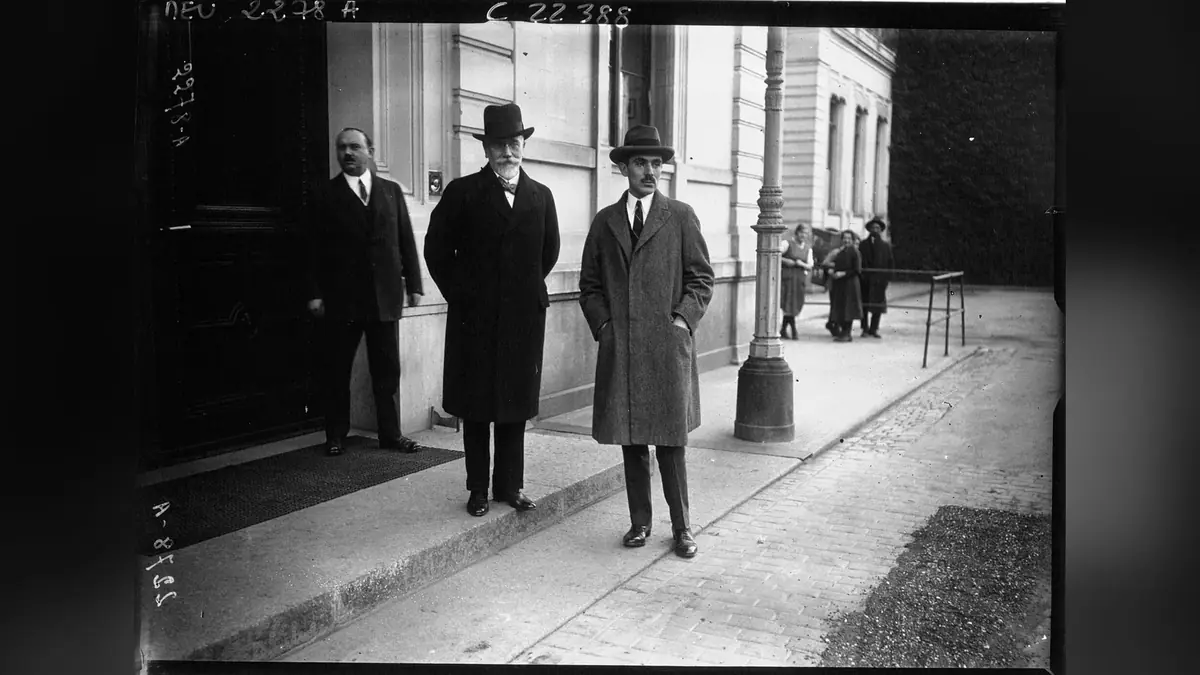
On 20 November 1922 (7 November in the old calendar, which was still in force in Greece) the peace conference on the Near East opened in Lausanne, Switzerland. The opening session, chaired by the President of the Swiss Confederation, Robert Haab, was public and “purely ceremonial”, as the American delegation observing it cabled to Washington the next day, according to the State Department archives. Two months after the Asia Minor Catastrophe, Greece was represented by Eleftherios Venizelos. Behind him, on the west bank of the Evros, an army was being rebuilt. Within a few months that army would become one of Greece’s strongest cards at Lausanne.
Greece after Mudanya
The Armistice of Mudanya, in October 1922, forced Greece to evacuate Eastern Thrace, which it had been given by the Treaty of Sèvres in 1920, and to withdraw behind the Evros. Britain, France and Italy chose Lausanne as a neutral venue. Britain’s Foreign Secretary, Lord Curzon, met French Prime Minister Raymond Poincaré in Paris on 18 November and then Benito Mussolini to agree the agenda. Turkey was represented by Ismet Pasha (later İnönü), Rıza Nur and the chief rabbi Haim Nahum. The United States took part only as an observer, with the right to speak but without a vote and without signing.
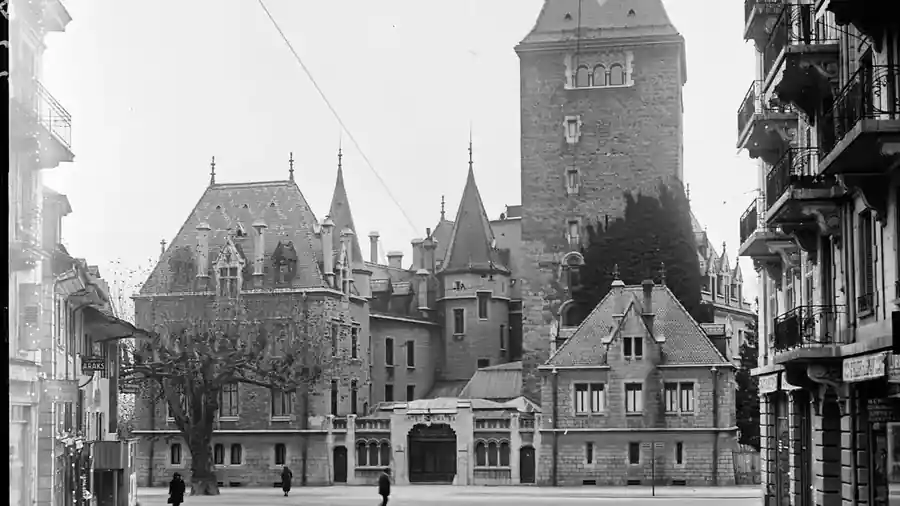
The first substantive session took place on 21 November. Curzon took the chair and the conference was divided into three commissions. The first and most important, on territorial and military questions, was chaired by Curzon himself. On 23 November, in a long speech to the commission, Ismet asked for Karagatch, the suburb of Adrianople on the west bank of the Evros that Greece had kept, to be ceded to Turkey. From the first days, in a confidential meeting with the Americans, Turkish officials said that in Turkey “the Greeks and the Armenians were not wanted” and that it would not cede territory for the settlement of minorities, as the American delegates recorded in a telegram of 22 November.
The Evros Army
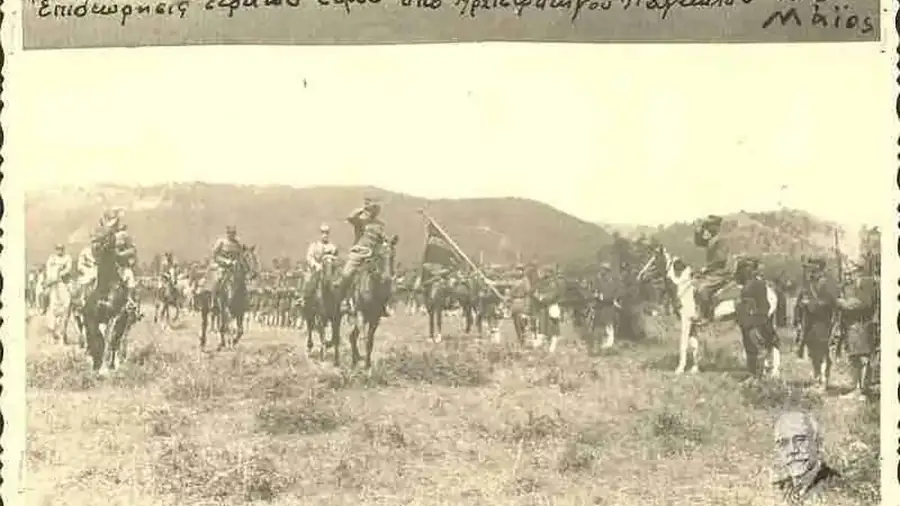
While diplomacy moved in Lausanne, the Evros Army was being formed in Western Thrace. It was assembled from the forces left after the defeat and the evacuation of the Army of Asia Minor, together with units already in Thrace. Reorganization began in October 1922 under Lieutenant General Konstantinos Nider and in December continued under Lieutenant General Theodoros Pangalos. The units came from formations evacuated from Asia Minor, from detachments withdrawn from Eastern Thrace and from newly mobilized forces. The task was hard, with shortages of equipment and supplies and an army still shaken by defeat. Pangalos imposed very harsh discipline, which extended to the summary execution of deserters.
By April 1923 the army had about 100,000 men in ten combat divisions, organized in the 2nd, 3rd and 4th Army Corps. Plans were drawn up for crossing the Evros and advancing into Eastern Thrace. General Alexandros Mazarakis-Ainian, who inspected the army on Venizelos’s behalf, judged it capable of reaching the fortified lines of Chataldja, outside Constantinople. It nevertheless remained weak in heavy artillery after the losses in Asia Minor, and an offensive depended on factors outside its control: on whether the Navy could stop Turkish reinforcements crossing the Straits, on the stance of the Allies who occupied Constantinople and on the risk of a Bulgarian attack.
The reparations card
The conference was adjourned in early February 1923 and reopened on 23 April. The most dangerous issue between Greece and Turkey was the Turkish demand that Greece pay war reparations for the destruction in Asia Minor, something Athens said it could not do. The demand came close to causing a new war. Venizelos preferred to use the strength of the Evros Army to bolster his negotiating position, not for a new campaign, and the Greek delegation threatened to walk out if Turkey did not accept Karagatch in place of reparations.
How much the army counted at Lausanne shows from the other side of the table. Rıza Nur, a member of the Turkish delegation, wrote later that when information arrived that Pangalos intended to cross the Evros, he “was terribly frightened”. He estimated that Turkey had in Eastern Thrace only about 10,000 men, without artillery, while Ismet warned him that the Greek navy could cut off their retreat. By his own account, Ismet told him that if Turkey did not drop its demand for reparations, Pangalos would attack and take Constantinople as well. The British Foreign Office’s annual report for 1923 described the Greek forces in Western Thrace as a considerable army, far stronger than the Turkish forces facing it, and noted that fear of a Greek advance had acted as a restraint on the moves of the Turkish leadership.
The Greek delegation threatened to leave the conference, and on 24 May the British delegate Sir Horace Rumbold advised Venizelos to avoid any adventurous policy. In Ankara Mustafa Kemal intervened and his government allowed Ismet to accept Karagatch in place of reparations, provided the remaining issues were settled favorably. On 26 May 1923 a compromise was reached. Greece acknowledged responsibility for the destruction of the war but was relieved of paying monetary reparations, while Turkey received the Karagatch triangle, also known as Old Orestias. The government never ordered an attack. The danger of a wider war, with Allied forces at the Straits and Bulgaria at its back, was greater than Greece could bear.
What was signed
In the meantime, on 30 January 1923, Greece and Turkey had signed the Convention on the exchange of populations in Lausanne. The Treaty of Lausanne itself was signed on 24 July 1923. It drew the borders of Greece, Bulgaria and Turkey and gave Imbros and Tenedos a special administrative status, which Turkey revoked in 1926. The Convention of 30 January had already exempted from the exchange the Greek Orthodox of Constantinople, Imbros and Tenedos and the Muslims of Western Thrace.
Lausanne ratified the defeat of the Asia Minor Campaign, but a few months after the collapse of the front, a reconstituted army on the Evros weighed on the negotiation over reparations without ever crossing the river.
Frequently asked questions
When did the Lausanne Conference open? The opening, ceremonial session took place on 20 November 1922 (7 November in the old calendar). The first substantive session was on 21 November, chaired by Lord Curzon.
What was the Evros Army? It was the army reconstituted in Western Thrace after the Asia Minor Catastrophe, from December 1922 under Lieutenant General Theodoros Pangalos. In April 1923 it had about 100,000 men in ten combat divisions.
Why did Greece not pay war reparations to Turkey? With the compromise of 26 May 1923, Greece acknowledged responsibility for the destruction of the war but was relieved of monetary reparations, ceding the Karagatch triangle to Turkey. According to Rıza Nur, fear of an attack by the Evros Army persuaded him and Ismet to support dropping the demand. The solution was finally approved by Ankara as well.
When was the Treaty of Lausanne signed? On 24 July 1923. The Convention on the exchange of populations between Greece and Turkey had been signed earlier, on 30 January 1923.