Middle East & North Africa
Iran readies a tanker convoy at Kharg Island to test the US blockade, sources say
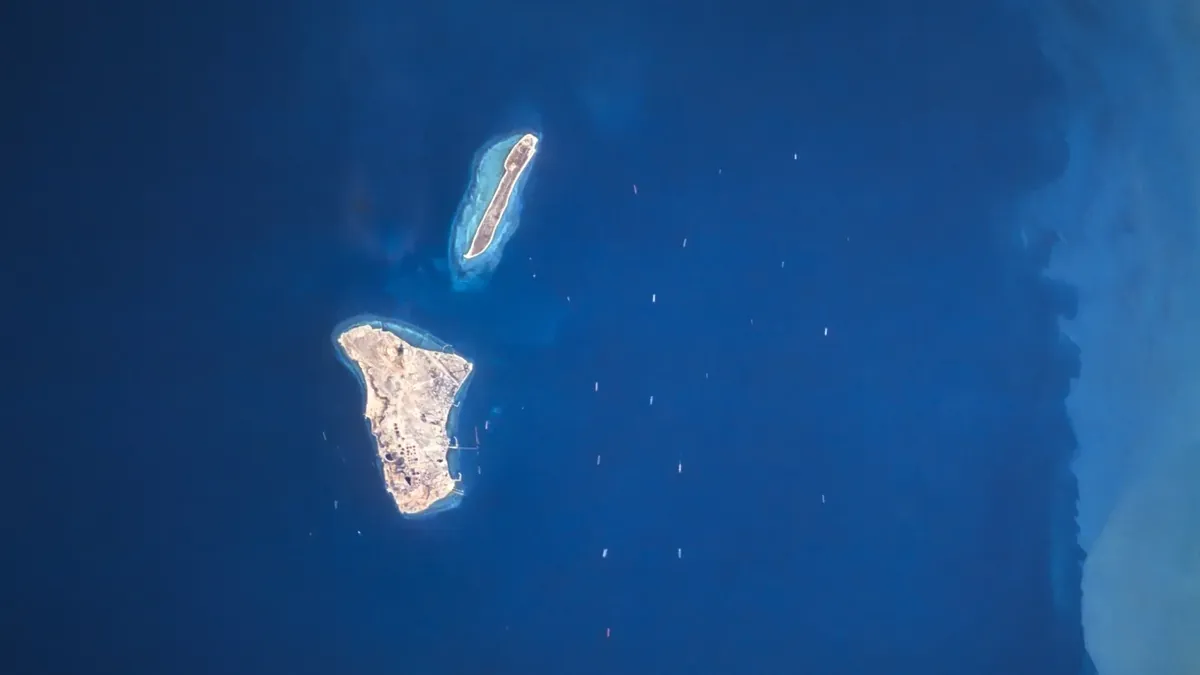
Satellite images show more than 14 Iranian-flagged tankers at Kharg Island, as Tehran reportedly plans a convoy to the Gulf of Oman to test the US naval blockade of its oil exports.

Iran is preparing a tanker convoy at Kharg Island, in the northern Persian Gulf, to test the naval blockade the US is imposing on its oil exports. Satellite images and ship-tracking data show more than 14 tankers at the terminal, with crews and under the Iranian flag, according to a Euronews report on Friday, November 20. The same report says Tehran plans to send them in convoy to the Gulf of Oman in the coming days. The tracking company TankerTrackers noted on Thursday, November 19, that Iran “appears to be preparing to send oil again”.
The idea of a convoy had been put in a commentary by the semi-official Fars agency, linked to the Revolutionary Guards, on Wednesday, November 18. The text suggested Iran send a group of tankers to break the blockade and threatened strikes on energy infrastructure in the region, “especially UAE oil”, if US forces intervene. A journalist with ties to the Guards wrote on X that stopping an Iranian tanker’s course would cause explosions at oil facilities in the UAE, Saudi Arabia, Qatar, Kuwait, Oman and Bahrain. He called it his personal analysis. The Guards’ spokesman, Brigadier General Hossein Mohebbi, told Basij students in Tehran the same week that Iran would not allow the continuation of the naval, land and air blockade.
A first ship-to-ship transfer
A first transfer of Iranian crude at sea has already taken place. The tanker OLYM, which had been east of Kharg since August loaded with about one million barrels, carried out a ship-to-ship (STS) transfer south of the island on Tuesday, November 17, the organization United Against Nuclear Iran (UANI) recorded. About 200,000 barrels passed to the smaller Hao Fan, which is not on the US sanctions list. The two ships had turned off their transponders, while the Hao Fan broadcast a false position near Sinas, Oman, according to UANI, and the transfer was also recorded by the data analytics platform Kpler.
Washington is trying to close this gap. US Central Command (CENTCOM), in a guidance to shipping on Wednesday, November 18, cited by Al Jazeera, warned that any ship that receives by transfer cargo from a vessel subject to the blockade that has loaded at an Iranian port or coast “may be considered to be circumventing the blockade, even if it has not entered Iranian ports or Iranian coastal waters”. Such ships, it added, may be stopped, boarded, diverted, seized or directed to the Iranian port from which the cargo originated. CENTCOM had already disabled the cargo ship Huda with an air strike in the Gulf of Oman on November 7, when it tried to breach the blockade.
Why Kharg matters
Between 85% and 90% of Iran’s crude exports pass through Kharg, and its terminal can store about 30 million barrels, Euronews notes. Alternative terminals, such as the port of Jask, lack the infrastructure to replace it. The US imposed the blockade on April 13, lifted it in June and reimposed it on July 14, while attacks on tankers continue in the Strait of Hormuz.