Drones
UVEX-2/26: Robotdrones’ Greek FPV drones in a simulated strike on enemy forces on a rocky islet and on a ship hidden behind an island
The Greek firm Robotdrones tested FPV drones in the Hellenic Navy’s UVEX-2/26 exercise, flying up to 20 km from the control station in two scenarios: enemy forces on a rocky islet and a ship hidden behind an island.

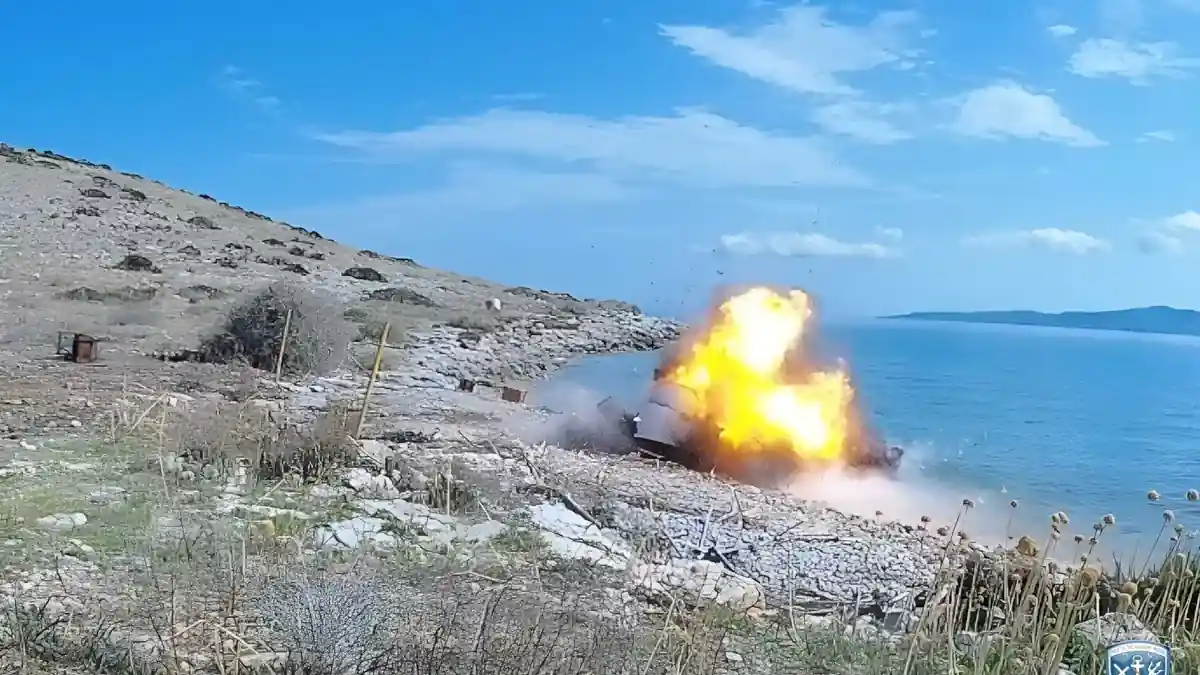
The FPV drones of the Greek firm Robotdrones Future Technologies were tested in two scenarios that could have been written for the Aegean, during the Hellenic Navy’s UVEX-2/26 exercise. In the first, the target was an enemy force on a rocky islet. In the second, a warship hidden behind an islet. The company released two videos from the drones’ cameras.
The year’s second UVEX
According to the Hellenic Navy’s announcement, UVEX-2/26 took place from October 12 to 22, 2026 in the Saronic Gulf and the South Euboean Gulf. It was a small-scale technical exercise, the second the Navy has organised for experimentation and innovation in unmanned operations, after UVEX 1/26 in March in the Saronic Gulf.
Units of the Frigate Command, the Fast Patrol Boat Command, the Underwater Demolition Command, the Naval Air Command and the Naval Logistics Command took part. Alongside them operated unmanned aerial (UAV), surface (USV) and underwater (UUV) vehicles from companies of the Greek innovation ecosystem and domestic defence industry. The exercise fits the Navy’s wider shift towards unmanned systems.
Flights of 20 kilometres from the antenna
Robotdrones founder Mr Lemonopoulos said in posts that the company’s FPVs flew up to 20 kilometres from the control station, meaning the point where the communications antenna was set up. On the route Marathon Courthouses – Styra, Euboea – South Euboean Naval Base, the remote operation of the systems was tested, which gives more flexibility in surveillance and in the use of unmanned systems.
Enemy force on a rocky islet
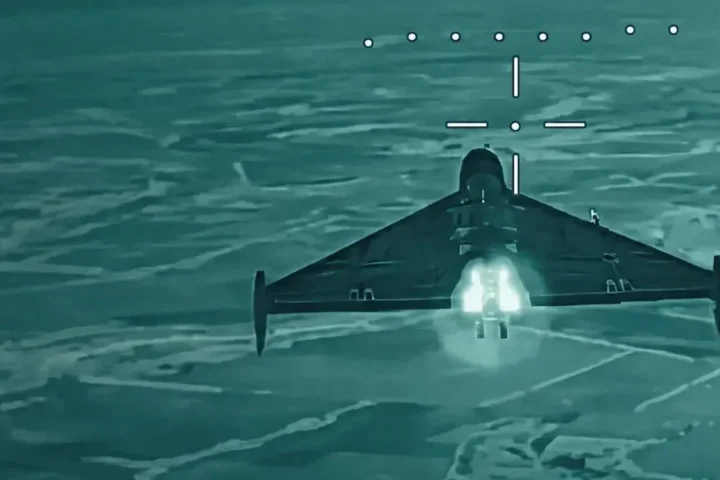
In the first scenario, the drones had to quickly locate enemy forces on a small islet, target them and neutralise them virtually. In the video the FPV scans the islet, spots a position among rocks and descends towards it. The image stops “one second before the target is hit”, as the company’s caption puts it.
“The message is clear. Anyone who tries to seize a Greek rocky islet should know they may face an immediate, strong and decisive defensive response,” Robotdrones says. It adds that UVEX-2/26 gave it the chance to demonstrate these capabilities in a simulated operational mission and that “deterrence is based on readiness, technology and effectiveness”.
The ship behind the islet
The second mission was to locate and virtually target a Roussen-class fast attack craft that had hidden behind an islet. The FPV passes over the ridge, finds the ship near the shore, under the rocks of a cove, and makes successive approaches. The company says the mission was completed successfully.
Robotdrones calls its participation valuable experience, because it tested its systems in realistic conditions, assessed how effective they are and gained know-how to develop them. “Those who think they can threaten the security and national sovereignty of Greece, should they ever try, will find themselves facing many surprises they may not have imagined. Innovation is proved in practice,” the company’s founder said. These are the company’s own statements.