Europe
Bloomberg: Russia offers force cuts in Kaliningrad and Belarus if NATO pledges no deployments in post-1997 members
Bloomberg reports Russia would reduce forces near EU borders if NATO commits not to deploy in countries that joined after 1997. Lithuania's Budrys: “the eastern flank is not a bargaining chip.”

Russia proposes to reduce its military presence near the European Union’s borders, in the Kaliningrad region and in Belarus, if NATO commits not to deploy forces in any country that joined the Alliance after 1997. Bloomberg revealed the proposal, citing unnamed sources familiar with the discussions. 1997 is the year NATO began to enlarge into Eastern Europe. According to the agency, Moscow has not moved substantially away from the maximalist demands it set in December 2021, a few weeks before the full-scale invasion of Ukraine.
The proposal comes amid the sudden US push for a comprehensive deal to end the war. Donald Trump’s envoys Steve Witkoff and Jared Kushner are pressing Russian and Ukrainian officials to consider new ideas on NATO rules, military means and troop deployments in Europe. US negotiators reportedly believe strong, NATO-style security guarantees for Ukraine and an understanding with Russia on Europe’s security architecture could open the way to a deal on territory, where talks are deadlocked. Washington even asked Kyiv whether it would leave the Donbas in exchange for joining the Alliance, as Volodymyr Zelensky himself revealed on Saturday, November 14. Speaking in Dublin, he said it was the first time the Americans had put the question and that he would put such a deal to the Ukrainian people, since he has no right to decide alone (Vatican News).
Europe’s response
At the EU summit on Friday, November 13, many European leaders said bluntly that such a trade would never happen. For Europeans a standing principle applies: Russian hostilities stop first, and troops and NATO are discussed afterwards. Several leaders admitted, however, that they must at least join parallel talks to satisfy the United States. For the states bordering Russia, the idea serves Moscow’s plans and exposes them to the risk of losing the NATO forces that guard their territory.
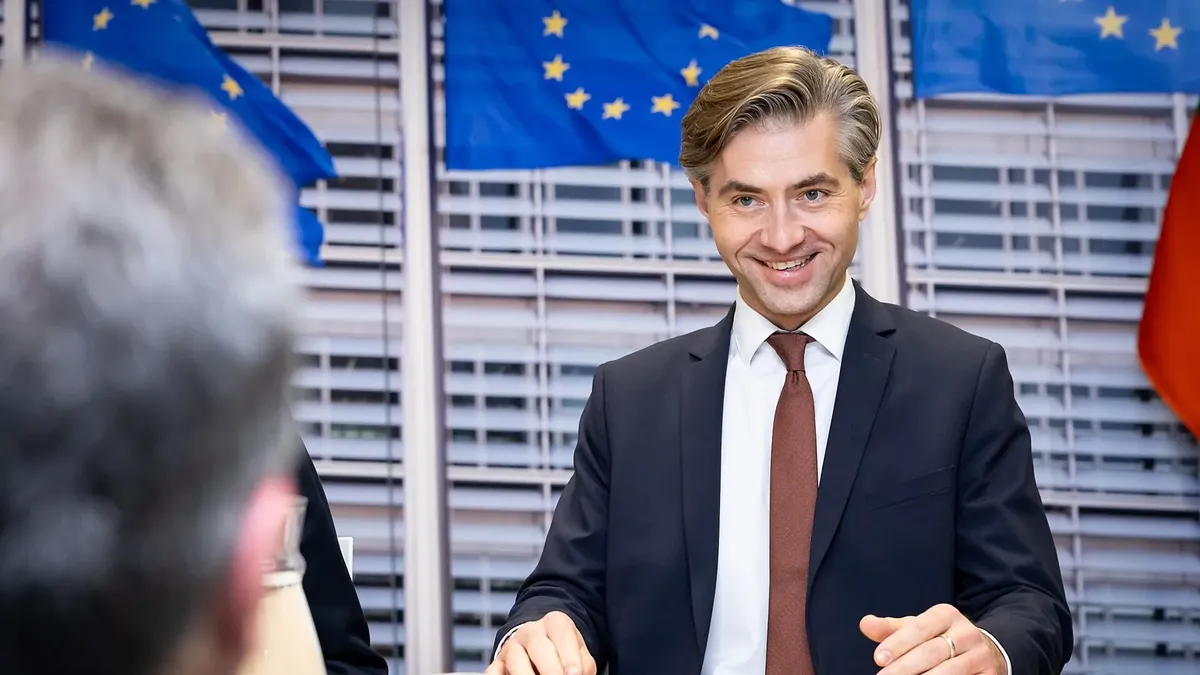
Lithuania gave the clearest answer. “The eastern flank is definitely not a bargaining chip and there can be no spheres of influence,” said Foreign Minister Kęstutis Budrys. “Russia must not have a veto on anything. For us this is a matter of principle,” he added, explaining that this means no veto on Ukraine’s EU accession, on the presence of NATO forces, or on Alliance moves to strengthen collective defence. He sent the same message from Brussels on Wednesday, November 18; Lithuania’s foreign ministry summed up its position: the eastern flank is not a bargaining chip, and there must be no more Yalta-style agreements.
What a return to 1997 would mean
The 1997 demand is not new. Vladimir Medinsky’s Russian delegation raised it at the trilateral talks in Abu Dhabi on November 11, and a Russian position paper called for NATO withdrawal from Eastern Europe. A return to the 1997 positions would mean withdrawing forces and weapons from at least 16 of the 32 member states, among them the Baltic countries, Finland and Sweden. Kaliningrad, between Poland and Lithuania, hosts the headquarters of Russia’s Baltic Fleet and tactical Iskander missile systems. Witkoff and Kushner are expected to meet Ukrainian and European officials in Berlin on Thursday, November 19 on post-war security guarantees for Ukraine.