Cyprus
Greece–Cyprus summit in Nicosia: talks to resume “from where they stopped at Crans-Montana”, GSI cable “of European interest”, Cyprus to join Schengen on July 1
At the 4th Greece–Cyprus Intergovernmental Summit in Nicosia, Mitsotakis and Christodoulides called for talks to resume from Crans-Montana, with no anachronistic guarantees and no occupation forces, and backed the GSI cable.

Artificial intelligence, civil protection and the transfer of Cyprus’ experience from its Presidency of the Council of the EU were the three pillars of the 4th Greece–Cyprus Intergovernmental Summit, held in Nicosia on Wednesday, November 18. In his statements after meeting Cyprus President Nikos Christodoulides, Prime Minister Kyriakos Mitsotakis highlighted the Cyprus problem, the electricity interconnector and Cyprus’ entry into the Schengen area. The joint communiqué confirms that the next Intergovernmental Summit will take place in Athens in 2027.
The Cyprus problem: talks “from where they stopped in 2017”
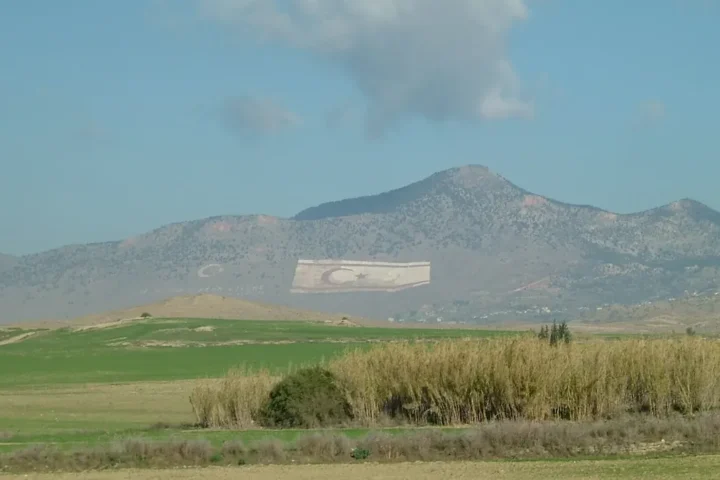
The two leaders welcomed the new momentum on the Cyprus problem and the prospect of a meeting with the UN Secretary-General. They call for substantive negotiations to resume “from where they stopped in 2017 at Crans-Montana”, on the agreed framework, the UN Security Council resolutions and the EU’s principles and acquis. “We look forward to a date being set for the trilateral and, immediately after, for an enlarged five-party meeting,” Mr Mitsotakis told the plenary. He repeated that the solution must be a bizonal, bicommunal federation, “without anachronistic guarantees, without occupation forces”, that is, without the Turkish troops that have occupied the north of the island since the 1974 invasion.
On security, the communiqué speaks of close coordination between the two countries “in promoting security and stability in the Eastern Mediterranean”, in an uncertain international environment. Athens and Nicosia are presented as pillars of stability and cooperation and as a bridge between the EU and the wider region, committed to international law and good neighbourly relations. Mr Mitsotakis stressed the Law of the Sea and asked that the new EU budget adequately fund the Union’s goals on competitiveness, defence and the climate crisis. Two Declarations of Intent were signed, on Cypriot students attending the Hellenic Police Officers’ School and on training for Cypriot Coast Guard personnel. The Prime Minister also welcomed the special unit on organised crime that Cyprus is setting up.
The cable and the EU Presidencies
On the Greece–Cyprus electricity interconnector (GSI), Mr Mitsotakis noted that seabed surveys resumed last week. He called the cable a “project of European interest” that is “moving smoothly” according to the original plan, and said Greece insisted on delivering it “overcoming whatever obstacles we met along the way”.
Greece takes over the Presidency of the Council of the EU in the second half of 2027, and the two sides agreed to cooperate closely at technical level. “We look forward to Cyprus formally joining the Schengen Area on July 1,” said Mr Mitsotakis, who wants this to be the first major decision of the Greek Presidency.
Artificial intelligence and civil protection
Artificial intelligence, which the communiqué calls the “central pillar” of the Summit, covered the use of data from Greek Earth-observation microsatellites together with the two countries’ ground stations for receiving and processing satellite data. The two leaders also discussed Cyprus’ AI Factory Antenna “Pharos-CY” and Greece’s AI Factory “Pharos”, the implementation of the EU AI Act and the use of AI in public administration. Mr Mitsotakis cited the “Daedalus” supercomputer and the development of Greek language models.
On civil protection, the communiqué recalls that during the 2026 fire season Cyprus hosted, for the first time, a pre-positioned 21-member unit of the Hellenic Fire Service under the EU Civil Protection Mechanism. A memorandum on training ambulance crews was also signed.