Politics & Diplomacy
EU calls for Black Sea grain arrangement and pause in attacks
At a UN meeting, Kaja Kallas urged a new Black Sea grain arrangement and a moratorium on attacks to restore safe passage for Ukraine’s food exports.

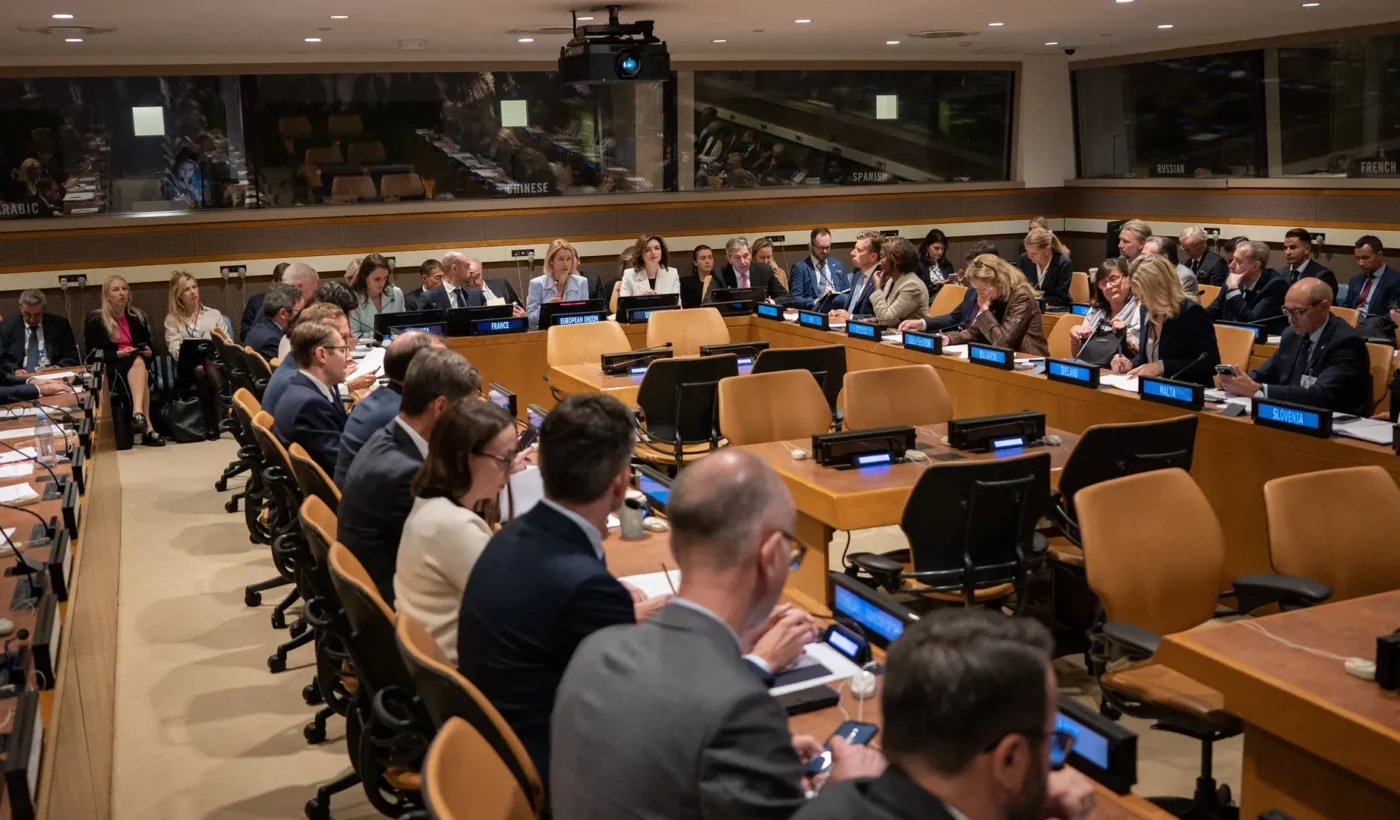
The European Union called for a new Black Sea grain arrangement and a moratorium on attacks affecting the route at a United Nations meeting in New York on September 22. The proposal links Ukraine’s export corridor to global food security as hostilities threaten commercial shipping.
EU foreign policy chief Kaja Kallas co-hosted the discussion with Ukraine, France and Romania. In remarks published by the EU delegation to Ukraine on September 23, she said diplomatic efforts should secure civilian vessels, protect critical infrastructure and reopen a trade route on which agricultural markets depend. The call is for an arrangement and a pause in attacks, not an agreement already reached.
Kallas said shipments through the Black Sea had effectively stalled since August because of escalating Russian attacks, which she said made commercial operations unviable. That assessment was the EU’s account of the disruption; the meeting did not announce that Russia had accepted a moratorium. The EU also cited conflict in the Gulf and climate effects as additional pressures on food production and supply chains.
Ukraine is a major agricultural exporter, and maritime access remains central to its trade. In the EU figures presented by Kallas, Ukrainian products account for 15% of global maize exports, 10% of wheat exports, 15–20% of barley and 50% of sunflower oil. She said about 90% of those goods move through the Black Sea corridor. Those figures describe the EU’s stated export estimates and should not be read as a measure of shipments currently moving.
The gathering revisited the Black Sea Grain Initiative, which operated in 2022 and 2023. Kallas said it helped avert a wider food-security crisis and welcomed participation by the UN Office for the Coordination of Humanitarian Affairs, the UN Office for Project Services and the World Food Programme in a discussion of what could be done now. A new mechanism would require further diplomacy and arrangements for safe passage; no such mechanism was announced at the meeting.
The EU has also relied on overland Solidarity Lanes since May 2022. Kallas said those routes had facilitated about €304 billion in trade. She described current EU work to find grain storage, support farmers and smaller agrifood businesses unable to sell produce, and ease border crossings for cargo. The broader trade figure covers commerce through the lanes, rather than grain alone.
At the UN event, the EU framed uninterrupted food exports as an issue for importing countries far beyond Europe. Kallas said the bloc mobilised €2.1 billion for food security globally in 2025, spanning immediate relief and longer-term resilience. Her immediate diplomatic request focused on civilian shipping and infrastructure in the Black Sea.
Kallas said Ukraine had called for a full and unconditional ceasefire since March 2025 and was ready to work on a specific diplomatic solution for the sea route. She urged the international community to encourage safe passage and a halt to attacks, while the status of any proposed Black Sea arrangement remains subject to negotiations.