Europe
EU-UK summit: joint statement commits to deeper cooperation on Ukraine, maritime security and hybrid threats
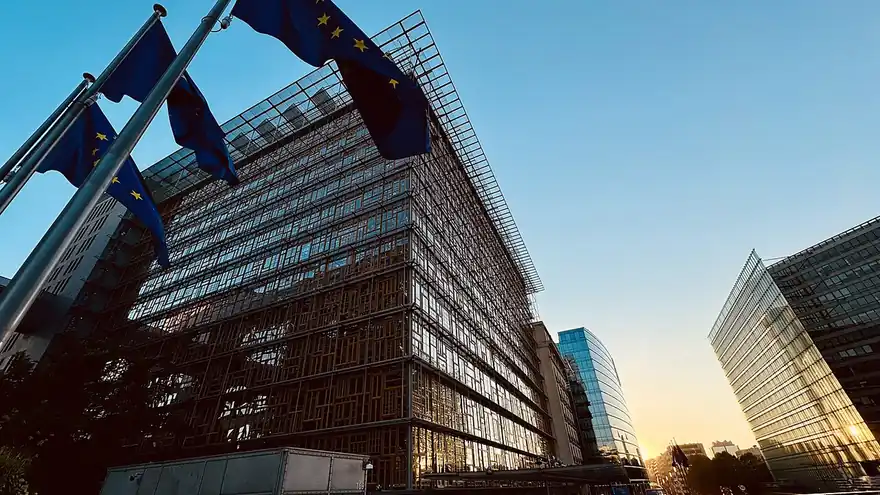
After their second summit in Brussels on 20 November 2026, the EU and the UK published a joint statement on Ukraine, maritime security, hybrid threats, Iran and Gaza, and the Sovereign Base Areas in Cyprus.

The European Union and the United Kingdom have agreed a new shared ambition on foreign policy, security and defence at their second summit, held in Brussels on 20 November 2026. The leaders’ joint statement, published by the UK government, commits both sides to stronger support for Ukraine, closer coordination on hybrid threats, maritime security and freedom of navigation, and regular consultations on Russia, the Western Balkans and the Middle East.
The statement also records the conclusion of negotiations on a Youth Experience Scheme and on linking the two emissions trading systems, covered in our report UK sets out its UK-EU summit package: youth scheme, food trade deal and emissions link, with red lines intact. This article looks at what the leaders agreed on the international and security side.
Ukraine and Russia
The leaders reaffirmed “unwavering support” for Ukraine’s independence, sovereignty and territorial integrity within its internationally recognised borders, and called on Russia to agree a full, immediate and unconditional ceasefire. They said the path to peace in Ukraine cannot be decided without Ukraine, and that any settlement should rest on “robust and credible security guarantees”. “Ukraine’s security is Europe’s security,” the statement says.
The text welcomes the UK’s participation in the EU’s Ukraine Support Loan and says the EU training mission EUMAM Ukraine and the UK will keep coordinating with the Coalition of the Willing, which is co-led by the UK, France and Germany, including on the Multinational Force Ukraine. Geopolitiki has reported separately on UK to gift Ukraine more than 1,000 long-range strike drones in a £260 million package.
Maritime security, hybrid threats and defence
Citing the UN Convention on the Law of the Sea, the two sides said they will deepen cooperation on maritime security, including joint naval activities and work against Russia’s shadow fleet, with more information sharing and coordination on enforcement and on countering sanctions circumvention. They also adopted the “No Tolls/No Fees” pledge on lawful navigation and committed to strengthen the protection of critical maritime infrastructure.
The EU and UK agreed enhanced cooperation on hybrid and cyber threats, welcomed the conclusion of negotiations on a framework agreement for UK participation in EU civilian CSDP missions, and noted progress on UK participation in the PESCO military mobility and logistic hubs projects. They intend to exchange more on defence industrial issues and capability development, and to hold a first Indo-Pacific strategic consultation.
Middle East and the Gulf
On Iran, the leaders condemned attacks on countries in the region and on shipping in the Strait of Hormuz and called for a diplomatic solution that restores freedom of navigation and transit passage. They said Iran “must never acquire a nuclear weapon” and must cooperate fully with the IAEA. On Gaza they called for unimpeded humanitarian access and urged Israel to withdraw its tender for construction in the E1 area. They also condemned the Houthi escalation in Yemen and attacks on shipping in the Red Sea.
Cyprus and the Mediterranean
For Cyprus, the statement says the two sides “will finalise the work to implement the Protocol relating to the Sovereign Base Areas in Cyprus in all its parts”. It also welcomes the UK’s participation in the Khartoum and Rabat processes, which is meant to deepen cooperation with countries of origin and transit along the Eastern, Central and Western Mediterranean and Atlantic routes. The leaders added that they are engaging on the wider Eastern European neighbourhood, including the Black Sea, and reaffirmed their commitment to the stability of the Western Balkans.
Other agreements
Beyond foreign policy, the leaders noted a decision on full reciprocal access to waters to fish until 30 June 2038, and agreed to open negotiations on tuition fees, to be concluded within six months. The Youth Experience Scheme would allow 100,000 young people from each side to live in the other’s territory for up to three years, with the aim of applying the agreement no later than 2028. The statement also welcomes the signature of an arrangement enabling UK participation in EU Election Observation Missions.