Middle East & North Africa
Iraqi forces enter Jurf al-Nasr, stronghold of the Kataib Hezbollah militia
Iraqi security forces entered Jurf al-Nasr, south of Baghdad, after a compromise with Kataib Hezbollah. Prime Minister al-Zaidi said no weapons would remain outside state control.

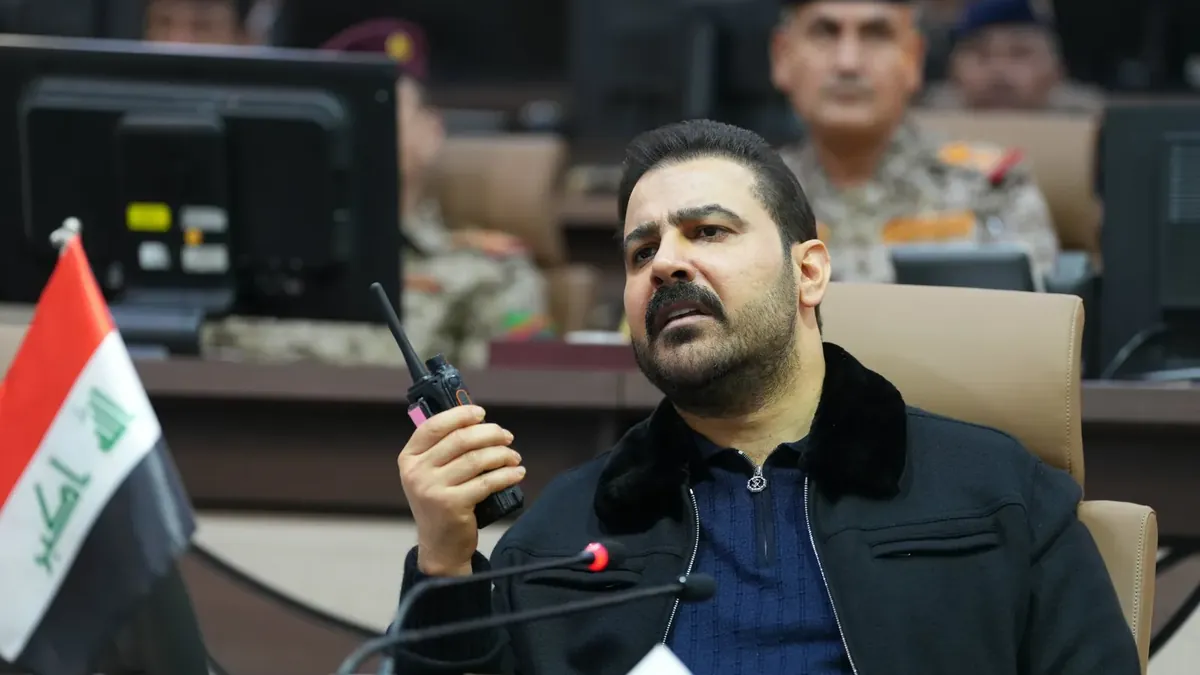
Iraqi security forces entered Jurf al-Nasr, also known as Jurf al-Sakhar, on Friday, November 20, the stronghold of the pro-Iranian Kataib Hezbollah militia south of Baghdad. Prime Minister and Commander-in-Chief Ali Falih al-Zaidi addressed the units that moved into the area, calling for “restraint and prudence”. “We are not fighting a battle,” he stressed. “Everyone there is your brother. There is no enemy among you and no adversary facing you. They are children of this homeland and their blood is our blood.”
Al-Zaidi said this phase has a spirit of “integration, not exclusion” and that everyone will join the armed forces “under one flag, one command and one law”. His decision, however, is unchanged: “No weapon outside the authority of the state, no weapon except the weapon of Iraq, no decision except the decision of Iraq and no flag above the flag of Iraq.” From Jurf al-Nasr, he added, the imposition of state authority across Iraqi territory begins, to confront “any corruption or uncontrolled weapon” in the country.
The operation and the compromise
The operation rests on a decree of Thursday, November 19, establishing a Control Command at Jurf al-Nasr under the Federal Police Command, headed by Lt. Gen. Ahmed Hatem Hamid, with two deputies, one for defence and one for the Popular Mobilization Forces (PMF, Hashd al-Shaabi). Under his command are one Iraqi Army brigade, one Federal Police brigade, two PMF brigades and one Energy Police regiment to protect the pipelines. The command has operated since 06:00 on Friday. Tanks and armoured vehicles entered the area, The National reports.
The government had announced on Monday, November 16, that it would take control of the area after an investigation raised suspicions that the group had stolen Iraqi oil worth hundreds of millions of dollars through illegal refineries. Nine senior security and oil-sector officials were removed. Kataib Hezbollah denied the accusations and had threatened to confront government forces. The crisis was defused by a compromise on Thursday evening, after a visit to Iraq by Esmail Qaani, commander of the Quds Force of Iran’s Revolutionary Guards, who met group officials, the PMF chief and a representative of the Badr Organization, according to Al Jazeera. Under the deal, Kataib Hezbollah members are expected to leave within a month for other parts of the country.
Why it matters
Jurf al-Nasr lies in Babylon province, about 60 kilometres south-west of Baghdad. Kataib Hezbollah took part in retaking it from the Islamic State in 2014, and since then the area, with a mainly Sunni population, has remained closed to the government and to most former residents. “If implemented as planned, it will dismantle the last Kataib Hezbollah stronghold since the war against ISIS,” Lahib Higel of the Crisis Group told The National, adding that it remains open whether the group will keep exerting influence through the PMF brigades that will control parts of the area.
Baghdad’s move is attributed to pressure from the United States and its Gulf allies to curb Iranian influence in Iraq, while the war of the US and Israel against Iran continues. Kataib Hezbollah, one of the country’s most powerful armed groups, is on US terrorist lists and has been linked to attacks in the Iraqi Kurdistan Region, including the drone strike on the Khor Mor gas field.