Politics & Diplomacy
Lithuania backs lifting nuclear weapons and foreign bases ban in first vote; Kremlin warns of escalation
Lithuania’s Seimas passed the first vote to remove its ban on nuclear weapons and foreign bases. A second vote is required, while Moscow warns of escalation.

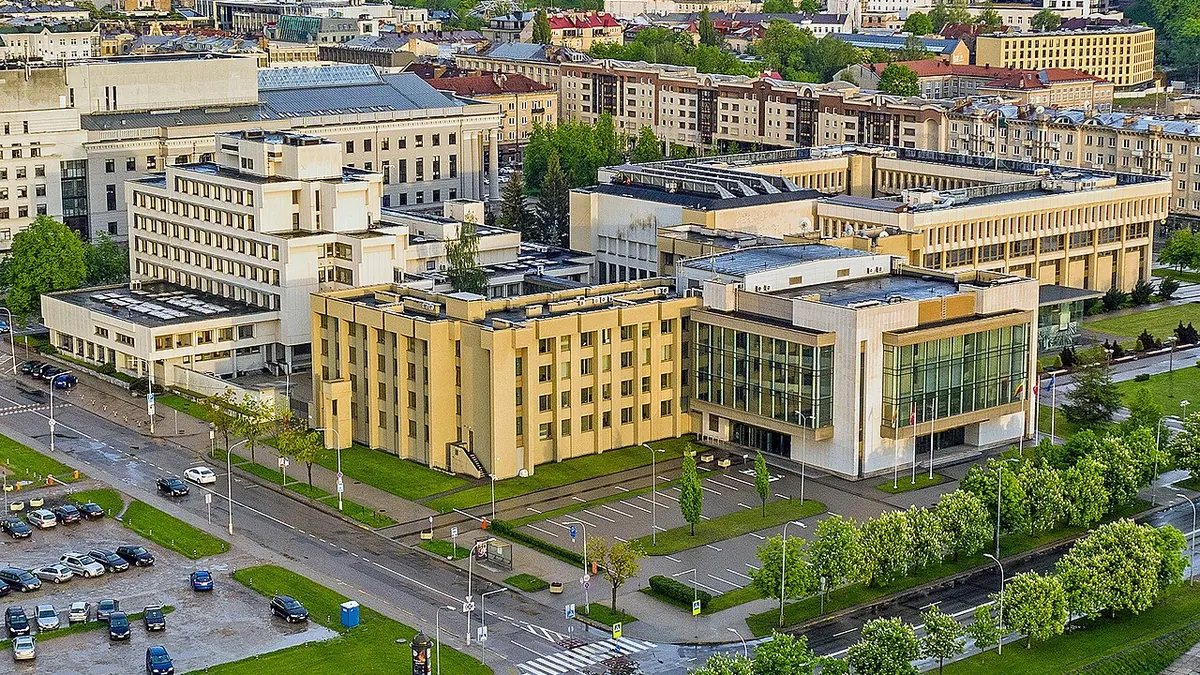
Lithuania’s parliament approved the first vote on a constitutional amendment to remove the ban on weapons of mass destruction and foreign military bases on October 6. The proposal passed the Seimas with 106 votes in favour, 18 against and six abstentions. If approved in a second vote, it would remove the constitutional obstacle to hosting allied nuclear weapons in the NATO member, which borders Russia’s Kaliningrad exclave and Belarus.
The Kremlin warned the same day that such a development would represent a further escalation of tensions in Europe.
What Article 137 prohibits
Article 137 of Lithuania’s Constitution prohibits weapons of mass destruction and foreign military bases on the country’s territory. The restriction was adopted more than three decades ago, after Lithuania left the Soviet Union. The amendment would delete the provision in its entirety. It does not authorise a particular nuclear deployment; it removes the constitutional barrier to a future decision.
The process remains unfinished. Constitutional amendments require two votes, each supported by at least two-thirds of parliament: 94 of its 141 members. At least three months must separate the ballots. Seimas Speaker Juozas Olekas has said the final vote is planned for January 12, 2027.
Supporters’ arguments and opposition
Before the vote, Olekas argued that removing the ban would strengthen Lithuania’s resilience and deterrence and eliminate a legal exception distinguishing it from other European Union and NATO members.
Part of the opposition also supported the amendment. Conservative leader Laurynas Kasčiūnas said neighbouring countries had no comparable restriction and that the existing provision prevented allies from fully incorporating Lithuania into NATO’s nuclear deterrence planning. “With the current restriction, we cannot fully participate in NATO’s nuclear deterrence plans,” he said.
Defence Minister Robertas Kaunas presented the change as a response to Moscow, pointing to strategic weapons in Kaliningrad and Belarus. “We are responding to Russia’s aggression,” he said, adding that without Russia’s war in Ukraine, this debate probably would not be taking place.
Most opposing votes came from Nemunas Dawn: 14 of its lawmakers voted against and two abstained. Its MP Aidas Gedvilas questioned parliament’s authority to make such a fundamental change and called for a referendum. Three members of the mixed parliamentary group and one from the Farmers and Greens Union and Christian Families Alliance also voted against.
The Kremlin’s response
Kremlin spokesman Dmitry Peskov, asked about the vote and a possible U.S. base in Lithuania, said bringing American military infrastructure closer to Russia’s borders could only be seen as escalation. He said the same applied to nuclear weapons stationed in a neighbouring country and that neither development would promote stability or predictability in Europe.
In early September, Peskov had warned that Lithuania could become a Russian target if it allowed allies to station nuclear weapons there. Later that month, Moscow issued a nuclear warning to NATO over Kaliningrad.
Lithuania’s request for a permanent U.S. base
The vote coincided with discussion of a permanent American military presence, also covered by Article 137’s ban on foreign bases. Responding to Lithuania’s invitation on October 5, U.S. President Donald Trump said: “We will certainly look at it.”
Prime Minister Mindaugas Sinkevičius wrote on Facebook on October 6 that Lithuania was ready to cover the costs if Washington made the political decision to station troops permanently. He called the American presence a critical deterrent and security guarantee. Sinkevičius said he had proposed making the deployment permanent when he met Trump envoy John Coale in Vilnius in September. Kaunas said he had raised it with Pentagon policy chief Elbridge Colby in Washington later that month.
The United States has maintained an armoured battalion of nearly 1,000 troops in Lithuania since 2019 through successive rotations. The request comes after Pentagon chief Pete Hegseth said some American capabilities in Europe would return to the United States or move to a different posture in the Western Hemisphere.
The wider European debate
In March, French President Emmanuel Macron proposed a European nuclear deterrence framework allowing partners to temporarily host French nuclear-capable strategic air forces. In June, the Financial Times reported that Washington was considering nuclear deployments in additional European NATO countries.
Lithuania already hosts a multinational NATO force, while a German brigade is being permanently established there. In early October, NATO aircraft scrambled after a suspected drone alert from Belarus.
The next step is the second and final Seimas vote, which cannot be held until at least three months after the first.