Politics & Diplomacy
Oleshky: Ukraine’s General Staff accuses Russia of reinforcing its positions during the ceasefire, while Lubinets speaks of demining
Ukraine’s General Staff said Russia used the humanitarian ceasefire in Oleshky to strengthen its positions. Ombudsman Dmytro Lubinets said vehicles in a video seen by Sky News were used for demining under Ukrainian supervision.

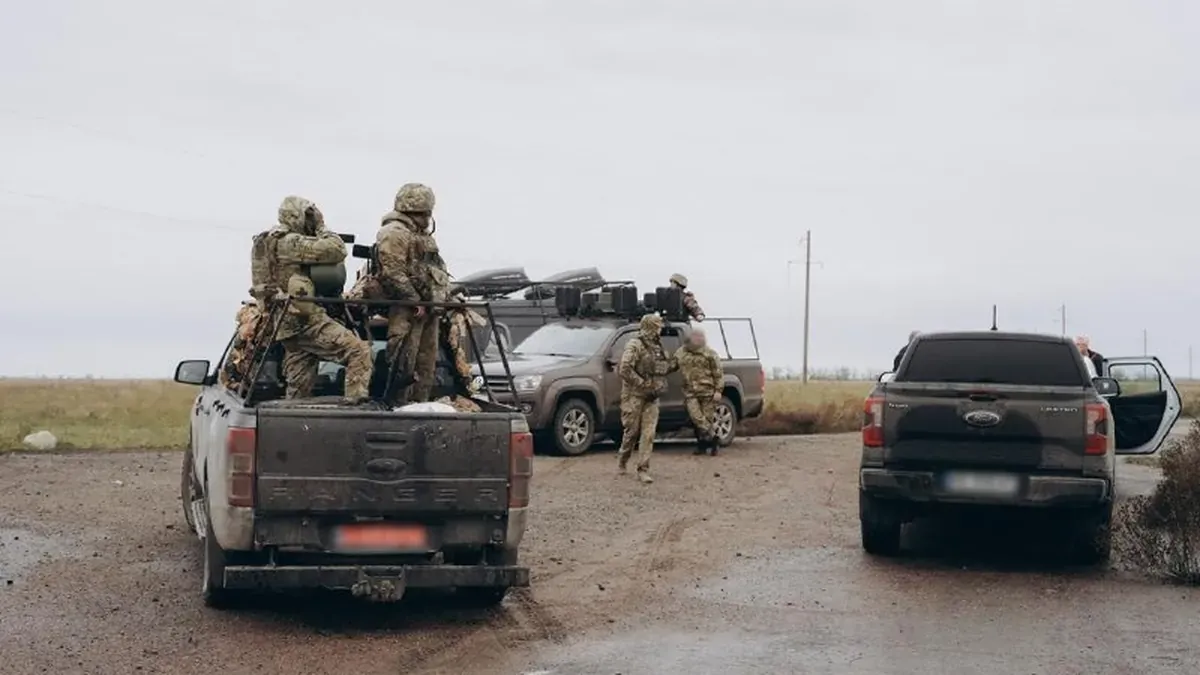
The General Staff of Ukraine’s Armed Forces accused Russia of exploiting the humanitarian ceasefire in Oleshky, in the Kherson region, to strengthen its positions. In its announcement on Monday, November 2, a day after the ceasefire ended, it said that during it, it recorded rotation of Russian units, fortification of positions, expansion of anti-drone protection along roads and increased supply traffic, including the transport of ammunition.
“In the framework of the ceasefire for the humanitarian operation in Oleshky, the units of Ukraine’s Defence Forces observed the ceasefire and moved exclusively within the limits of the agreements,” the General Staff said. “The enemy, by contrast, used the humanitarian pause to improve its positions,” it added. The 34th Separate Marine Brigade “Boryspil” urged residents of the Kherson region not to ignore sirens, saying Russia “used the ceasefire to prepare and strengthen its capabilities” and that there are grounds to expect an intensification of fighting.
Lubinets offers a different explanation for the video
Britain’s Sky News broadcast footage from Ukrainian drones of Russian armoured vehicles and supply vehicles moving during the ceasefire. Ukraine’s Human Rights Commissioner Dmytro Lubinets said at a press conference on November 2 that the vehicles in the video carried red crosses and were used for demining. “This military equipment was used for demining under the strict supervision of the Ukrainian side. After the demining it returned to where it had been,” he explained. “I will not try to make assessments. I am speaking about what happened under my own control. The video can be interpreted in different ways,” he noted.
Mr Lubinets recalled that the agreement banned both sides from bringing in or moving military equipment, and that it had initially been agreed to check compliance every two hours, with periodic publication of the results. On Sunday, November 1, he had written that the two sides “kept the obligations they took on throughout the period”. Neither Ukraine nor Russia reported violations while the ceasefire was in force.
The largest local pause since 2022
The ceasefire, brokered with the mediation of US First Lady Melania Trump and with the participation of Pope Leo, was in force from 03:00 on October 27 until 23:00 on November 1 and was the largest local pause in fighting since the start of the Russian invasion in 2022. Melania Trump wrote on November 2 that nearly 800 people were removed. For how the operation went, see our reports on the residents who reached Ukraine and on the evacuation of 167 civilians from the Kherson right bank.
Attacks continued after the ceasefire ended. Yaroslav Shanko, head of the Kherson city military administration, reported a drone strike in the centre of the city on Monday, with no casualties. Regional governor Oleksandr Prokudin wrote that within 24 hours, up to 04:00 GMT on Monday, Russian forces hit 16 settlements in the Ukrainian-controlled parts of the region with artillery, drones and aircraft, among them the regional capital.