Europe
Russia tells Estonia its actions are “on the verge of open war” as Tallinn closes the border
Moscow summoned Estonia's chargé d'affaires with a “strong protest” over the closure of the land border and the arson attempt Tallinn blames on Russian military intelligence. Estonia's prime minister says the closure is effectively indefinite.

Russia’s foreign ministry on Monday, November 23, summoned Estonia’s chargé d’affaires in Moscow and handed him a “strong protest” over Tallinn’s decision to close the land border with Russia. Moscow accused the Estonian government of “hostile actions” which, the Estonian diplomat was told, are “on the verge of provoking open war with Russia”.
Two issues were at the centre of the protest: the closure of the border, and Estonia’s accusation that Russia’s military intelligence service (GRU) was behind an arson attempt on November 14 at the premises of the Estonian drone company Threod Systems in Viimsi, near Tallinn. Estonia’s Internal Security Service (KaPo) attributes the act to a GRU order, and eight residents of Latvia have been arrested in the case. Moscow called the accusation baseless and without evidence.
The Russian side repeated its claim that Estonia tacitly allows Ukrainian drones to use its airspace for attacks on north-western Russia and that such flights have been recorded more than once. It also accused Tallinn of actively supporting Kyiv, of trying to inspect, seize and immobilise Russian cargo ships, which Moscow presents as a naval blockade, and of banning the transit of Russian and Belarusian grain in October. According to the Russian ministry, the closure of the border “will inevitably turn” against Tallinn and its allies in the EU and NATO, and Russia “reserves the right” to take political and diplomatic measures.
Estonia’s foreign ministry rejected the drone claim. “Estonia has never allowed and will never allow its territory to be used for the military operations of another country,” it said, adding that as a rule it does not comment on “Russian propaganda narratives”.
A closure without an end date
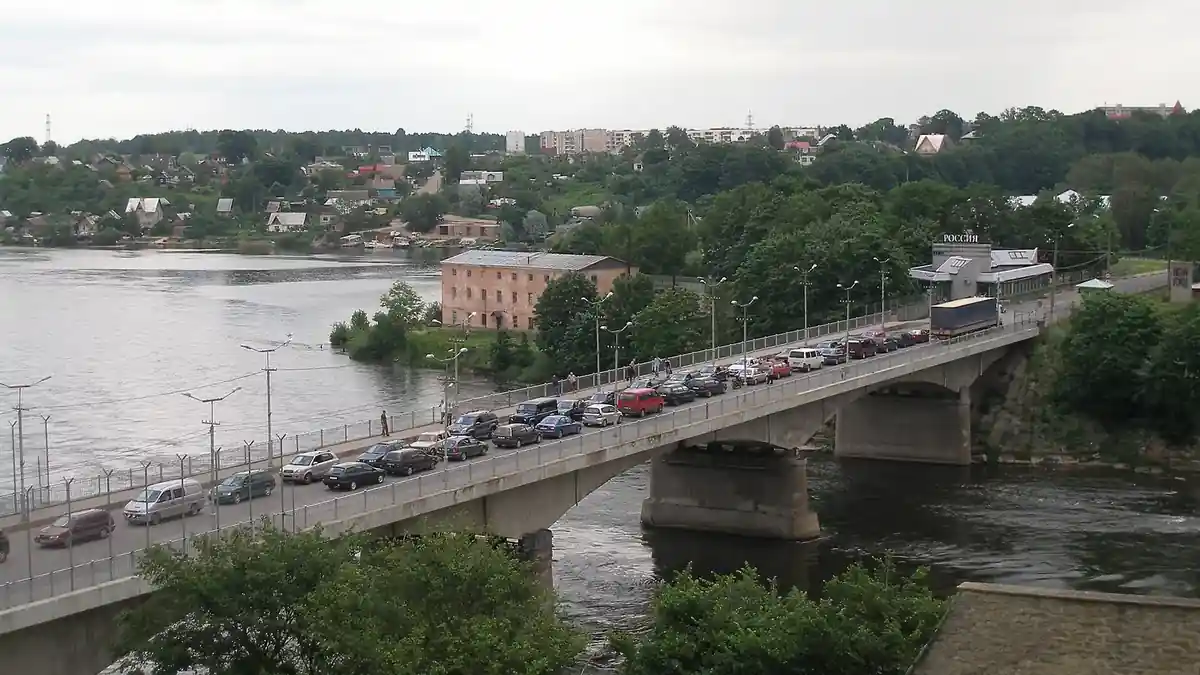
The Estonian government decided on November 20 to close all road crossing points, Narva-1, Narva-2, Koidula, Luhamaa and Saatse, to pedestrians and vehicles from 07:00 on December 1, for six months with a review afterwards. Rail freight continues under existing restrictions and strict customs control.
On Tuesday, November 24, Prime Minister Kristen Michal said that in practice the closure has no end date. “The official name is a temporary closure of the border, but in essence it is an indefinite closure,” he said. He added that the decision would withstand any court challenge, that Estonia has been the target of twelve incidents attributed to Russia, and that closing the Narva rail crossing too could be the next step if necessary. Tension in the Baltic is also rising at sea, after the drone attack on a Russian cargo ship in the Gulf of Finland.