Asia-Pacific
UK formally recognises genocide against the Rohingya and sanctions five Myanmar generals after ICJ ruling
Days after the ICJ judgment, the UK said it formally recognises the genocide against the Rohingya, sanctioned five senior military officers and announced plans to target aviation fuel supplies to Myanmar.

The United Kingdom said on 23 November that it formally recognises the genocide committed against the Rohingya, following the judgment of the International Court of Justice, and announced a package of measures against Myanmar’s military. The UK government said the Foreign Secretary, Ed Miliband, set out the measures in a statement to the House of Commons.
Five officers sanctioned
According to the UK government, the new sanctions target five senior Myanmar military officers and impose asset freezes, travel bans and director disqualifications. The notes to the announcement describe the grounds in each case:
- Brigadier General Myo Htut Hlaing, deputy commander of the Northwestern Regional Command, over what the UK describes as reasonable grounds to suspect responsibility for the treatment of prisoners detained in Chin State;
- Major General Myo Min Tun, Eastern Military Commander, over suspected involvement in repression of the civilian population;
- Major General Myat Thet Oo, a former commander of Northern Command who later served as ambassador to Laos, over senior roles that the UK says enabled repression of civilians;
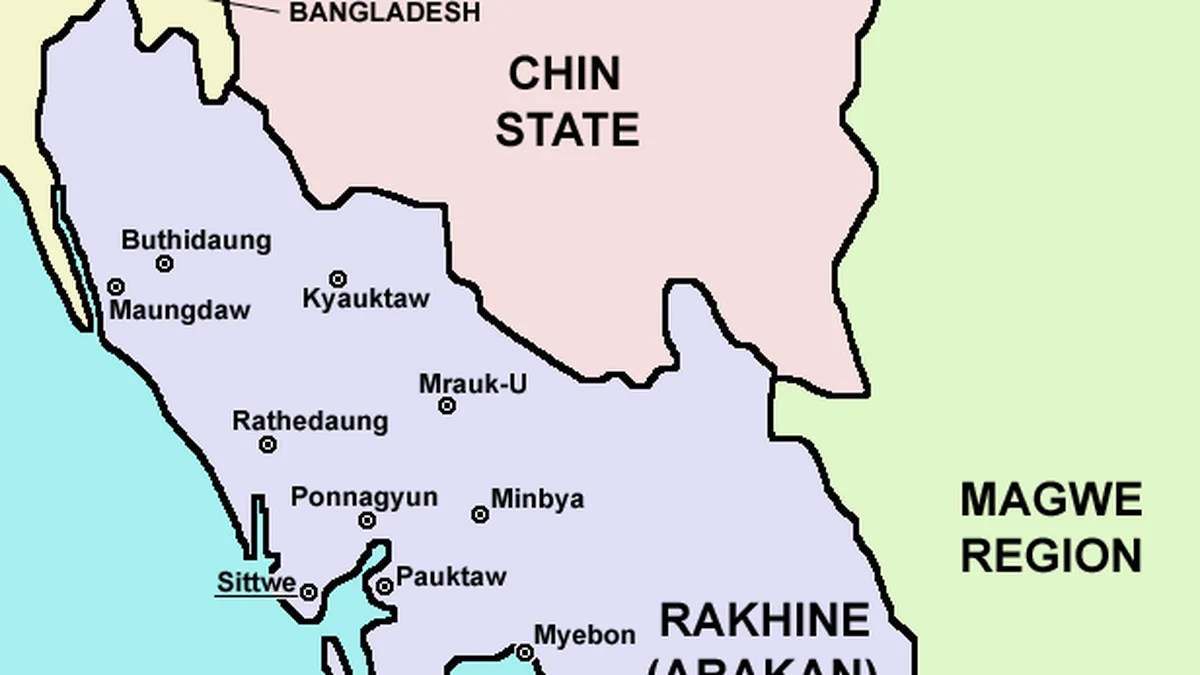
- Major General Kyaw Soe, appointed commander of the Western Command, which covers Rakhine, in June 2026, over what the UK calls principally airstrikes on populated civilian locations and medical infrastructure;
- Major General Kyaw Swar Oo, his predecessor, over the airstrike on Mrauk-U General Hospital, in which the UK says 33 civilians were killed.
The UK says it has now imposed 19 rounds of sanctions since the 2021 military coup, designating 42 individuals and 39 entities.
Aviation fuel and aid
The government said it intends to introduce legislation targeting the export and supply of aviation fuel to Myanmar, as part of efforts to address the military’s continued airstrikes against civilians. No timetable is given in the announcement.
It also announced £5 million in additional humanitarian funding for services to about 350,000 people in Rakhine State, and a further £3 million to strengthen accountability and justice for survivors, including collecting and preserving evidence. The UK said it is doubling its support for the UN’s Independent Investigative Mechanism for Myanmar (IIMM), which it says has provided critical evidence supporting the ICJ’s judgment.
Diplomacy at the UN
The UK says it has also summoned the Myanmar Chargé d’affaires and expelled the Myanmar Defence Attaché. On 23 November it led a joint statement with Belgium, Canada, Cyprus, the Czech Republic, Estonia, Iceland, Latvia, Luxembourg, New Zealand, Portugal, Spain and The Gambia. London said it has called an urgent session with UN Security Council members this week and has asked for a Security Council meeting in two weeks’ time on the situation in Myanmar, alongside engagement with ASEAN and the Organisation of Islamic Cooperation.
Mr Miliband said in the government’s statement: “There can be no impunity for these atrocities and the gravest violations of international law.”
Background
The UK says it now officially acknowledges six instances of genocide: the Holocaust, Myanmar, Rwanda, Srebrenica, and acts of genocide in Cambodia and against the Yazidi people. The Gambia brought the case against Myanmar in November 2019, alleging violations of the Genocide Convention in the treatment of the Rohingya. Geopolitiki reported on 19 November on the ICJ’s ruling and the UK’s expulsion of Myanmar’s Defence Attaché.
The figures and descriptions of the officers’ conduct above are the UK government’s own, set out as the grounds for its sanctions designations; they are not findings of a court.