Europe
UK tells IAEA Board that Russia’s attacks on Ukraine’s power grid threaten nuclear safety and demands withdrawal from Zaporizhzhia
In a statement to the IAEA Board of Governors, the UK cited Agency findings on damaged substations and 27 losses of off-site power at Zaporizhzhia, and called on Russia to withdraw from the plant.

The United Kingdom told the International Atomic Energy Agency (IAEA) Board of Governors that the nuclear safety situation in Ukraine is “a consequence of Russia’s illegal invasion of Ukraine and occupation of Zaporizhzhia nuclear power plant”, and called on Moscow to stop attacking Ukraine’s energy infrastructure and withdraw from the plant. The UK government published the text on 23 November; the page gives 19 November as the date of the speech. The delegate said it was a reply, in part, to what Russia had told the Board earlier that morning.
Three points on grid damage and winter risk
The British delegate structured the statement around three points. The first was that nuclear facilities depend on reliable off-site power for essential safety functions, and that Russia attacks that supply “relentlessly”. Citing the Agency’s own reporting, the UK listed three findings:
- 10 of the 18 critical substations the IAEA revisited in the reporting period had suffered new damage from air attacks;
- repeated attacks in September and October reversed months of restoration work;
- substations supporting the Khmelnytskyy and Rivne nuclear power plants were targeted 12 times in two weeks.
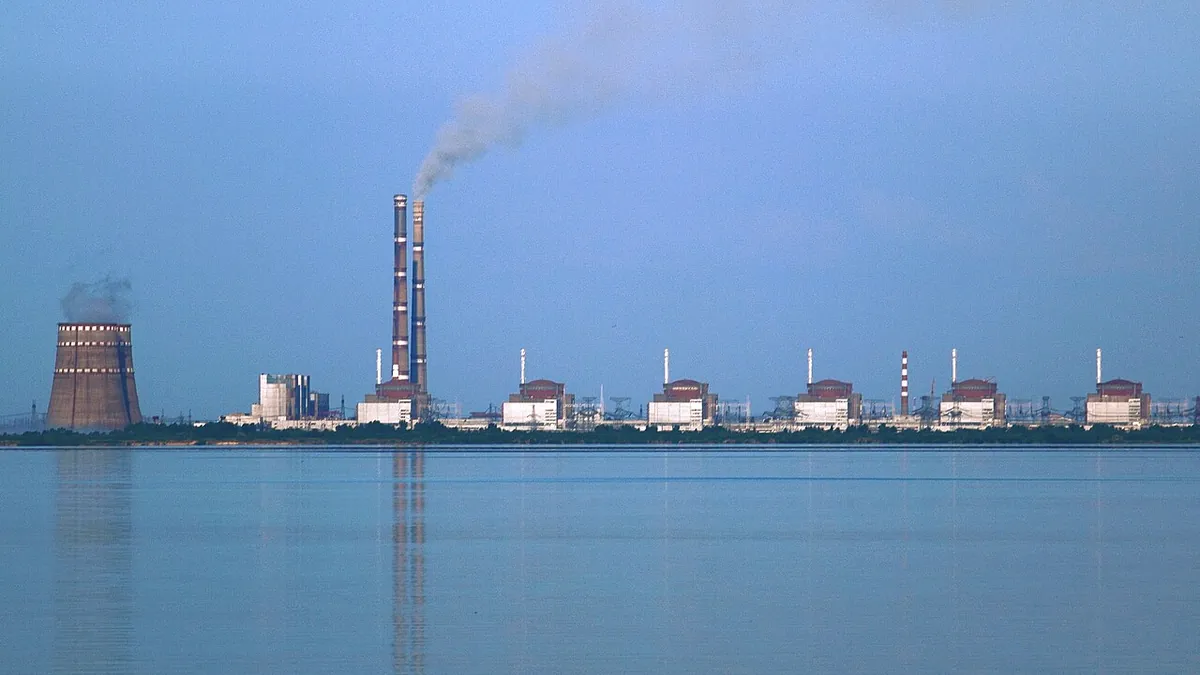
The statement said Ukraine’s grid has “little resilience left”. It said the Zaporizhzhia plant shows where this leads: 27 complete losses of off-site power and significantly depleted diesel reserves, leaving the plant in a perilous state. It also recalled that a transformer repaired after an Agency-brokered ceasefire was destroyed by a drone strike weeks later. Geopolitiki has followed that sequence: see our reports on the IAEA brokers eighth local ceasefire at Zaporizhzhia plant to repair backup transformer, as Grossi warns diesel is running low and on Zaporizhzhia nuclear plant without external power again – diesel generators running, fuel for about two weeks.
The second point was that Ukraine is entering winter with an increasingly precarious electricity grid, which the UK described as a direct and growing risk to nuclear safety. It referred to what it called a “deplorable statement” by Russia that it intends to “freeze” Ukrainians this winter.
London challenges Russia’s account
The UK pointed to what it described as a contradiction in Russia’s position. In September, it said, Russia told the Board that the plant’s power situation was “extremely tense” while objecting to the Agency examining the grid that supplies it. Russia had also told the IAEA General Conference that nuclear safety and security must be an absolute priority “regardless of location”. The UK agreed with the principle but added that it “cannot mean only the locations that suit Russia”.
On the Russian ambassador’s description of incidents affecting personnel and contractors at the plant, the UK said any harm to nuclear personnel is deeply concerning and that their safety must be protected. It called the Russian account selective and noted that many incidents remain unverified by the Agency. London encouraged the Secretariat to state clearly what it has been able to verify independently and what it is reporting from other sources that it could not confirm. It added that if Russia is concerned for the welfare of nuclear personnel, that should extend to the Ukrainian personnel it detains under occupation.
The UK’s demand
In conclusion, the UK said a civil nuclear incident in Ukraine must be prevented and that the Agency has set out the risk clearly. “Russia must stop attacking Ukraine’s energy infrastructure,” the statement said, “and it must withdraw from ZNPP.” It also said that, as more countries look to nuclear power as part of their energy future, all states have a stake in ensuring confidence in nuclear energy is not undermined.
The statement is a national position delivered at the Board, not a Board decision. The figures on substations and power losses are those the UK attributed to the IAEA.