Politics & Diplomacy
Trump says he would welcome a united Ireland
The US president voiced support for Irish unity while visiting Ireland, but announced no new American policy or diplomatic initiative.

U.S. President Donald Trump said he would “love” to see a united Ireland, commenting on one of the most sensitive constitutional questions in relations among Ireland, Northern Ireland and the United Kingdom.
Trump made the remark during a visit to Ireland. He did not announce a new U.S. policy, a diplomatic initiative or a timetable for constitutional change.
The status of Northern Ireland is governed by the 1998 Good Friday Agreement and the principle of consent. Northern Ireland remains part of the United Kingdom unless a majority of voters there chooses otherwise in a referendum.
The agreement provides a mechanism for a border poll when the British government concludes that a majority is likely to support a united Ireland. Political parties disagree over whether or when that threshold will be reached.
Irish nationalists seek reunification, while unionists support remaining in the United Kingdom. Other voters may base their position on economic, social or governance questions rather than traditional political identity.
The United States played an important diplomatic role in the peace process and continues to support the Good Friday Agreement. American leaders have generally emphasized consent, stability and cooperation among the British and Irish governments.
Trump’s expression of preference therefore carries political attention but does not alter the legal framework. The decision belongs to voters through the procedures established by the agreement, not to an external government.
Any future referendum would involve detailed debate over public services, taxation, constitutional arrangements, identity protections and the institutions created by the peace settlement. No such vote was announced alongside Trump’s comments.
The remark may be welcomed by supporters of Irish unity and criticised by unionists who regard Northern Ireland’s position as a matter for its people. It should be reported as a personal statement by the U.S. president rather than evidence of an agreed change in British, Irish or American policy.
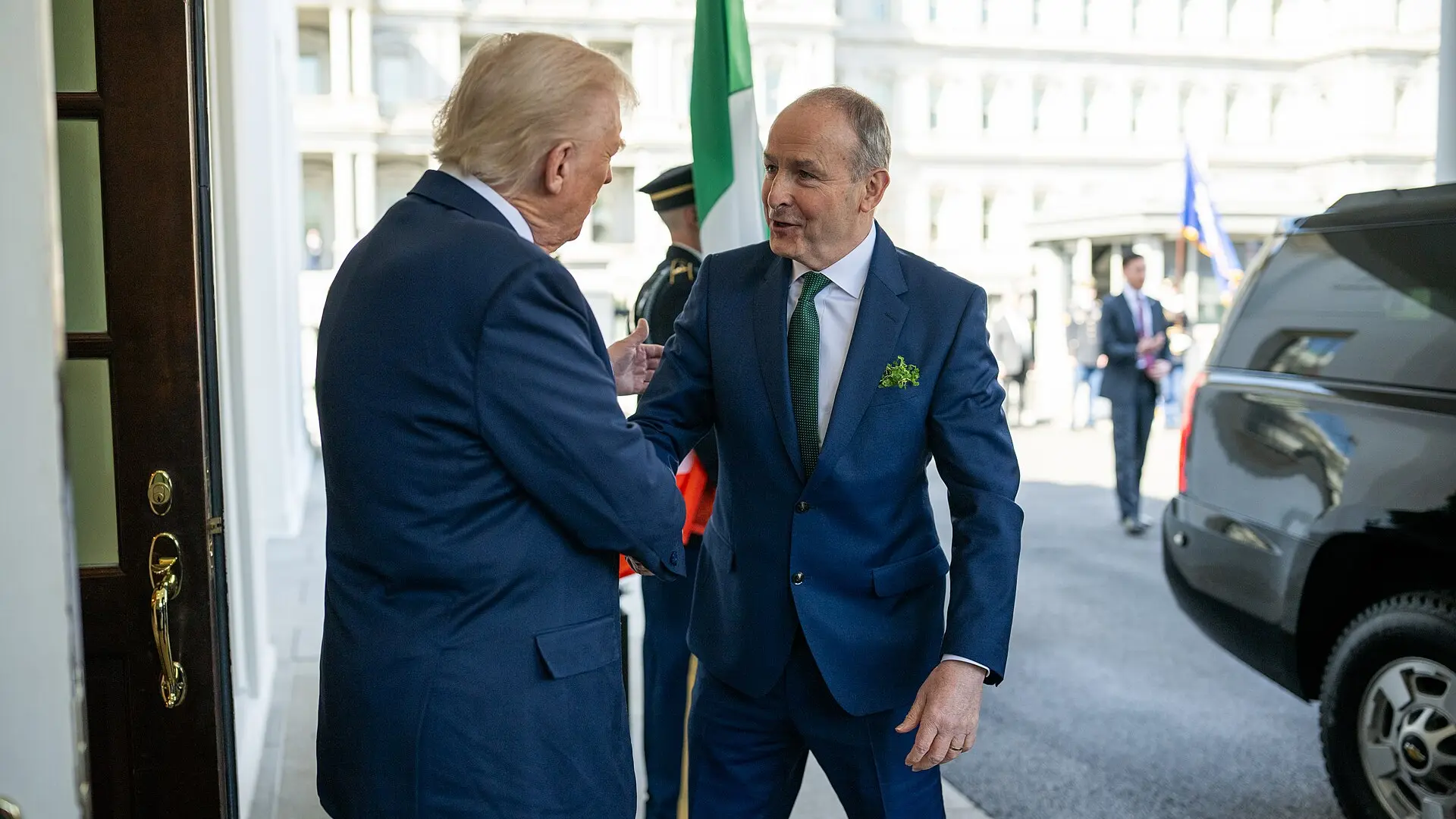
Trump made the remarks in Dublin after meeting Taoiseach Micheál Martin during a visit linked to the Irish Open. He said he believed unity would eventually happen and described it as a positive outcome, while acknowledging that the United Kingdom would have a role in the process.
The British prime minister’s office responded that the government’s position had not changed. It said a referendum would be called only when there appeared to be majority support for constitutional change in Northern Ireland. No new polling threshold, timetable or bilateral negotiation was announced in response to Trump’s comments.
Northern Ireland’s devolved institutions are built around power sharing between communities with different constitutional preferences. Any border poll would therefore take place within a wider peace agreement that also protects political participation, rights and cross-border cooperation regardless of the result.
Trump’s statement attracted attention because of the United States’ history as a supporter of the peace process, but the remarks were not accompanied by a White House policy document. The reported position therefore remained an expression of preference made during the visit.