Analysis
Strait of Hormuz explained: law, oil flows and who can pass
About a fifth of the world’s oil consumption passes through the Strait of Hormuz. What the numbers show and what UNCLOS says about transit passage.

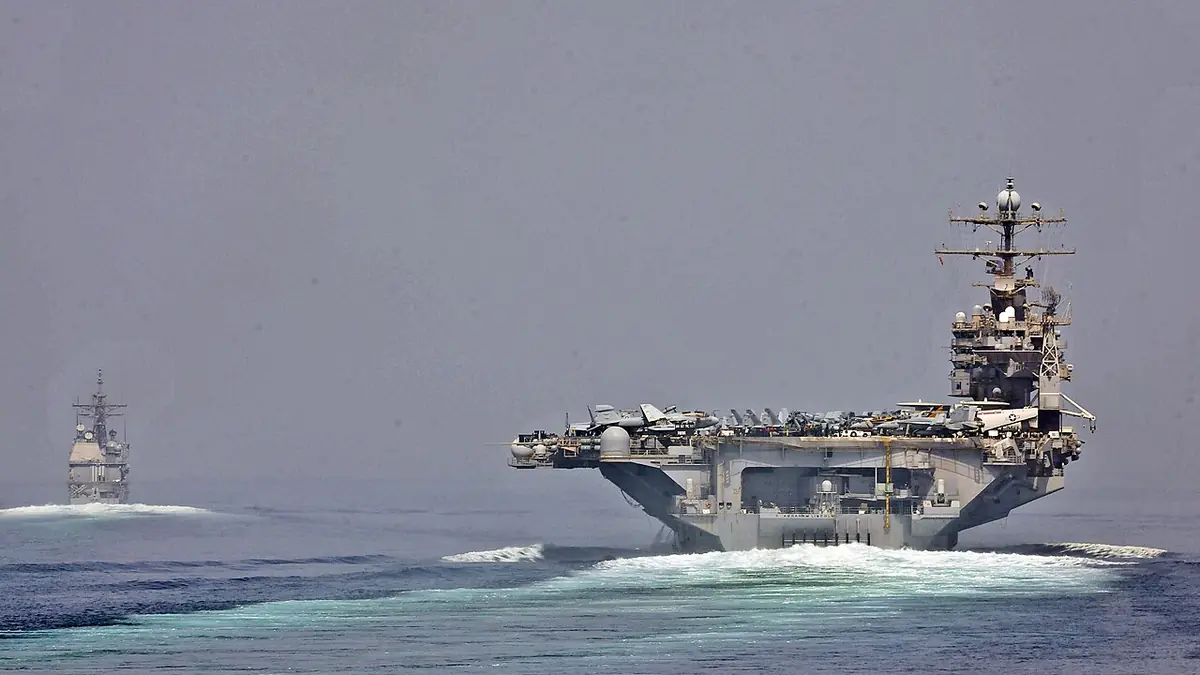
U.S. Navy ships transit the Strait of Hormuz, 11 May 2012 (archive photo). Photo: U.S. Navy, public domain
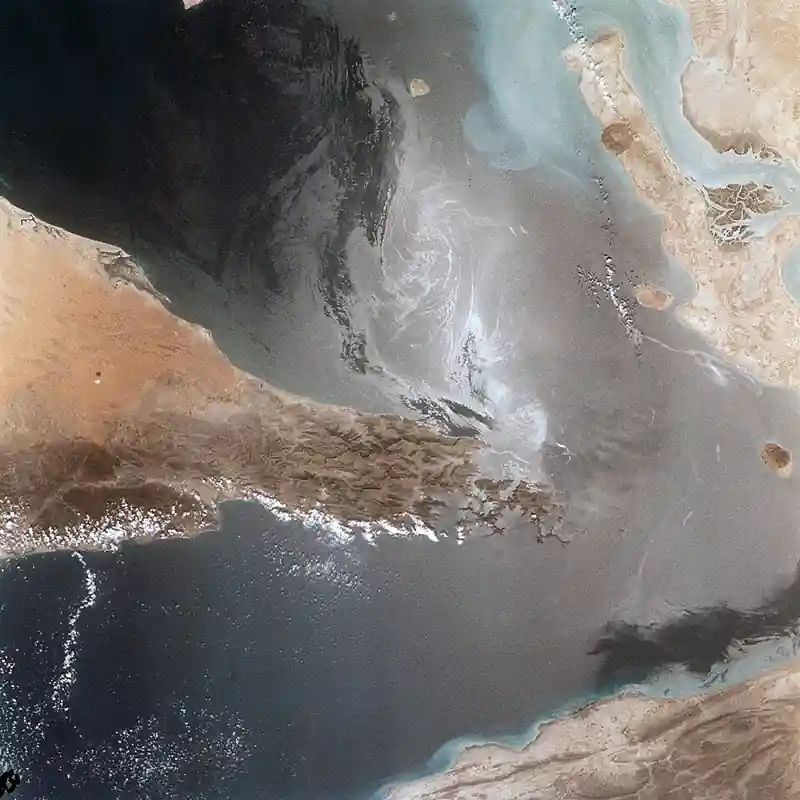
The Strait of Hormuz is the narrow waterway between Oman and Iran that links the Persian Gulf with the Gulf of Oman and the Arabian Sea. It matters for two reasons: roughly a fifth of the world’s oil consumption passes through it, and its legal status under the law of the sea decides who may sail through, and on what terms.
Key points
- The U.S. Energy Information Administration (EIA) puts total oil flows through the strait at 20.9 million barrels per day in the first half of 2025, about 20% of global petroleum liquids consumption and one-quarter of seaborne oil trade.
- Under Part III of the UN Convention on the Law of the Sea (UNCLOS), ships and aircraft of all states enjoy a right of transit passage in such straits, and Article 44 says “There shall be no suspension of transit passage.”
- Iran signed UNCLOS in 1982 but, in the UN’s status table, shows no ratification; on signing it declared that transit passage should benefit only states parties.
- Pipelines can bypass only part of the traffic: the EIA estimates about 4.7 million barrels per day of Saudi and Emirati bypass capacity.
Where is the Strait of Hormuz and why does it matter?
The EIA describes the strait as “deep enough and wide enough to handle the world’s largest crude oil tankers”. It places it between Oman and Iran, at the exit of the Persian Gulf, and ranks it with the Strait of Malacca as the world’s most important chokepoints by volume of oil transit. If it were closed, the EIA notes, the alternatives that exist could move only a portion of the oil.
Natural gas travels the same route. In the first half of 2025, 11.4 billion cubic feet per day of liquefied natural gas, over 20% of global LNG trade, passed through the strait, primarily from Qatar, according to the EIA.
| Year | Total oil flow (million barrels per day) | Crude and condensate | Petroleum products | LNG (billion cubic feet per day) |
|---|---|---|---|---|
| 2020 | 19.2 | 14.4 | 4.8 | 10.7 |
| 2021 | 19.7 | 14.7 | 5.1 | 10.8 |
| 2022 | 21.9 | 16.2 | 5.6 | 11.0 |
| 2023 | 21.8 | 15.8 | 6.0 | 10.6 |
| 2024 | 20.7 | 14.6 | 6.1 | 10.5 |
| First half of 2025 | 20.9 | 14.7 | 6.1 | 11.4 |
The same EIA analysis estimates that 89% of the crude oil and condensate that moved through the strait in the first half of 2025 went to Asian markets, with China, India, Japan and South Korea the top destinations at a combined 74%. The United States imported about 0.4 million barrels per day of crude oil and condensate from Persian Gulf countries through the strait in the same period, about 7% of its crude imports.
What are the bypass routes?
Saudi Aramco’s East-West crude oil pipeline and the United Arab Emirates’ Abu Dhabi pipeline together could provide about 4.7 million barrels per day of capacity to avoid the strait, in the EIA’s March 2026 chokepoints report. The UAE plans another 1.5 million barrels per day pipeline from Jebel Dhanna to Fujairah by 2027. Iran’s Goreh-Jask pipeline and Jask terminal on the Gulf of Oman have an effective capacity of around 0.3 million barrels per day. Against flows of about 20.9 million barrels per day, the bypass capacity covers only a fraction.
What does the law of the sea say about passage through Hormuz?
The relevant rules are in Part III of UNCLOS, “Straits used for international navigation” (UN text of Part III). Article 38 gives “all ships and aircraft” the right of transit passage in a strait connecting one part of the high seas or exclusive economic zone with another, and says it “shall not be impeded”. Transit passage means the freedom of navigation and overflight “solely for the purpose of continuous and expeditious transit”.
The convention balances that right with duties and with the powers of the coastal states:
- Duties of ships (Article 39): proceed without delay, refrain from any threat or use of force against the states bordering the strait, and comply with international safety and pollution rules.
- Survey ships (Article 40): foreign research and hydrographic survey ships may not carry out survey activities during transit without prior authorization of the bordering states.
- Bordering states (Article 41 and 42): they may designate sea lanes and traffic separation schemes, after referring them to the competent international organization, and adopt non-discriminatory laws on navigation safety, pollution, fishing and customs matters.
- No suspension (Article 44): bordering states “shall not hamper transit passage” and must publicize any danger to navigation they know of; “There shall be no suspension of transit passage.”
Article 34 adds that the regime does not otherwise change the legal status of the waters or the sovereignty of the bordering states, who exercise it “subject to this Part and to other rules of international law”. Where a strait is covered by long-standing conventions specifically relating to it, Article 35(c) leaves that regime in place; the Dardanelles and the Bosphorus are governed in that way, as Geopolitiki explains in Montreux Convention explained: who can pass the Bosphorus and the Dardanelles.
Territorial sea and innocent passage
Straits also contain territorial sea. Article 3 of UNCLOS lets every state set the breadth of its territorial sea up to 12 nautical miles (UN text of Part II). Where transit passage does not apply, innocent passage does, and Article 45 states that there is no suspension of innocent passage through such straits. In ordinary territorial waters, by contrast, Article 25(3) lets a coastal state suspend innocent passage temporarily in specified areas if essential for its security, after due publication.
Where Iran and Oman stand
The UN treaty status table (UN Treaty Collection, UNCLOS) lists Oman as having signed on 1 July 1983 and ratified on 17 August 1989. For Iran it shows a signature on 10 December 1982 and no ratification. The United States does not appear among the participants listed in that table.
Both states filed declarations on the record. Iran’s, made on signature, states its understanding that “only states parties to the Law of the Sea Convention shall be entitled to benefit from the contractual rights created therein”, naming “the right of Transit passage through straits used for international navigation (Part III, Section 2, article 38)” among them. It also says that warships may be required to obtain prior authorization to exercise innocent passage through the territorial sea.
Oman’s declaration on signature states its understanding that the application of Articles 19, 25, 34, 38 and 45 “does not preclude a coastal State from taking such appropriate measures as are necessary to protect its interest of peace and security.” On ratification Oman also declared a 12-nautical-mile territorial sea and said innocent passage is guaranteed to warships subject to prior permission.
These are declarations by the states concerned, quoted as filed. UNCLOS itself, in Article 44, rules out suspension of transit passage, and Article 39 obliges ships in transit to refrain from any threat or use of force against the bordering states.
Why shipping is vulnerable even without a closure
The strait’s importance means a disruption does not have to be a formal closure to matter. The EIA warns that the blockage of oil transit through a major chokepoint, even temporarily, can lead to supply delays and higher shipping costs and, with them, higher world energy prices. DW News looks at the shipping consequences in this explainer.
Why it matters for Greece and the wider debate on straits
Part III is the same legal framework that frames debate over every international strait, including the Dardanelles and the Bosphorus. Geopolitiki’s UNCLOS explained: sea zones, islands and the Aegean dispute sets out how the convention’s sea zones apply to Greece, a party to the convention.
For the latest reporting on the strait, see Iran says it will use “all available means” against the US naval blockade and Araghchi: the Strait of Hormuz can open within two hours, but the 60% uranium will not leave Iran.
Sources: U.S. Energy Information Administration, World Oil Transit Chokepoints (updated 3 March 2026); UN, UNCLOS Part III; UN, UNCLOS Part II; UN Treaty Collection, UNCLOS status and declarations.