Europe
Galileo Second Generation: ESA orders four more satellites, taking the new fleet to 16
ESA announced on October 27 that it has ordered four more Galileo Second Generation satellites from Thales Alenia Space and Airbus, bringing the new fleet to 16, with delivery planned for 2031.

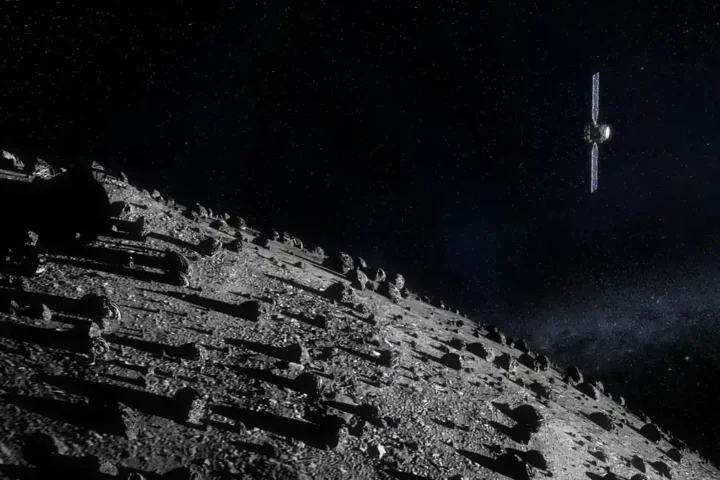
Europe is making sure it will not be left without its own satellite navigation system in the decades ahead. The European Space Agency (ESA) announced on Tuesday, October 27 that it has ordered four more Galileo Second Generation (G2) satellites. With them, the new-generation fleet reaches 16 satellites.
Galileo is Europe’s satellite navigation system, a network of satellites that lets any receiver, from a mobile phone to a ship, calculate its position and the precise time. ESA describes it as the most accurate navigation system in the world at present. It has served billions of users since 2016, when its Open Service went live. Every mobile phone sold on the single European market is guaranteed to support Galileo, and the system is also used in railways, shipping, agriculture, the timing of financial services and rescue operations.
The system is owned by the European Union. The programme is managed and funded by the European Commission under the EU Space Programme. ESA designs, develops and qualifies the space and ground segments. The EU Agency for the Space Programme (EUSPA) is the service provider: it manages the launches, puts the satellites into service and oversees their operation.
The new contracts were signed with the two companies already building the second generation. Thales Alenia Space (Italy) and Airbus Defence and Space (Germany) have each been responsible since 2021 for six G2 satellites, and two more are now added for each company. The signing with Thales Alenia Space took place on Friday, October 23 in Rome and with Airbus on Monday, October 26 in Ottobrunn, Germany. In Ottobrunn the signatories were ESA’s Director of Resilience, Navigation and Connectivity, Laurent Jaffart, and the head of the Galileo G2 programme, Markus Schelkle. ESA extended the contracts on behalf of EUSPA and for the benefit of the EU.
“With these contracts ESA and European industry secure the continuity of European satellite navigation services, meet the evolving needs of users and strengthen Europe’s strategic autonomy,” Jaffart said. “They are an investment in Europe’s ability to navigate its own future, independently and with confidence.”
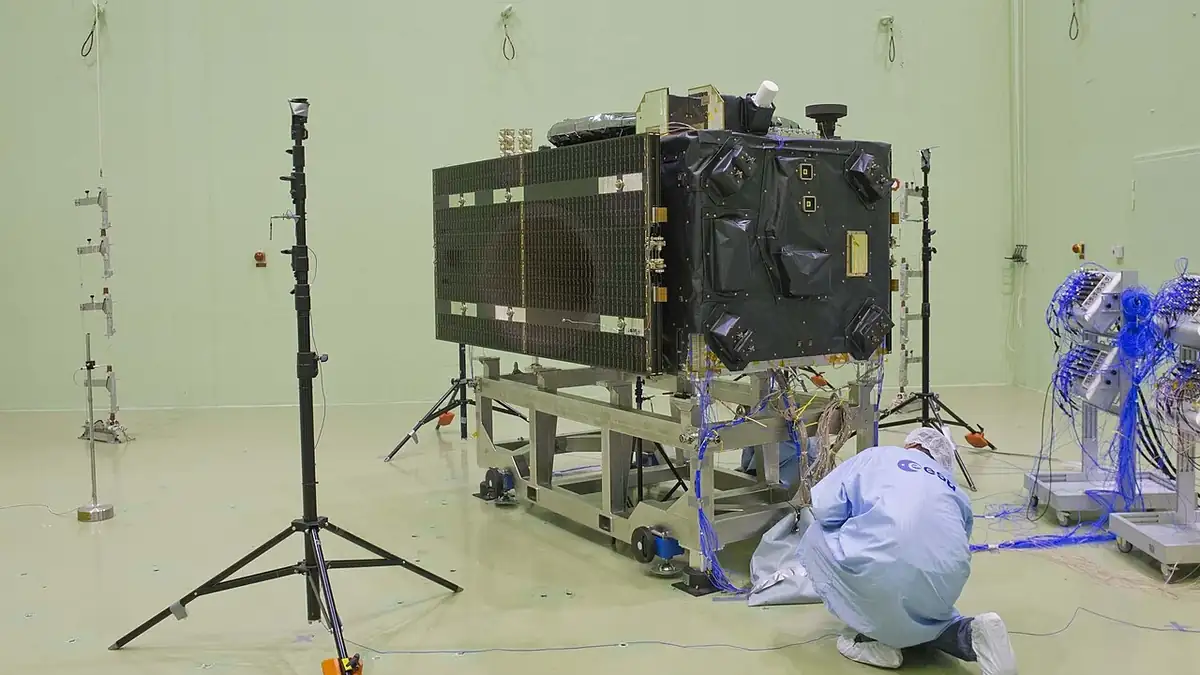
The four new satellites will be identical to those already under development. Delivery is scheduled for 2031, with launch following soon after. The first twelve G2 satellites are at an advanced stage, with development and qualification work nearing completion. Integration and compatibility tests with the ground segment, which began in September 2024 at Thales Alenia Space in Rome, are in full swing. In 2027 the first satellites will be integrated and flight-tested, so that the first G2 launch can take place in 2028.
The second generation brings significant technical upgrades. The G2 satellites carry fully digital navigation payloads, the equipment that generates and transmits the signals, and an improved navigation antenna. They also have inter-satellite links, an advanced atomic clock arrangement and electric propulsion. ESA expects all this to deliver more robust and reliable positioning, navigation and timing.
The new satellites will join the 38 of the first generation, of which all but four have already been launched. The two generations will work together seamlessly, which will support Galileo in the long term, increase its resilience and enable new services for users in Europe and around the world.
Thales Alenia Space chief executive Hervé Derrey called the programme a “cornerstone of Europe’s strategic autonomy”. Alain Fauré, head of Space Systems at Airbus Defence and Space, said the satellites are “vital for strengthening navigation capabilities for European security and defence and for wider societal benefits”.