Technology
NASA’s UVEX space telescope passes a key milestone: launch by January 2031 and a $590 million cost
NASA committed to launching the UltraViolet EXplorer by January 2031 at a lifecycle cost of $590 million after the mission passed Key Decision Point C.

NASA is now formally committed to launching the UVEX (UltraViolet EXplorer) space telescope by January 2031, at a total lifecycle cost of $590 million. The commitment follows the project’s approval at Key Decision Point C (KDP-C), the technical and programmatic review that decides whether a mission can move from design to construction. The agency announced it on Tuesday, October 27, 2026, in the mission blog on NASA Science.
The milestone shows how far the project has come. NASA selected UVEX in 2024 as the new mid-sized mission of its Explorers programme, after evaluating two mid-sized proposals and two Missions of Opportunity. The cost was then estimated at about $300 million, excluding launch, for a two-year mission, with launch expected in 2030. With KDP-C the project now has a committed schedule and budget.
What the telescope will do
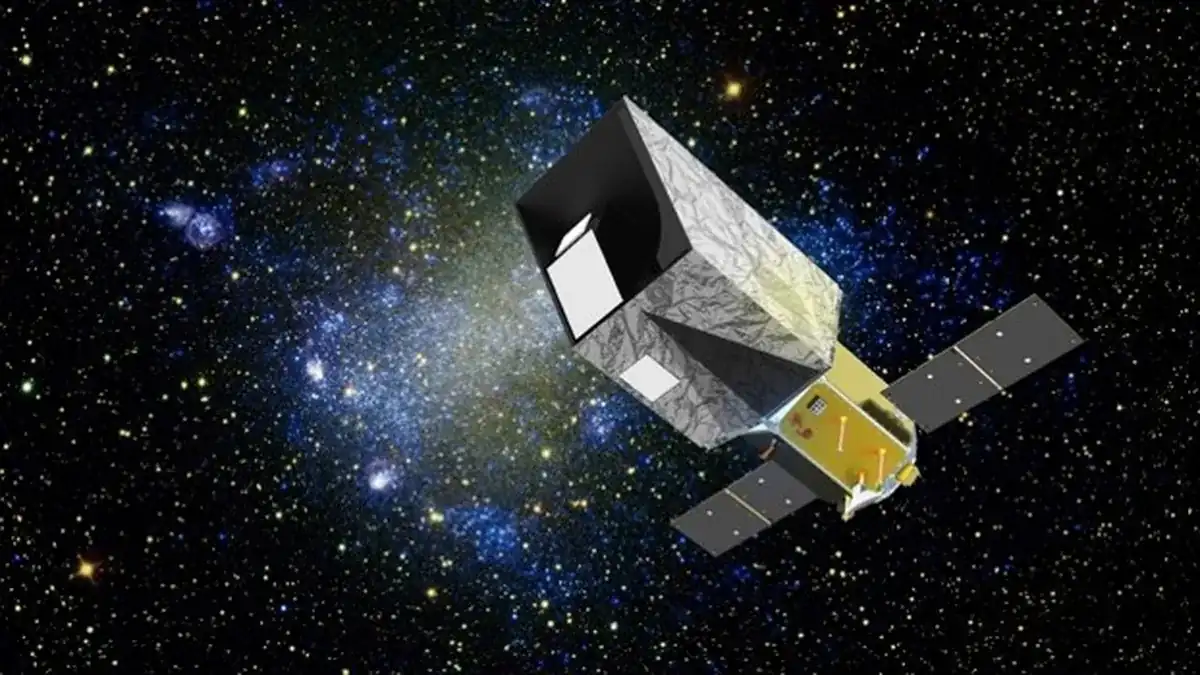
The telescope will map ultraviolet light across the whole sky with high sensitivity. NASA expects this to shed light on how galaxies and stars evolve. Caltech, home of the mission’s principal investigator, says the survey will be 50 to 100 times more sensitive than the comparable survey by GALEX. UVEX will carry a wide-field camera with two ultraviolet bands and a long-slit spectrograph with multiple slit widths, which splits an object’s light into its colours.
Its second big advantage is speed of reaction. The telescope will slew quickly toward ultraviolet sources and record the explosions that follow gravitational-wave pulses from neutron-star mergers. Rapid pointing was also the great strength of NASA’s Swift telescope, which recently completed its mission after nearly 22 years. The mission team adds that UVEX will capture spectra from the first hours of core-collapse supernovae, the explosions of collapsing stars, and will let astronomers request target-of-opportunity observations of unpredictable events.
NASA stresses that UVEX will work in complement with other missions that scan large parts of the sky, such as the Nancy Grace Roman Space Telescope, so that together they build a modern map of the universe at different wavelengths. Roman launched on August 30, 2026 and is travelling to its final position, while Hubble is preparing the ground for its observations. Caltech adds that the survey will find nearby low-mass, low-metallicity galaxies analogous to distant galaxies of the early universe and will study hot stars in the Large and Small Magellanic Clouds, our neighbouring galaxies.
Who is involved
The mission is led by Fiona Harrison of Caltech in Pasadena, California, as principal investigator. The University of California, Berkeley, NASA’s Jet Propulsion Laboratory (JPL), Northrop Grumman and the Space Dynamics Laboratory also take part.
UVEX belongs to the Explorers programme, NASA’s longest-running continuous programme, which offers frequent, low-cost access to space through principal-investigator-led missions. Since the launch of Explorer 1 in 1958, which discovered Earth’s radiation belts, the programme has launched more than 90 missions, among them Uhuru and the Cosmic Background Explorer, whose researchers were awarded Nobel Prizes.