Technology
NASA’s Lucy enters the region of Jupiter’s Trojan asteroids, five years after launch
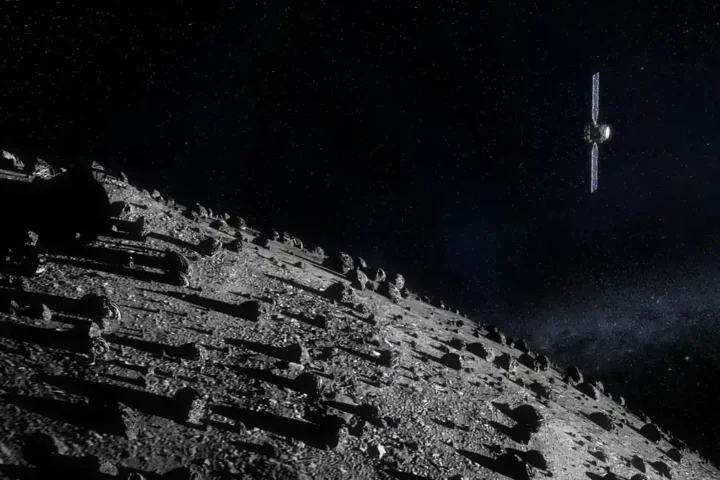
NASA’s Lucy is the first spacecraft to enter the region of Jupiter’s Trojan asteroids, five years after launch. Its first Trojan flyby, of Eurybates, is set for August 2027.

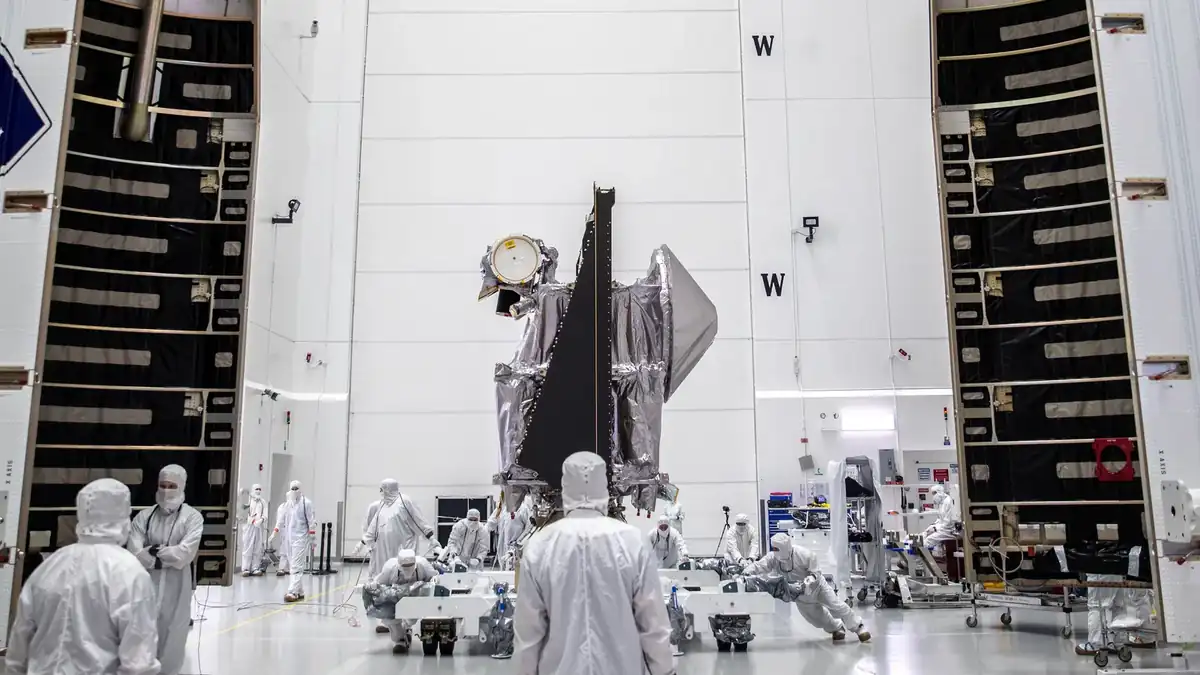
NASA’s Lucy is the first spacecraft to enter the region of Jupiter’s Trojan asteroids, the primitive bodies of the Solar System that share the giant planet’s orbit, one group ahead of it and one behind. The US space agency announced it on Wednesday, October 28, 2026, five years after the mission launched on October 16, 2021. The spacecraft has travelled more than 2.2 billion miles, about 3.5 billion kilometres.
The region had stayed unexplored for a simple reason. Several spacecraft have visited Jupiter, some even using gravity assist, which borrows the planet’s gravity to travel farther, but none had the chance to reach the Trojans, because they lie far from the planet. Only Lucy was designed specifically to explore this population. Scientists expect that studying them up close will improve theories about how the planets of the Solar System formed 4.5 billion years ago and how they reached their present arrangement. The Trojans are probably leftovers of the material that built the outer planets (Jupiter, Saturn, Uranus and Neptune), something like time capsules from the birth of the Solar System more than four billion years ago.
The flyby schedule
The programme provides for flybys of 11 asteroids, eight of them Trojans. In the main asteroid belt the spacecraft has already approached Dinkinesh and its satellite Selam (November 1, 2023) and Donaldjohanson (April 20, 2025). The Trojans begin with Eurybates on August 11, 2027, followed by Polymele on September 14, 2027, Leucus on April 18, 2028 and Orus on November 11, 2028. In 2030 the spacecraft will return to Earth for the third and last gravity assist, which will send it toward the other group. There, on March 3, 2033, it will explore the binary pair Patroclus and Menoetius.
Space has no clear borders, so the entry is not marked by any line. Engineers calculate the spacecraft’s position from its radio signals and from photographs of the surrounding stars, and so they know that Lucy is approaching Jupiter’s Lagrange point 4 (L4). There, in one of two large and unexplored “islands of stability”, thousands of asteroids share the planet’s orbit, guided by the combined pull of the Sun and Jupiter. The first group leads the planet around L4 and the second trails it around L5. The Trojans are as far from Jupiter as Jupiter is from the Sun, about 484 million miles (about 779 million km). The average distance between them exceeds 6 million miles (over 9.6 million km), so they will look like bright dots against the starry background until the spacecraft approaches its targets.
Lucy has adapted to the gradual fall in temperature and brightness. Its design suits this region, which is more than five times as far from the Sun as Earth, and the spacecraft and its instruments are working normally. With less than a year to the first encounter, the team is finalising plans to make the most of the few hours beside Eurybates.
Lucy is not the only mission turned toward asteroids. The Psyche spacecraft is pressing on toward its metal asteroid, while the DART deflection test asked another question, whether humanity can change the path of such a body. At the pair Didymos and Dimorphos, ESA’s Hera spacecraft told the two bodies apart for the first time.