Analysis Air Force
Greece’s F-35s: what has been signed, when they arrive, what is missing on weapons and what changes for the Hellenic Air Force
Greece has signed for 20 F-35A fighters with an option for 20 more. A complete guide to the contract, the timetable to November 2029, Andravida, the TR-3 and Block 4 configuration, the unresolved weapons question and the balance with Turkey.

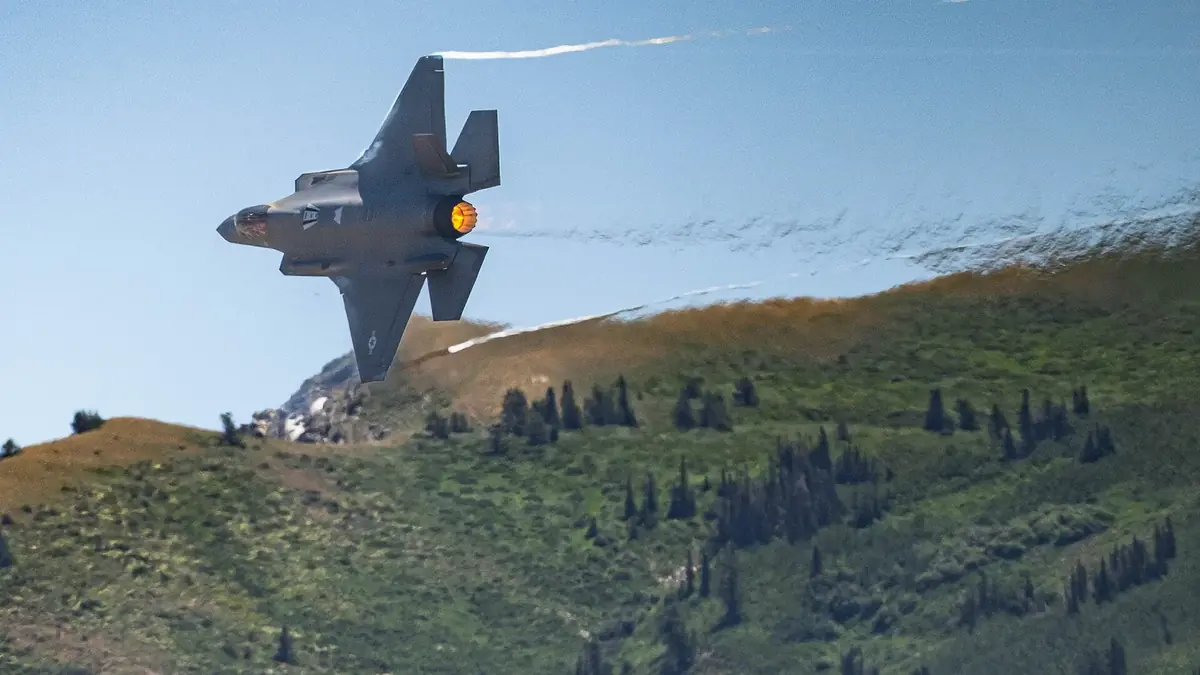
Greece has signed for 20 F-35A Lightning II fighters, with an option for 20 more. The Letter of Offer and Acceptance (LOA) was signed in July 2024, at a cost of about $3.5 billion for the first twenty. The first Greek aircraft will be delivered in the U.S. for the training of crews. The original plan provided for the arrival of the first Greek F-35s at Andravida in 2030. The government has now placed the first arrival in November 2029, while the scenario of a phased transfer of the first eight aircraft in two flights of four has also been examined. The programme is one of the largest procurements in the history of the Hellenic Air Force.
The big open issue is weaponry. In October 2026, U.S. Secretary of State Marco Rubio said that “there is no official answer” to Greece’s request for the F-35’s weapons and that the final decision rests with the U.S. president. After Rubio’s visit to Athens on October 7, Greece agreed to spend up to $4 billion on American weapons, that is missiles and bombs for the F-16Vs, the future F-35s and the Black Hawks, as well as on the upgrade of another 37 F-16 Block 50s to Viper. It is an agreement in principle: no LOA or contract for a specific F-35 weapon has been signed yet. National Defence Minister Nikos Dendias made clear that Athens asks for the F-35 the most modern weaponry and not missiles of an older generation: “This is what we are asking the U.S. for, this is what I told Mr. Rubio.”
Greece’s F-35s at a glance
| Item | What applies | Status |
|---|---|---|
| Version | F-35A (conventional takeoff and landing) | Confirmed (LOA) |
| Number | 20 aircraft | Confirmed (LOA, 07/2024) |
| Option | 20 more | Not exercised to date |
| Cost of the first 20 | about $3.5 billion, with support | Published |
| Maximum approved U.S. package | up to 40 F-35A and 42 F135 engines, estimated at $8.6 billion | State Department approval, 01/2024 |
| Base | 117 Combat Wing, Andravida | Confirmed |
| Infrastructure works | €290 million approved by KYSEA | Tender pending |
| First aircraft in Greece | November 2029 (original plan: 2030) | Government timetable. The number of the first aircraft has not been announced |
The contract: from the 2020 request to the 2024 LOA
Athens sent a first letter of interest to the Pentagon in November 2020 and the official Letter of Request for 20 aircraft in June 2022, as the prime minister announced after the NATO Summit in Madrid. On January 26, 2024, the U.S. Defense Security Cooperation Agency (DSCA) notified Congress that the State Department had approved a possible sale of up to 40 F-35A and 42 Pratt & Whitney F135-PW-100 engines (40 installed and 2 spare), together with cryptographic equipment, electronic warfare systems, flight simulators and support. The estimated cost of the whole was $8.6 billion. The announcement did not include munitions.
KYSEA, Greece’s Government Council for National Security, approved the procurement on July 16, 2024, and the LOA was signed on July 25, 2024. The same day Lockheed Martin announced that Greece became the 19th country in the F-35 programme, with an order for 20 aircraft and an option for 20 more. The value of the first twenty, with support, was reported at about $3.5 billion.
- The $8.6 billion is not the cost of the Greek contract. It is the ceiling of the American approval for 40 aircraft. The signed contract covers 20.
- The option for the next 20 has not been exercised. To date there is no KYSEA decision or Ministry of National Defence announcement on a second order, nor was anything of the kind mentioned during Marco Rubio’s visit to Athens.
When Greece’s F-35s arrive
The timetable, as it takes shape today:
| Year | Milestone | Source |
|---|---|---|
| 2027 | Start of production at Fort Worth (Lot 20). Start of training of Greek pilots, according to the prime minister | Lockheed Martin, prime minister (07/2026) |
| 2028 | First deliveries of Greek aircraft, which remain in the U.S. for training | Lockheed Martin, Ministry of National Defence |
| Early 2029 | Start of training of Greek pilots on a Greek F-35 in the U.S., according to the government spokesman | Government spokesman (10/2026) |
| November 2029 | First delivery and basing in Greece. The scenario of phased transfer in two flights of four has not been announced as a decision | Government to Parliament (07/2026), government spokesman (10/2026) |
| 2030 | Original target for the arrival of the first 8 aircraft in Greece, before the latest government timetable | Original plan |
The Chief of the Hellenic Air Force General Staff, Lieutenant General Dimosthenis Grigoriadis, said in May 2026 that the first F-35As will in all likelihood be received in 2029. In July the government informed Parliament that the first F-35s will be received and based in November 2029, and on October 8 government spokesman Pavlos Marinakis repeated the same date. How many aircraft will arrive then has not been announced. It has been discussed that the American side proposed splitting the first eight into two flights of four, so that the first four aircraft would be transferred to Andravida a year earlier than the original plan. The proposal has not been officially announced as a decision and depends mainly on whether the base’s infrastructure will be ready and certified.
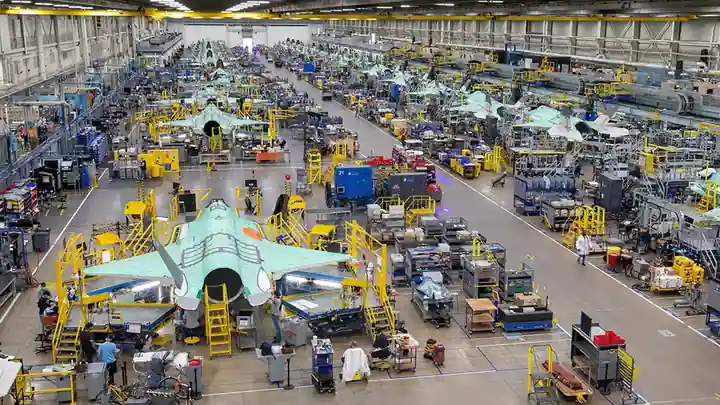
According to Lockheed Martin, the first eight Greek aircraft are expected to be built in the U.S.
The training of Greek aviators
The process is the same for most new F-35 users. The first aircraft are delivered in the U.S., where Greek pilots fly them together with American instructors and test pilots until the crews and the receiving base are certified. Official statements give two dates. Prime Minister Kyriakos Mitsotakis said on July 8, 2026 that Greek pilots will begin training on the Greek F-35s in 2027. Government spokesman Pavlos Marinakis said on October 8, 2026 that from early 2029 the training of Greek pilots will begin “on our own aircraft in America”.
The Air Force is considering sending initially eight aviators, together with technical personnel. They will form the core of the instructors for the next phase in Greece. With the arrival of the first aircraft at Andravida, part of the training will move to Greece.
A recent example of the same route is Finland, which presented its first F-35As at Rovaniemi in early October 2026, after training its first pilots in the U.S.
Which version Greece is getting: TR-3 and Block 4
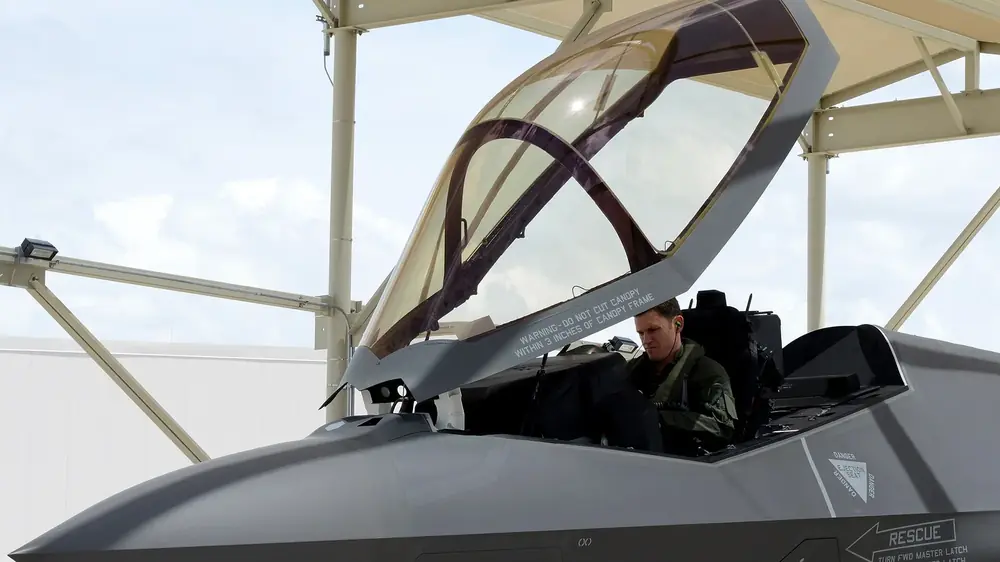
The Greek F-35As will be delivered in the Technology Refresh 3 (TR-3) configuration. The TR-3 is mainly a new “computing foundation”: a more powerful central computer, new displays and more memory. By itself it does not change the aircraft’s combat capabilities. It is, however, the necessary base for Block 4, the big package of upgrades that brings new weapons, improved electronic warfare and new sensors, in successive software steps.
The TR-3 was significantly delayed. The U.S. froze for about a year, in 2023–2024, the acceptance of new aircraft because the software was not ready, and the first TR-3 aircraft were delivered with limited combat capabilities. For Greece, which receives from 2028, this is expected to mean that the aircraft will arrive in a more mature state than those delivered in 2024, although Block 4 delays continue. Which exact Block 4 steps will be integrated at delivery has not been made public.
Northrop Grumman’s new AN/APG-85 radar is intended for the newer production lots, but it has not been officially announced whether the Greek aircraft will carry it from delivery.
Key characteristics of the F-35A
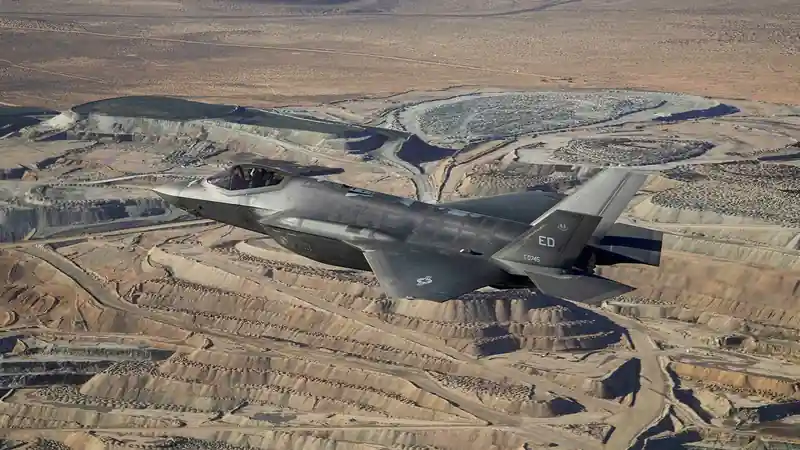
| Characteristic | Value (Lockheed Martin) |
|---|---|
| Length | 15.7 m |
| Wingspan | 10.7 m |
| Engine | 1 × Pratt & Whitney F135-PW-100 |
| Internal fuel | 8,278 kg |
| Weapons payload | 8,160 kg (internal and external) |
| Maximum speed | Mach 1.6, with full internal weapons |
| Combat radius on internal fuel | over 1,093 km (USAF profile) |
| Range on internal fuel | over 2,200 km |
| G limit | 9 g |
| Cannon | GAU-22/A 25 mm, internal |
Range and combat radius figures depend on the mission profile and cannot be compared directly with numbers for other aircraft that have been calculated differently.
Andravida: the new “nest” of the F-35s
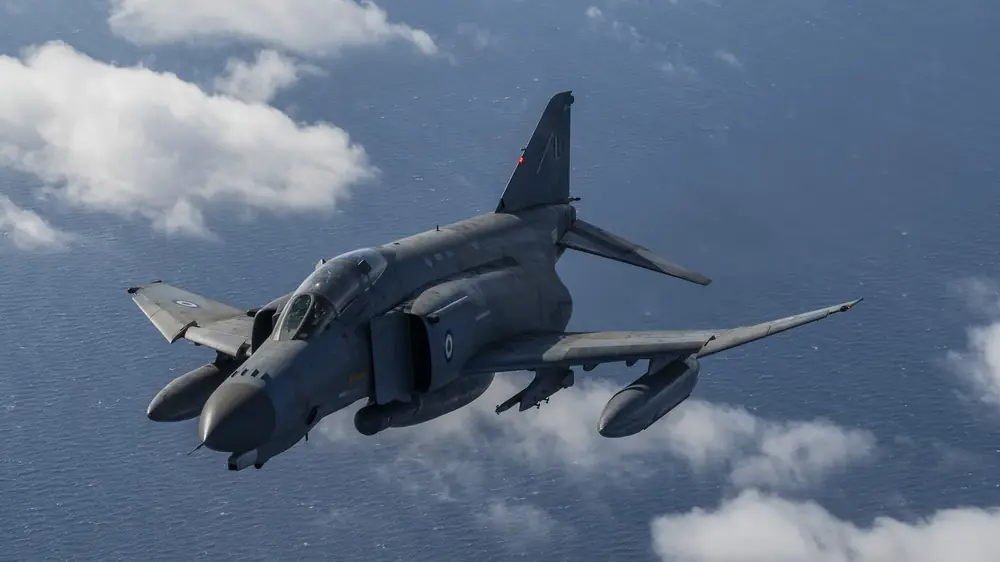
The F-35s will be based at the 117 Combat Wing at Andravida, where 338 Squadron currently flies the last Greek F-4E Phantom AUPs. The base needs extensive new infrastructure for fifth-generation aircraft, according to specifications set by the U.S. Air Force and the F-35 Joint Program Office (JPO).
KYSEA has approved €290 million for the infrastructure works, as also stated in a parliamentary question of July 2026. The works include:
- hardened aircraft shelters and maintenance hangars
- low-observable coating repair facilities
- classified information handling areas
- physical security and cybersecurity infrastructure
- new support buildings and an upgrade of landing aids
The tender has not been announced. Four large Greek construction groups have expressed interest and are being vetted by the American side. The announcement is expected after the candidates are evaluated. If the works are delayed, the base will not be certified in time and the aircraft will remain longer in the U.S.
The weapons of Greece’s F-35s: what has been approved and what is under discussion
The 2024 American approval concerned aircraft, engines and support. For no weapon system of the Greek F-35s has the signing of a contract been announced. The October 2026 agreement in principle for American weapons of up to $4 billion, which also concerns the F-35s, has not yet been converted into an LOA. The picture today:
| Weapon | Role | Status for Greece |
|---|---|---|
| AGM-158 JASSM-ER | Long-range, low-observable strike missile | Greece requested and received pricing and availability (P&A) data. No purchase request has been submitted |
| JSM (Kongsberg) | Anti-ship and land-attack missile, fits in the internal bay | Briefing to the Hellenic Air Force General Staff and the Hellenic Air Force by Kongsberg, 09/2026 |
| AIM-120 AMRAAM | Medium-range air-to-air missile | The Air Force has been briefed on the AIM-120C-8 and is interested in the AIM-120D. The LOA is pending |
| AIM-9X Sidewinder | Short-range air-to-air missile | Greek interest. The LOA is pending |
| AARGM / AARGM-ER | Anti-radiation missile for suppression of enemy air defences. The F-35A integrates the AARGM-ER (AGM-88G), for internal carriage | Greek interest. The LOA is pending |
| AIM-260 JATM | New U.S. air-to-air missile with longer range than the AMRAAM | An Air Force requirement. No U.S. export licence |
The JASSM-ER would give the Air Force the ability for precise strikes from very long distance, without the aircraft entering the range of enemy air defences. It does not, however, fit in the internal bay of the F-35A, so its use from the aircraft would require certification for external carriage, at the expense of low observability. By contrast, the JSM is an anti-ship and land-attack missile designed specifically to fit in the F-35A’s internal bay, which keeps the aircraft’s radar signature low. For the Aegean, this property has direct operational value. A further future option for the Air Force could be the Meteor, which already arms the Greek Rafales. Its integration on the F-35 is under way: on November 5, 2026 MBDA announced the first successful release from the internal weapons bay of the F-35B, while Italy supports certification on the F-35A version. Its use by the Greek aircraft would require the corresponding approvals and certifications.
Future American weapons
The AIM-424 Malice (LRAAM) is a new American very-long-range air-to-air missile, over 250 nautical miles (about 463 km) according to the U.S. Navy. It has been shown in the internal bay of the F-35C, but certification on the F-35A has not been announced, nor any prospect of its release to Greece, and there is no Greek request.
The delay in American munitions is well known and, as Rubio’s statement showed, the decision is made in Washington and not at the Air Force General Staff. An F-35 without modern weapons in its internal bay loses a large part of its value, and the decision on weaponry must be taken well before delivery.
How it changes the Hellenic Air Force
The F-35 is expected to work also as an information hub for the fleet. With its sensors and low observability it can detect targets closer to the threat and share the operational picture with other aircraft, ships and ground units.
The Air Force’s future composition will rest on three fighters:
- F-35A: penetration, intelligence gathering and strikes on high-value targets in a dense air-defence environment.
- Rafale F3R: long range, the Meteor air-to-air missile and strikes with the SCALP.
- F-16V Viper: the numerical backbone of the fleet, with the APG-83 AESA radar. See the analysis of the difference between the F-16V and the F-16 Block 70/72.
The F-35 communicates with other F-35s through the MADL data link, with a low probability of detection and interception, and with the rest of the fleet through Link 16. How its data will reach the F-16s and ground forces is the subject of the analysis on the Sniper NTP pod. The next step is unmanned “collaborative” fighters (CCA). The Chief of the Air Force General Staff has said that their acquisition is expected within the next five years and the Air Force is already examining solutions such as the MQ-28 Ghost Bat and the X-BAT. For the X-BAT, Shield AI and GEK TERNA signed in October 2026 a memorandum on an industrial base and support in Greece.
What it means against Turkey
Turkey was a co-producer of the F-35 until 2019, when the U.S. expelled it from the programme after its purchase of the Russian S-400s. Since 2019 Ankara has been pressing for a return, and the American administration has sent contradictory messages. To date there has been no decision on reinstatement, and American law (NDAA 2020) prohibits the transfer of F-35s to Turkey as long as it retains the S-400s.
In the meantime, Turkey has agreed with Britain for 20 new Eurofighter Typhoons, whose assembly has begun, while the procurement of additional used Eurofighters from Qatar and Oman is still at the negotiation stage: in October 2026 Ankara was still waiting for the draft contract from Qatar. At the same time it is investing in the domestic KAAN, whose serial production depends on American engines.
For the period 2030–2035, the F-35 can give Greece a qualitative edge: a fifth-generation aircraft in operational service, networked with Rafales, F-16Vs and new frigates, before Turkey acquires a corresponding capability. That edge depends on whether the Andravida timetable is kept, whether the weapons are bought in time and whether the option for the second twenty is exercised.
Timeline of the Greek F-35 programme
| Date | Event |
|---|---|
| November 2020 | First Greek letter of interest for the F-35 to the Pentagon |
| June 2022 | Greece sends an official Letter of Request for 20 F-35s |
| January 26, 2024 | DSCA notifies Congress of the approval of a sale of up to 40 F-35A ($8.6 billion) |
| July 16, 2024 | KYSEA approves the procurement of 20 F-35A with an option for 20 more |
| July 25, 2024 | Lockheed Martin announces the Greek LOA. Greece becomes the programme’s 19th country |
| May 2026 | The Chief of the Air Force General Staff says the first F-35s are expected in 2029. The proposal for phased 4+4 delivery is discussed |
| July 2026 | The prime minister says pilot training begins in 2027. The government informs Parliament that the first F-35s arrive in November 2029 |
| July 2026 | A parliamentary question cites KYSEA approval of €290 million for infrastructure |
| August 2026 | Greece receives pricing and availability data for the JASSM-ER |
| September 2026 | Kongsberg briefs the Air Force General Staff on the JSM |
| October 2026 | Rubio’s statement on the F-35 weapons. Agreement in principle on U.S. weapons of up to $4 billion. The government spokesman confirms November 2029 and places the start of training on a Greek F-35 in early 2029. Dendias asks for the most modern weapons |
| 2027 (planned) | Start of production. Start of pilot training, according to the prime minister |
| 2028 (planned) | First deliveries in the U.S. |
| Early 2029 (planned) | Start of training of Greek pilots on a Greek F-35 in the U.S., according to the government spokesman |
| November 2029 (planned) | First delivery at Andravida |
Watch Lockheed Martin’s video on the F-35

Frequently asked questions about Greece’s F-35s
How many F-35s is Greece getting? The signed contract covers 20 F-35As. There is an option for 20 more, which has not been exercised to date.
How much do Greece’s F-35s cost? The first twenty, with support, cost about $3.5 billion. To this are added the Andravida works (€290 million approved) and the weapons, for which there is as yet no contract.
When do the F-35s arrive in Greece? The first deliveries will take place in 2028 in the U.S., for training. The government places the first receipt in Greece in November 2029, against 2030 in the original plan.
Where will they be based? At the 117 Combat Wing at Andravida, Ilia.
What weapons will they have? No weapons contract has been signed and, according to Marco Rubio, there is as yet no official American answer, despite the October 2026 agreement in principle on American weapons of up to $4 billion. Greek interest concerns, among others, the JASSM-ER, JSM, AMRAAM, AIM-9X and AARGM.
Related coverage: Dendias on the F-35 weapons · Finland’s F-35As · Canada’s first F-35As