

Analysis
Analysis: F-16 Block 70/72, how the newest F-16 differs from Greece’s F-16V Viper and which countries are receiving it
Analysis: The F-16 Block 70/72 is the new-build F-16 now in production at Greenville, with the APG-83 radar, the Viper Shield electronic warfare suite and a 12,000-hour airframe. A look at its equipment, its engines, how it differs from Greece’s F-16V Viper and who is receiving it.

The F-16 Block 70/72 is the version of the F-16 now being built on the type’s only active production line, in Greenville, South Carolina. Two milestones within a few days prompted this analysis. On October 2, 2026, the first two Taiwanese F-16V Block 70s arrived on the island, and on October 6 Lockheed Martin announced the first flight of the first Block 72 for Morocco.
For Greek readers the interest is twofold. The Hellenic Air Force is upgrading 84 of its own F-16s to the Viper configuration, which shares the radar and key avionics of the Block 70/72. Bulgaria, meanwhile, has already received new-build aircraft, and Turkey has a potential order that has not yet been taken up. This analysis brings together the official data on the version: its equipment, the difference between the Block 70 and the Block 72, its relationship to the Greek F-16V, its users and the next steps.
F-16 Block 70/72 at a glance
- Manufacturer: Lockheed Martin, Greenville, South Carolina
- Length, height, wingspan: 15.03 m, 5.09 m, 9.45 m
- Empty weight: 9,207 kg (20,300 lb)
- Maximum takeoff weight: 21,772 kg (48,000 lb)
- Engine: Block 70: General Electric F110-GE-129D. Block 72: Pratt & Whitney F100-PW-229. 29,000-lb thrust class
- Maximum speed: over Mach 2
- Maneuvering limit: 9 g
- Structural life: 12,000 flight hours
- Radar: Northrop Grumman APG-83 SABR (AESA)
- Electronic warfare: L3Harris AN/ALQ-254(V)1 Viper Shield, internal
- Mission computer: Modular Mission Computer (MMC)
- Deliveries and orders: Bahrain, Slovakia, Bulgaria, Taiwan, Morocco, Jordan, Peru
What the F-16 Block 70/72 is, and how it differs from the F-16V
The F-16 Block 70/72 is a newly built aircraft, whereas the Greek F-16V Viper results from the upgrade of existing F-16s. The two configurations share the APG-83 radar, the modern mission computer and the center pedestal display in the cockpit. The F-16V designation is also used for new aircraft, as in Taiwan. The real distinction is a new or an existing airframe, and the equipment each country has chosen, particularly in electronic warfare.
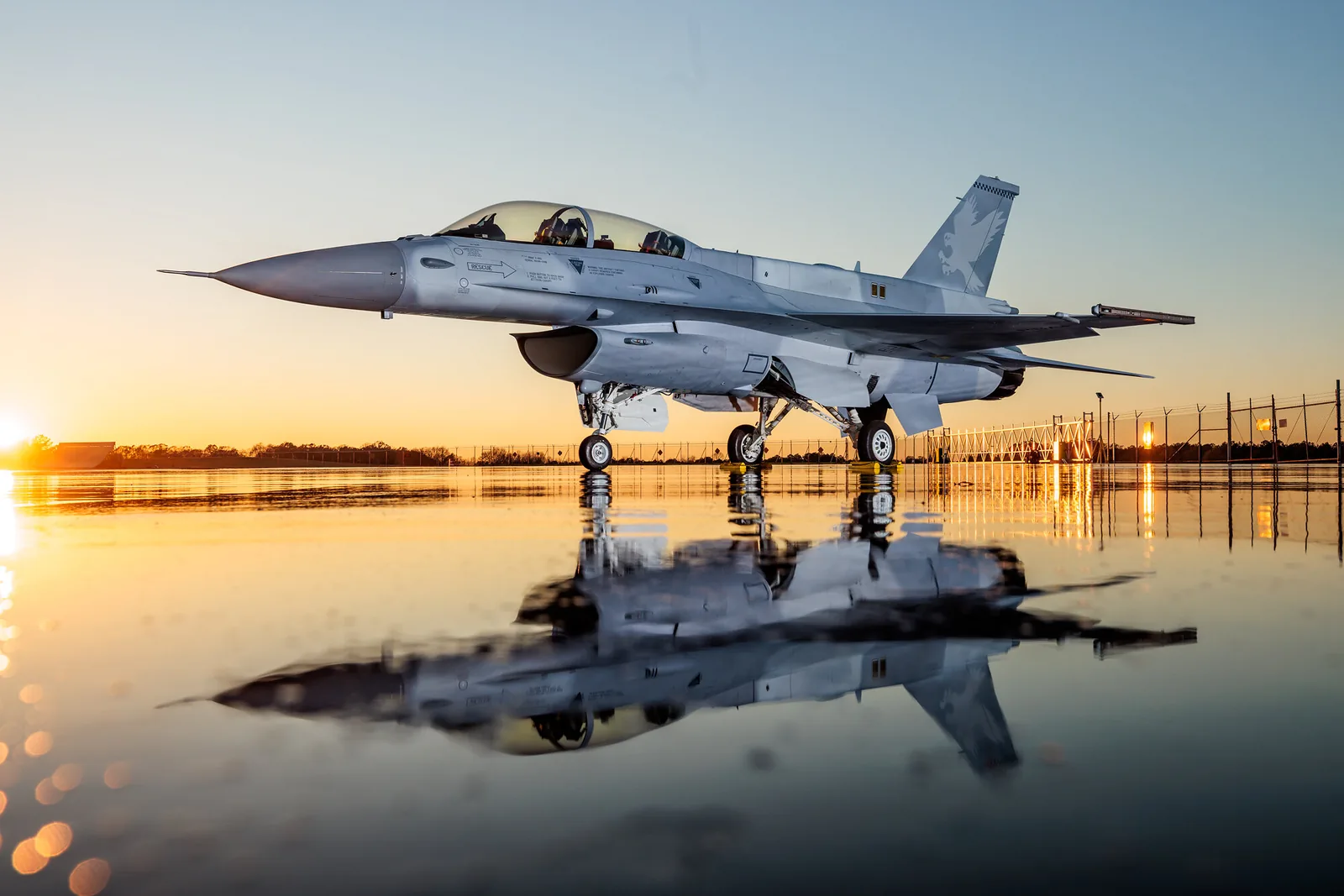
Lockheed Martin presents the version as the most advanced 4th-generation fighter ever built, and says that with new aircraft and upgrades the international F-16 fleet can operate to 2060 and beyond. According to its figures, more than 2,800 F-16s are in service in 29 countries, with Peru to be added. In practice the two designations are often confused, since Taiwan also calls its new Block 70s F-16Vs.
Block 70 versus Block 72: the engines
The main difference between the Block 70 and the Block 72 is the engine. The Block 70 carries the General Electric F110-GE-129D and the Block 72 the Pratt & Whitney F100-PW-229, both in the 29,000-lb thrust class. The two sub-variants rest on the same modern avionics architecture. The final equipment, weapons and self-protection system are determined by the configuration each customer orders.
Both are afterburning turbofans. For the F110-129, GE Aerospace cites a three-stage blisk fan (with integrally bladed disks) and an advanced afterburner, aimed at fewer parts, easier maintenance and longer component life. The F110 family has more than 3,800 engines delivered and has been selected by 18 nations. Which engine goes in is not always settled from the outset: the congressional notification for the Philippines, dated April 1, 2025, provides for 24 engines of the type “F110-GE-129D or F100-PW-229” for 20 aircraft.
Morocco is a characteristic example. The notification delivered to Congress on March 22, 2019 for 25 new F-16C/D Block 72s, with an estimated value of $3.787 billion, included 29 F100-229 engines, four of them spares, the same type that powers the country’s F-16 Block 52+ aircraft. With the parallel upgrade of its older aircraft to F-16V level, the whole fleet gains a common engine and a common radar.
F-16 Block 70/72 electronics: the mission computer and the new architecture
The core of the version is the MMC 7000AH Modular Mission Computer. US sales notifications describe it as the aircraft’s central computer and the data-transfer hub for all subsystems and avionics. According to Lockheed Martin, consolidating the processing for weapons and electronics in one system gives the pilot more capability and makes software upgrades cheaper. The Greek F-16Vs receive the same computer.
The other digital systems connect around it. The iPDG (Improved Programmable Display Generator), which drives the color displays, is described in the same documents as the F-16’s fifth-generation graphics processor. The MIDS-JTRS terminal is a four-channel, software-defined radio for Link 16, TACAN and newer waveforms. The embedded GPS and inertial navigation system (EGI) has a SAASM unit or an M-Code receiver, to protect against signal spoofing. The APX-126 identification friend-or-foe (IFF) transponder, or the newer APX-127, interrogates and replies in Mode 5. The suite is completed by the AN/ALE-47 countermeasures dispenser, AN/ARC-238 radios and a digital intercom with 3D audio.
Cockpit: the 6-by-8-inch CPD and the helmet-mounted sight
The center pedestal display (CPD) measures 6 by 8 inches, about 15 by 20 centimeters, and is where the pilot sees the radar and targeting-pod imagery in high resolution. It supports color moving maps, a larger air-to-air situation display, zoom, display-to-display transfer of information and a digital presentation of the flight instruments. The helmet-mounted sight is either the JHMCS II or the Scorpion HObIT, which project targeting and flight data and are used to cue weapons and sensors to air and ground targets.

Digital flight control, Auto GCAS and PARS
The new digital flight control computer brings an improved autopilot and autothrottle, and two safety functions rely on it: Auto GCAS (Automatic Ground Collision Avoidance System), which automatically prevents the aircraft from hitting the ground, and PARS (Pilot Activated Recovery System), a recovery system the pilot activates. According to Lockheed Martin, Auto GCAS entered service with the US Air Force in late 2014 and by March 2024 had saved 13 pilots in 12 aircraft. The company cites US data according to which controlled flight into terrain accounts for 26% of F-16 aircraft losses and 75% of F-16 pilot deaths.
The APG-83 SABR radar: what changes compared with the APG-68
Northrop Grumman’s APG-83 SABR replaces the mechanically scanned APG-68 with an active electronically scanned array (AESA) antenna. The manufacturer designed it specifically for the F-16, drawing on the experience of the F-22’s APG-77 and the F-35’s APG-81, and Lockheed Martin puts its similarity to the F-35 radar at 95% in software and 70% in hardware.
Electronic scanning improves target tracking and ground mapping. Northrop Grumman describes the APG-83 as a radar that can perform multiple functions simultaneously and work with modern electronic warfare systems. For the pilot, that means a more complete picture of the tactical situation and greater flexibility in using the sensors.
The US Air Force reported in June 2022 that more than 70 Air National Guard F-16s in 12 units were already flying with the new AESA. It stressed the improvement in countering cruise missiles and in detecting, identifying and engaging threats at longer ranges.
Electronic warfare: the AN/ALQ-254 Viper Shield on the F-16 Block 70/72
L3Harris’s Viper Shield is an all-digital electronic warfare system, designed as core equipment of the F-16 Block 70/72 and mounted inside the fuselage. It combines a digital radar warning receiver (DRWR), which works directly with the APG-83, and a jammer based on digital radio frequency memory (DRFM) to counter modern radars.
The internal AN/ALQ-254(V)1 version consists of six types of unit: a multifunction display, a power control panel, a C/D-band receiver, a receiver unit, a processor and technique generator, and a transmitter with two preamplifiers. The architecture is based on commercially available 3U technology and software-defined functions, to simplify future upgrades. L3Harris also says the system avoids mutual interference with an accompanying aircraft and works with both today’s mission computer and the next-generation one.
Its first flight took place on February 4, 2025, in a single-seat Block 70 of the 412th Test Wing at Edwards Air Force Base, California, as L3Harris announced. L3Harris says the system is now on order from eight allied nations and that it is ramping up to full-rate production for the 233 systems on order. Peru selected it in August 2026. Not every customer gets the same system. The 2019 notifications for Morocco and Taiwan listed the AN/ALQ-211 AIDEWS, the 2024 one for Turkey the IVEWS (Integrated Viper Electronic Warfare Suite) “or equivalent”, and the 2025 one for the Philippines the Viper Shield “or equivalent”. In all of them the system is described as a combination of passive radar warning, wide-band radio-frequency jamming and central management, installed as a rule internally.
A more recent milestone is the completion of production of the first 35 Viper Shield systems on September 3, 2026. L3Harris also announced the assembly of its first pod using production units. Completing production and entering operational service are different milestones of the program.
One more detail matters for users of older F-16s. According to L3Harris, the Viper Shield can be installed internally in Block 40 and Block 50 aircraft, two-seat and single-seat, without redesign, while a pod version, the AN/ALQ-254(V)2, exists for older variants.
Sensors and weapons
The F-16 Block 70/72 integrates the Sniper (AN/AAQ-33) targeting pod and an infrared search and track (IRST) system, Lockheed Martin’s Legion-ES. The Sniper combines a high-resolution mid-wave infrared sensor, a dual-mode laser, a high-definition TV camera, a laser spot tracker and an image data link. The IRST is a passive sensor that detects and tracks targets by their infrared signature at long range without emitting anything itself. Lockheed Martin has also shown such pods in Athens, as we reported at the time, and the networked evolution of the pod is the Sniper NTP.
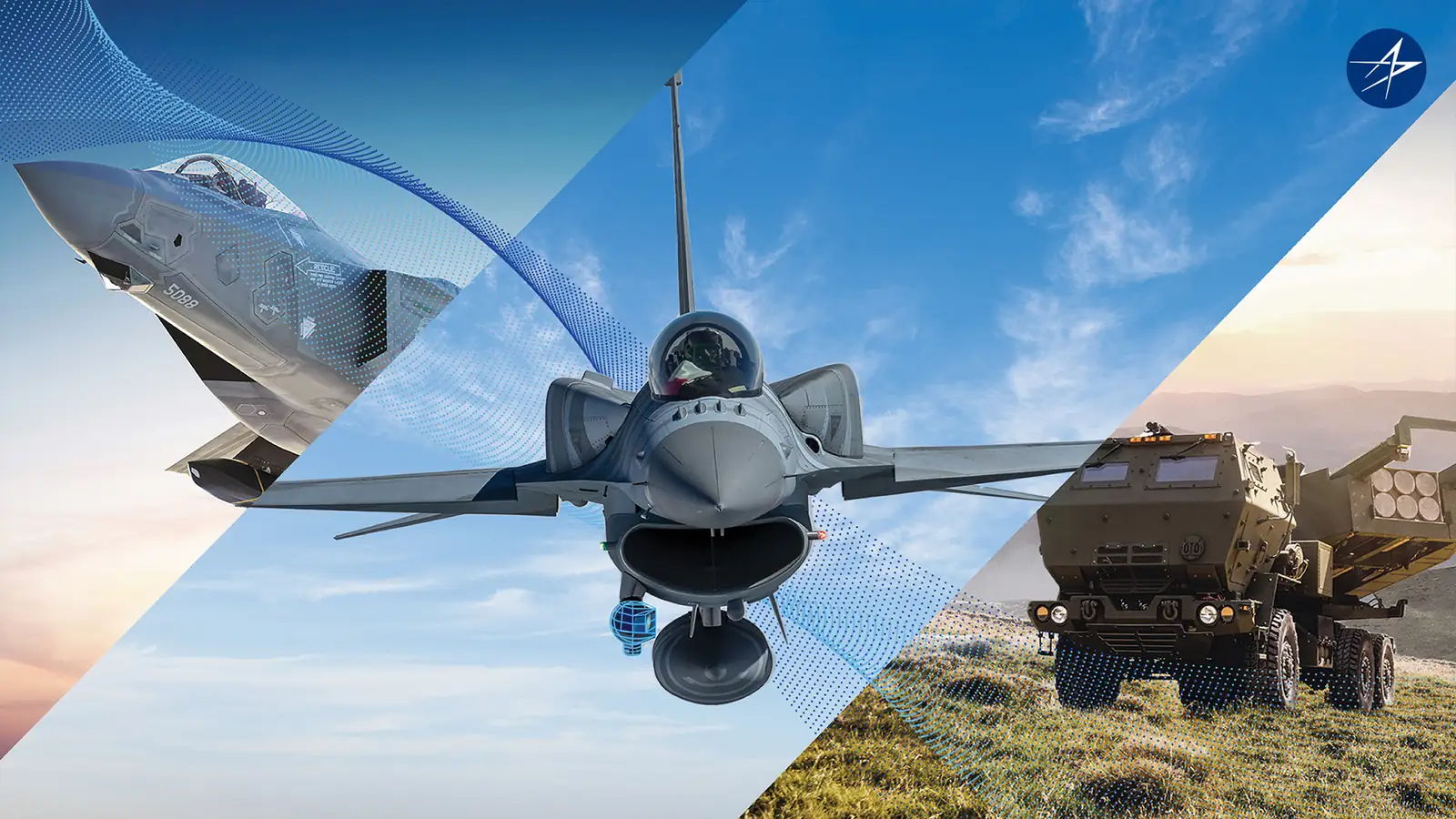
The company cites more than 3,300 certified carriage-and-release combinations for more than 180 types of weapons and stores on the F-16. What a customer actually buys can be seen in the package for the Philippines, for 20 aircraft: 112 AIM-120C-8 AMRAAM missiles, 40 AIM-9X Block II Sidewinders, 36 GBU-39/B small diameter bombs (SDB I), 30 JDAM kits for the GBU-38 or the laser-guided GBU-54, 30 kits for the GBU-50 Enhanced Paveway II, 12 Sniper pods, 88 LAU-129 launchers and the six-barrel 20 mm M61A1 cannon. Morocco’s 2019 package also included six DB-110 reconnaissance pods.
Airframe, fuel and seat
The 12,000-hour structural life is more than 50% longer than that of previous production F-16s. Lockheed Martin translates it into at least 40 years of service for most air forces, without extensive structural repairs expected in that period. The limit is 9 g and the maximum takeoff weight reaches 21.8 tonnes.
Conformal fuel tanks add fuel and range with little aerodynamic penalty. The ejection seat is Martin-Baker’s US18E, with an electronic ejection sequence controller and neck protection.

How the F-16 Block 70/72 differs from the Greek F-16V Viper
The Greek F-16V Viper is an upgrade of aircraft already in service, whereas the F-16 Block 70/72 is built from scratch. According to Lockheed Martin, the Greek upgrade includes: the APG-83 radar, the MMC-7000AH mission computer, Advanced Data Transfer Equipment (ADTE), the center pedestal display, the APX-126 IFF with Mode 5, the embedded GPS/inertial navigation system, an upgraded Link 16, provisions for the Sniper pod, interfaces for Paveway II bombs and a modified digital flight control computer with Auto GCAS and PARS.
The main points of comparison:
- Aircraft: new build (F-16 Block 70/72); Greek F-16V, upgrade of existing F-16s
- Radar: APG-83 SABR AESA in both
- Mission computer and cockpit: modern computer and center pedestal display (Block 70/72); MMC-7000AH and center pedestal display (Greek F-16V)
- Structural life: 12,000 hours for the new airframe (Block 70/72); the electronics upgrade does not create a new 12,000-hour airframe (Greek F-16V)
- Electronic warfare: customer’s choice, with the Viper Shield available (Block 70/72); the program of 84 aircraft does not include the Viper Shield (Greek F-16V)
- Work: production in Greenville (Block 70/72); modernization at HAI, in Tanagra (Greek F-16V)
The upgrade does not change the airframe, so it does not bring the 12,000-hour structural life, and it does not include the Viper Shield self-protection system. The Greek program covers 84 aircraft and is carried out at Hellenic Aerospace Industry (HAI) in Tanagra. The 42nd aircraft, at the midpoint of the program, was delivered in September 2025. The 50th Greek F-16V was received in April 2026, and on September 16, 2026 HAI and Lockheed Martin delivered the 60th, with deliveries continuing through 2027. Greece has operated F-16s since 1989 and has acquired 170 aircraft in total, in Blocks 30, 50 and 52, the first contract being Peace Xenia I in January 1987.
NemesisHD has separately examined the self-protection and electronic warfare of the Greek F-16 Vipers, as well as a proposal for new roles for the Greek F-16 Block 30s. As we have noted, the Greek F-16Vs unfortunately lack a modern self-protection system, retaining the older ASPIS II, despite the Hellenic Air Force General Staff’s steady interest in the Viper Shield.
Which countries have the F-16 Block 70/72
Bahrain, Slovakia, Bulgaria and Taiwan have so far received new-build F-16 Block 70/72 aircraft. Morocco is in flight testing of its first aircraft, Peru announced its purchase in April 2026, and a potential order of 40 aircraft has been approved for Turkey, which it has not yet taken forward.
Bahrain was the first customer. On June 25, 2018, Lockheed Martin announced a $1.12 billion contract for 16 aircraft, the first F-16s built at Greenville, and the first three left for the country on March 6, 2024. Slovakia became the first European country with the Block 70, with its first aircraft arriving there in July 2024. Bulgaria received its first in February 2025 and welcomed it on its territory in April. On December 15, 2025, Lockheed Martin announced that production of all the aircraft in the two countries’ initial fleets was complete.
Taiwan has ordered 66 aircraft, under a 2019 US approval worth $8 billion that included 75 F110 engines and 75 APG-83 radars. The first two landed on October 2, 2026, at Chihhang Air Base in Taitung, after delays attributed, among other things, to software and logistics-support problems. Taiwan’s Defense Minister Wellington Koo said more aircraft would arrive soon. Morocco has had approval since 2019 to buy 25 Block 72s. Peru announced in April 2026 the purchase of 12 aircraft, in a decision accompanied by political turmoil, and chose the Viper Shield for them in August. For the Philippines, the US approved in April 2025 a possible sale of 20 aircraft, 16 single-seat and four two-seat, worth $5.58 billion. An approval for 12 aircraft had preceded it in 2021 and did not end in a purchase.
The customers also include Jordan, which had signed letters of offer and acceptance for 12 new F-16 Block 70s, as Lockheed Martin announced in January 2023. The country had initially selected eight aircraft and added four. These are agreements to buy new aircraft, a different stage from a US approval of a potential sale.
Turkey’s case remains open. The notification delivered to Congress on January 26, 2024 covered 40 new F-16 Block 70s, 32 single-seat and eight two-seat, and the modernization of 79 existing aircraft to the V configuration, with a total estimated value of $23 billion. The package included 48 F110-GE-129D engines, 149 APG-83 radars, 952 AIM-120C-8 missiles and 864 GBU-39/B bombs. That approval has not been turned into a purchase. Meanwhile Ankara abandoned in 2024 the part covering the 79 upgrade kits, assigning the modernization of its older aircraft to domestic industry.
Production: a single line in Greenville
Final assembly takes place in Greenville, today the only active F-16 production line in the world, with more than 1,500 jobs and a supply chain of more than 530 suppliers in 12 countries. Sales go through the US Foreign Military Sales program, through which the aircraft’s final acceptance also takes place.
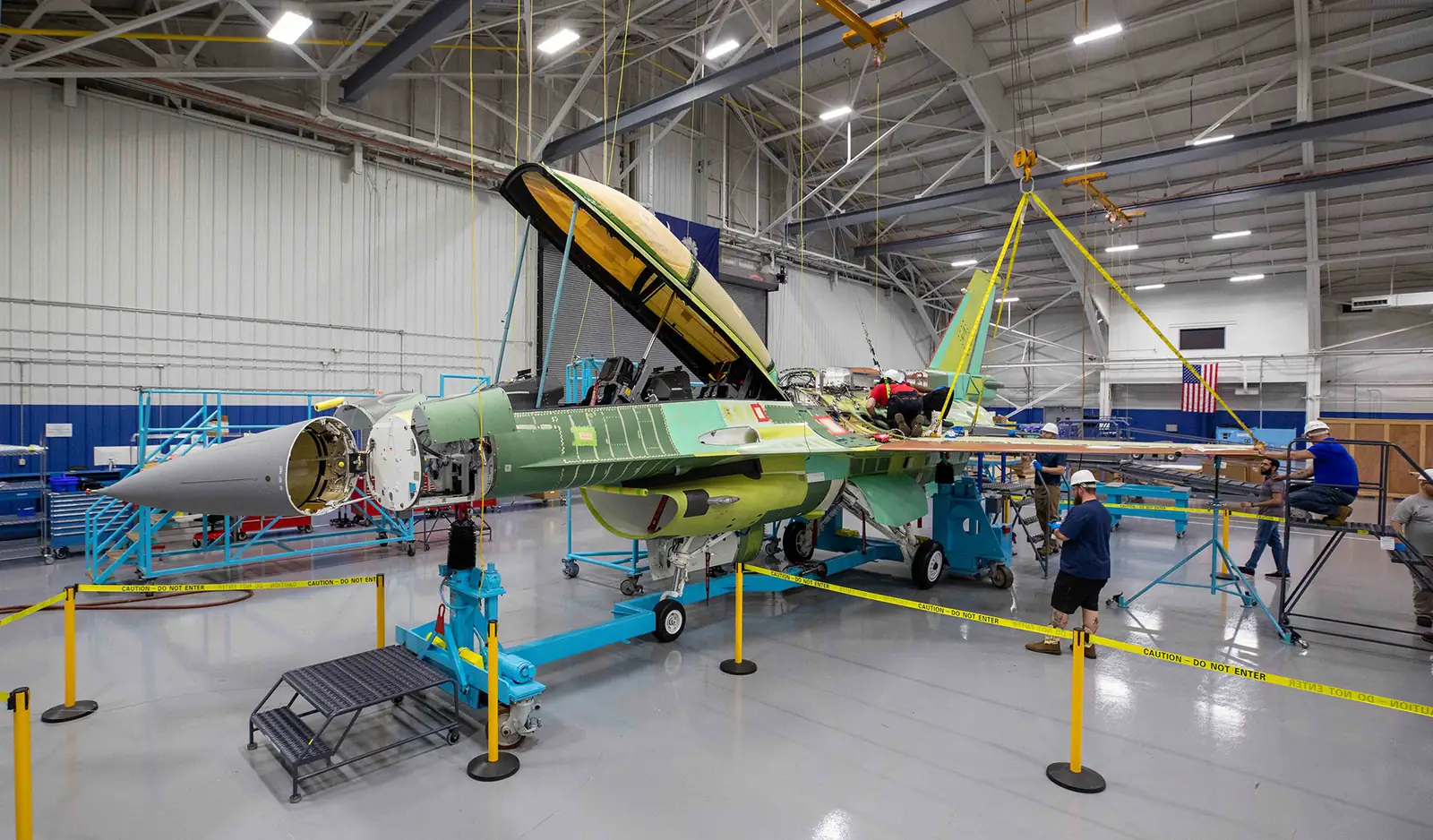
The first flight of the F-16 Block 70 can be seen in Lockheed Martin’s official video. Bahrain’s aircraft flew from Greenville on January 24, 2023. The flight lasted about 50 minutes and included engine, flight-control and fuel-system checks, according to the manufacturer’s official announcement.
In March 2024, Lockheed Martin reported a backlog of 133 aircraft for six countries, expected 19 to 21 deliveries that year and saw prospects for up to 300 additional aircraft.
What the F-16 Block 70/72 means for Greece and the region
The Greek program is an upgrade and not a purchase of new-build aircraft. Even so, the fighters that form the main backbone of the Hellenic Air Force acquire the same APG-83 radar as the F-16 Block 70/72, together with an advanced mission computer and a modernized cockpit. The new-build Block 70s received by Bulgaria rest on the same technological base.
These upgrades lead to better awareness of the tactical situation and greater interoperability with the other fighters. At the same time, by upgrading its electronic systems the F-16V ensures that it will continue to certify a range of weapons that are also intended for 5th-generation fighters, giving the staffs much greater flexibility in their armament choices.
What the next steps are
Morocco’s first Block 72 continues flight testing before delivery. In Taiwan, Defense Minister Wellington Koo said more aircraft would arrive soon. Peru’s aircraft will be built in Greenville. In Greece, deliveries of upgraded F-16Vs from HAI continue, with a horizon of 2027, and NemesisHD expects the launch of a second program to upgrade the Hellenic Air Force’s remaining F-16 versions, with the exception of the older Block 30s, to begin soon.
Frequently asked questions about the F-16 Block 70/72
Does Greece have the F-16 Block 70/72?
The Greek program does not involve the procurement of new-build F-16 Block 70/72s but the upgrade of 84 existing Hellenic Air Force F-16 fighters to the F-16V Viper configuration. The work is carried out at HAI in Tanagra, and by September 16, 2026, 60 upgraded aircraft had been delivered, with completion of deliveries expected within 2027. Although this is a modernization of existing aircraft and not a new-build Block 70/72, the Hellenic Air Force itself has also used the Block 70/72 designation for the Greek F-16Vs, including in official speeches by previous chiefs of the Hellenic Air Force General Staff.
How much does an F-16 Block 70/72 cost?
No official unit price is published. What is known are the estimated values of the packages notified to Congress: $3.787 billion for Morocco’s 25 aircraft (2019), $8 billion for Taiwan’s 66 (2019), $5.58 billion for the Philippines’ 20 (2025) and $23 billion for the Turkish request for 40 new aircraft and 79 upgrades (2024). The amounts include spare engines, weapons, training and support, so they cannot simply be divided by the number of aircraft. Closer to the cost of the aircraft themselves is Bahrain’s production contract: $1.12 billion for 16 aircraft in 2018.
Can the Viper Shield be fitted to the Greek F-16s?
L3Harris says the internal version can be installed without redesign on F-16 Block 40 and Block 50 aircraft, and that a pod version exists for older variants. No related procurement has been announced for the Hellenic Air Force, although NemesisHD is in a position to know that a decision will soon be taken.
Which air-to-air missile do the new aircraft get?
The most recent packages provide for the AIM-120C-8 AMRAAM: 112 for the Philippines and 952 in the Turkish request. Morocco, which in 2019 had requested 40 AIM-120C-7s, received approval in December 2024 for up to 30 AIM-120C-8s, worth $88.37 million. For short ranges, the Philippine package provides for the AIM-9X Block II Sidewinder.


