Analysis
Halki seminary explained: closed by Turkey since 1971
The Halki Theological School, the Ecumenical Patriarchate's seminary near Constantinople, has been closed by Turkey since 1971. This explainer sets out why, what the U.S. State Department records and where a reopening stands.

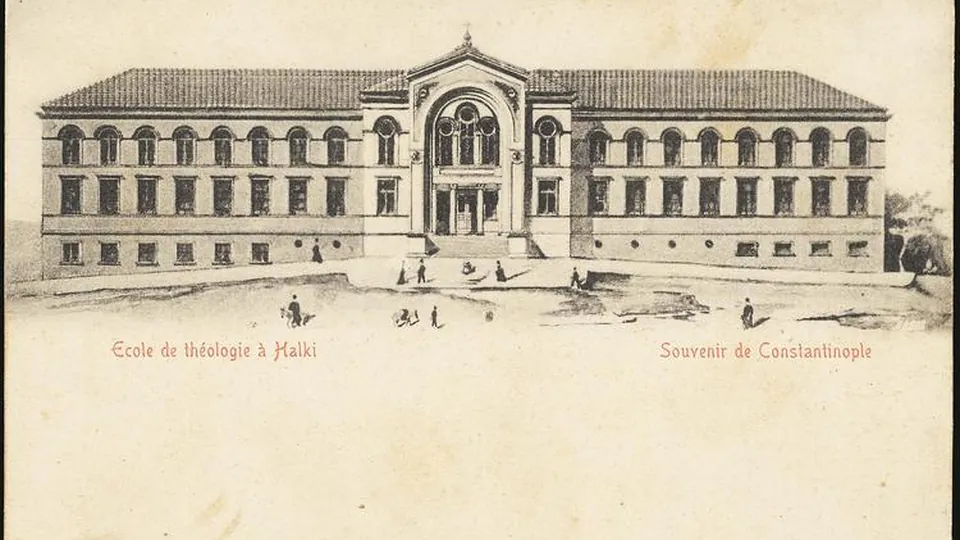
The Halki Theological School is the Ecumenical Patriarchate’s seminary on the island of Heybeliada (Halki) near Constantinople. Turkey has kept it closed since 1971, when a law banning private higher education was applied to it, and the Patriarchate says the school has stayed shut “despite occasional promises by the Turkish authorities”. On 28 October 2026 Ecumenical Patriarch Bartholomew said that talks with Turkish authorities had been encouraging.
Key points
- The school was re-established on 1 October 1844 and trained clergy for the Ecumenical Patriarchate until 1971.
- The Patriarchate says it was closed under a Turkish law that prohibited private institutions of higher education; a U.S. Representative described the closure as forcible.
- The U.S. State Department’s 2023 religious freedom report records that the seminary “remained closed” and that Greek Orthodox clergy cannot receive formal theological training in Turkey.
- Renovation of the buildings was due to finish in September 2026, but the Patriarchate has said the building’s inauguration is separate from a licence to reopen the school, which Turkish authorities have still to grant.
What is the Halki Theological School?
According to the Ecumenical Patriarchate, the school stands at the top of the Hill of Hope on Halki, one of the Princes’ Islands, about an hour by boat from the shore of Constantinople. It grew around the Holy Trinity monastery, founded in the Byzantine period, and its operation resumed with a special ceremony on 1 October 1844.
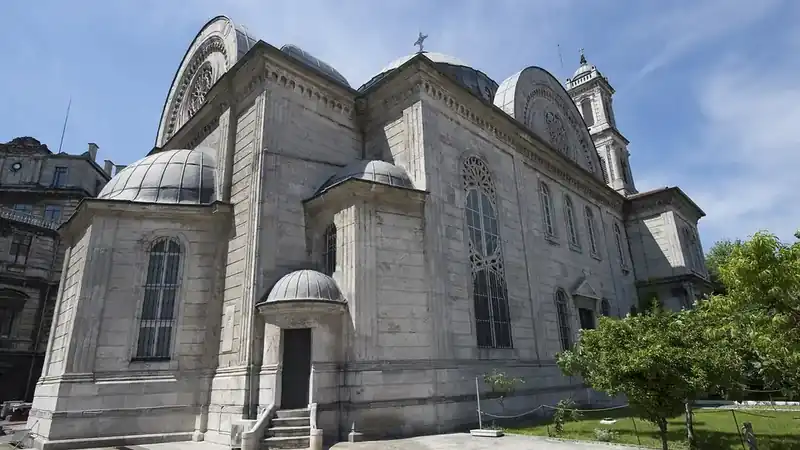
An earthquake on 28 June 1894 destroyed every building except the church. The present complex, built in the shape of the Greek letter Pi, was designed by the architect Periklis Fotiadis with funds from the benefactor Pavlos Skilitsis Stefanovik, and it was inaugurated on 6 October 1896, after which teaching resumed. The Patriarchate describes the school as an institution of the Ecumenical Throne, run under the Patriarch and the Holy Synod.
Why was Halki closed in 1971?
The Patriarchate’s own account is short: “In 1971 the School was closed according to a law that was promulgated by the Turkish goverment which prohibited the operation of private institutions of higher education.” The effect was to end the training of Orthodox clergy at the institution that had served the Patriarchate for more than a century.
The AFP news agency describes it as the main theological school of the Eastern Orthodox Church until the closure. In a 2011 press release, U.S. Representative Gus Bilirakis said the seminary had been “the premier location for training Eastern Orthodox clergy for nearly 150 years” and that “Turkish authorities forcibly shut down the seminary in 1971”. He called for it to be reopened “with no preconditions”.
The closure came after decades in which the Greek community of Constantinople was under pressure, including the violence of September 1955 covered in our explainer Istanbul pogrom of 1955 explained: what US records show.
What does the U.S. State Department say?
The State Department’s 2023 International Religious Freedom Report on Turkey lists the closure among the year’s main concerns: “The Greek Orthodox Halki Seminary on Heybeliada Island remained closed.” It adds that the Greek Orthodox and Armenian Orthodox Patriarchates “remained unable to conduct formal theological training within the country”, while the government “continued to provide training for Sunni Muslim clerics”.
The same report says Turkey does not recognise the Ecumenical Patriarchate of Constantinople as a legal entity, which leaves it “unable to buy or hold title to property or press claims in court”. It records that U.S. embassy and consulate officials raised the “continued closure of the Eastern Orthodox Halki seminary” with minority leaders and the authorities.
Where does the reopening stand now?
In May 2026 Bartholomew told donors in Athens that the renovation would be completed in the coming months and that the Patriarchate would “celebrate its inauguration this coming September”. Patriarchate spokesman Nikos Papachristou later told AFP there were no plans to reopen the seminary, only to inaugurate the renovated building, adding that the Patriarch hoped the licence for reopening would arrive at the same time.
In June, Bloomberg reported that Ankara was weighing reopening Halki as a university institution under the Ministry of Education, with students admitted through the national entrance exam and a theology faculty, according to a summary published by Turkish Minute. Bloomberg described a draft agreement after a meeting between President Erdogan and Bartholomew. The same summary says the Patriarch told the daily Hurriyet that Erdogan had instructed Education Minister Yusuf Tekin in 2024 to examine the possibility of reopening the school. These are press reports of a plan, not a published Turkish decision.
On 28 October 2026, speaking at the Pontifical Oriental Institute in Rome, Bartholomew said that recent discussions with Turkey’s Ministry of National Education and the Council of Higher Education had been encouraging. “Today we can speak not only of a wound but also of a hope,” he said, according to Orthodox Times. We have found no official Turkish announcement of a licence, and this article will need updating if one is issued.
Why it matters beyond one school
Halki is a test of how Turkey treats the Greek Orthodox minority, whose status Ankara itself derives from the 1923 Treaty of Lausanne. The State Department notes that the government continued to limit the rights of non-Muslim religious minorities and does not recognise the leadership structures of the Ecumenical Patriarchate. Because of the closure, the Patriarchate, which has its seat in Istanbul, cannot train its future clergy in Turkey.
Greece and Cyprus face other Turkish actions that violate international law, from the threat of war over the Aegean described in Casus belli explained: Turkey’s 1995 threat of war against Greece to the military occupation of part of the Republic of Cyprus since 1974, set out in Cyprus problem explained: 1960, 1974 and the UN buffer zone. On Halki, the decision to grant a licence rests with Ankara.
Sources
This article rests on the Ecumenical Patriarchate’s page on the Theological School of Halki, the U.S. State Department 2023 International Religious Freedom Report on Turkey, and the press release of Rep. Gus Bilirakis. Reports of 2026 statements are from AFP and Bloomberg as published by Turkish Minute, and from Orthodox Times for the Patriarch’s remarks in Rome.