Analysis Air Force
Turkey, the S-400 and the F-35: CAATSA sanctions explained
Why Turkey was removed from the F-35 programme, what CAATSA and the 2020 NDAA actually require, and what Trump’s July 2026 pledge means for Greece and Cyprus.

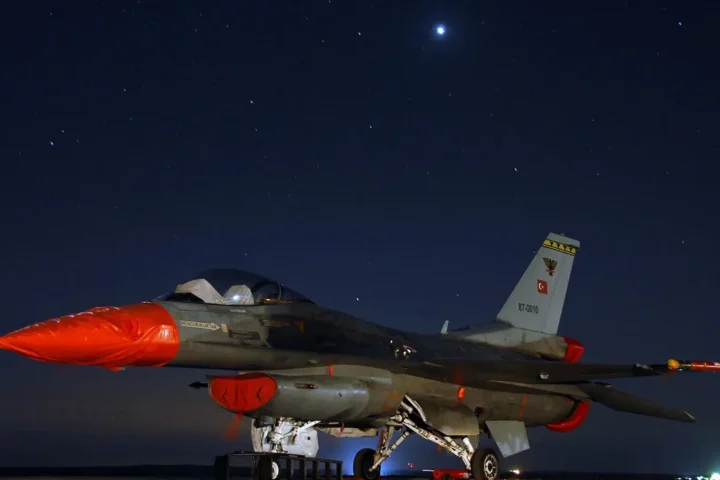
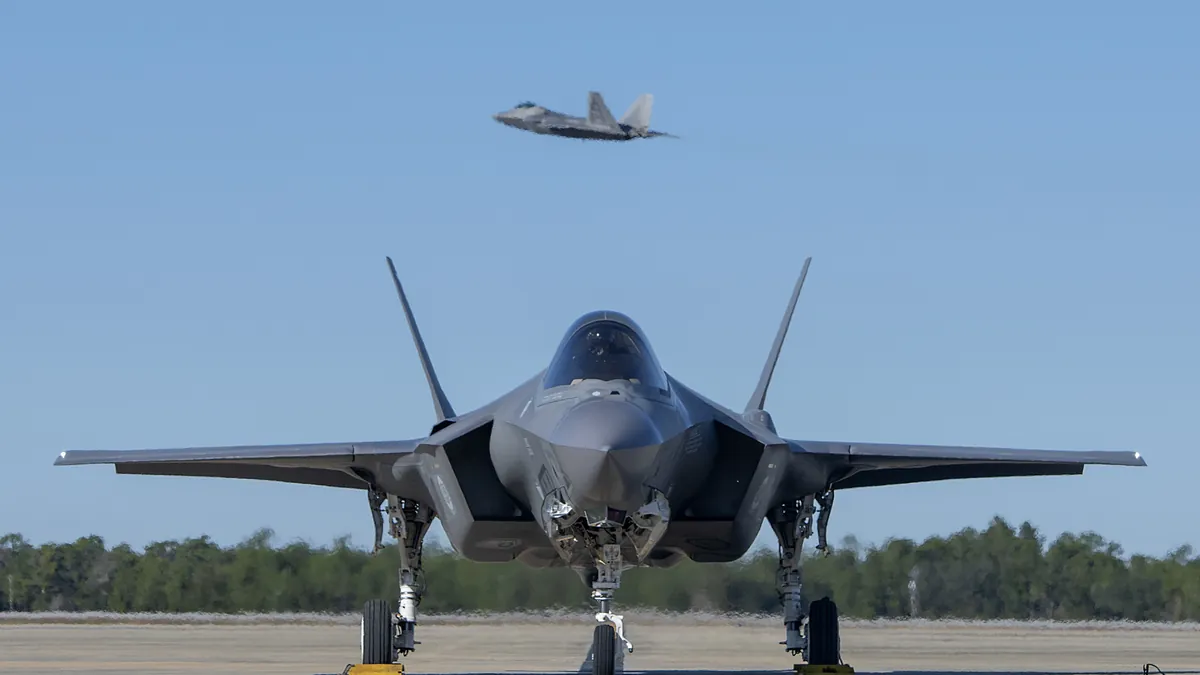
Illustrative photo: U.S. Air Force / Staff Sgt. Peter Thompson
Turkey was removed from the F-35 programme in July 2019 because it bought Russia’s S-400 air defence system, and the United States later added sanctions on Turkey’s main defence procurement agency under the CAATSA law. In July 2026 President Donald Trump said he would lift those sanctions and “consider” selling F-35s to Ankara, but the law still stands in the way, and Congress, Greece and Israel are watching.
Key points
- The White House said in 2019 that the S-400 made Turkey’s involvement in the F-35 “impossible”, because the jet “cannot coexist with a Russian intelligence collection platform”.
- Two separate legal barriers exist: Section 1245 of the FY2020 NDAA bars F-35 transfers to Turkey, and CAATSA Section 231 sanctions on Turkey’s defence procurement agency, imposed in December 2020, remain in force according to 18 members of Congress.
- Turkey is seeking 40 F-35s, according to the Congressional Research Service (CRS), and a possible sale of about 80 F110 engines for its Kaan fighter was reportedly notified to Congress in June 2026.
- Greece signed for 20 F-35s in July 2024 and is described by CRS as an expected recipient; Greek and Israeli officials have reportedly voiced concerns to Washington.
Why was Turkey thrown out of the F-35 programme?
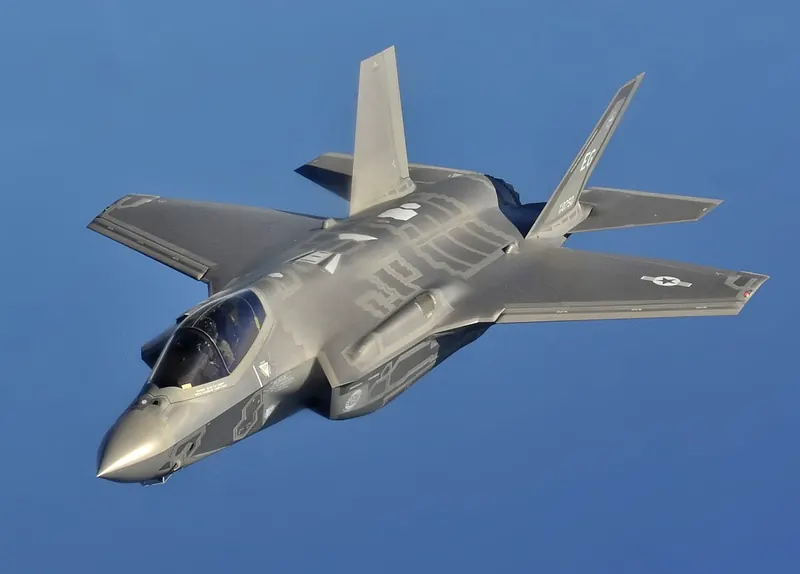
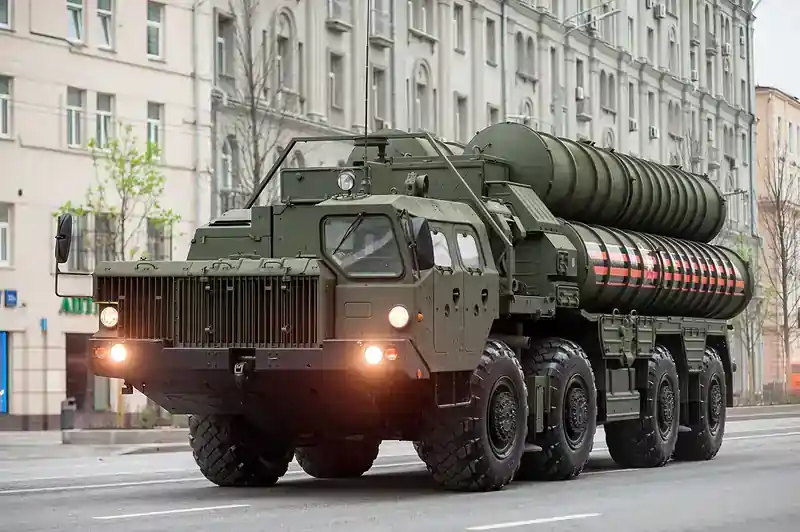
Turkey was an original member of the international consortium that shared the development cost of the F-35, but it was removed in July 2019 after it took delivery of the Russian S-400, CRS recounts in a July 2026 briefing for Congress. Officials cited the risk that Russia could use the system to gather intelligence on the stealth fighter’s capabilities, and CRS notes the move potentially cost Turkey billions of dollars in lost industrial work (CRS Insight IN12710).
The White House statement of 17 July 2019 put it bluntly: “The F-35 cannot coexist with a Russian intelligence collection platform that will be used to learn about its advanced capabilities.” It added that Washington had offered to move Turkey “to the front of the line” for the U.S. Patriot system and that accepting the S-400 “undermines the commitments all NATO Allies made to each other to move away from Russian systems” (White House statement, 17 July 2019).
What do the law and the sanctions actually say?
Two different pieces of U.S. law are involved, and lifting one does not lift the other.
- F-35 ban. In December 2019 Congress enacted Section 1245 of the FY2020 National Defense Authorization Act. The executive branch can waive it 90 days after certifying that Turkey no longer possesses the S-400 or associated items, has given credible assurances it will not reacquire the system, and has not acquired other Russian equipment that “would increase the risk of compromising the capabilities of the F-35 aircraft and its associated systems”.
- CAATSA sanctions. A year later the first Trump administration imposed sanctions under Section 231 of CAATSA, the Countering America’s Adversaries Through Sanctions Act, on Turkey’s main defence procurement agency and four related persons. CAATSA Section 236 lets the President waive them for national security reasons, or terminate them if the target has taken “significant verifiable steps” and the President has “reliable assurances”. Either step is subject to a 30 or 60 day congressional review under Section 216.
- A shortcut. A separate “modified waiver authority” under Section 231 is not subject to congressional review, but it requires the President to certify, among other things, that the activity “would not significantly increase the risk of compromising United States defense systems and operational capabilities”.
The same CRS note says lifting the sanctions may be a precondition for Turkish industry to keep developing and maintaining systems that depend on U.S. technology or export approvals, and reports that a Turkish official said in 2025 that the sanctions had obstructed the purchase of around $20 billion of spare parts for Turkey’s existing F-16s. That is a Turkish claim relayed by CRS, not a figure CRS verified.
| Date | Step |
|---|---|
| July 2019 | Turkey removed from the F-35 programme after acquiring the S-400 |
| December 2019 | Section 1245 of the FY2020 NDAA bars F-35 transfers to Turkey |
| December 2020 | CAATSA Section 231 sanctions imposed on Turkey’s defence procurement agency |
| June 2026 | Administration reportedly notifies Congress of a possible sale of about 80 F110 engines for the Kaan |
| 7 July 2026 | Trump, in Ankara: “We’re going to be taking the sanctions off” |
| 14 July 2026 | CRS says it is unclear what would lead officials to waive the ban or lift the sanctions |
What did Trump say in Ankara?
Speaking next to President Recep Tayyip Erdogan on the sidelines of the NATO leaders’ summit in Ankara on 7 July 2026, Trump said the United States would lift the sanctions on Turkey and consider selling it F-35s, according to the PBS NewsHour report headlined “Trump says in Erdogan meeting that U.S. will lift Turkey sanctions, consider selling F-35s”:
What is Congress saying?
Congress has the last word on much of this. Eighteen Democratic members, led by Rep. Dina Titus, wrote to House leaders before the Ankara summit urging them to be ready to use their powers if the administration pursues a transfer of U.S. fighter aircraft to Turkey. They argue that the CAATSA sanctions remain in force, that there is no public evidence Turkey has removed the S-400, and that Secretary of State Marco Rubio acknowledged in June 2026 testimony that sanctions must be maintained, according to a report posted on Rep. Ted Lieu’s website.
CRS describes a split. Some lawmakers may not object if Turkey no longer has the S-400, while others say Erdogan shows “aggression toward our greatest partners” and jails “his political opponents”. On the engines, nine members co-sponsored a joint resolution of disapproval, H.J.Res. 200, in July. CRS adds that veto-proof majorities may be needed to overcome presidential opposition, and that a media report says Turkey may be discussing a resale of its S-400 to the United Arab Emirates.
Why does this matter to Greece and Cyprus?
CRS lists Israel and Greece as the two countries whose military balance with Turkey an F-35 sale could affect, and says Israeli and Greek officials have reportedly communicated concerns to their U.S. counterparts. Greece is an expected F-35 recipient: the Greek government signed a Letter of Offer and Acceptance in July 2024 for 20 aircraft, with an option for 20 more, becoming the 19th nation to join the programme, according to Lockheed Martin. What has been signed, what is missing on weapons and when the jets arrive is set out in our analysis Greece’s F-35s: what has been signed, when they arrive, what is missing on weapons and what changes for the Hellenic Air Force.
The letter from the 18 members of Congress explicitly warns that reversing course would send the wrong signal to Eastern Mediterranean allies, citing Turkey’s policies toward Greece and Cyprus. Those policies rest on Turkey’s 1974 invasion and continuing occupation of part of the Republic of Cyprus, which the UN Security Council resolutions that Ankara ignores condemn; our explainer UN resolutions on Cyprus explained: what 353, 541 and 550 demand sets out what they require.
The CRS note also observes that Turkey is reportedly considering a U.S. or European missile defence system as an alternative to the S-400, and that an F-35 deal might change its interest in other fighters, including Eurofighter Typhoons. Turkey’s Eurofighter plans are covered in Eurofighter for Turkey: assembly of the first jet begins in Britain, with a Turkish Air Force delegation on the production line.
What happens next?
The sources read for this article describe statements, notifications and congressional manoeuvring, not a completed lifting of sanctions or an F-35 sale. Under the law as CRS summarises it, an F-35 transfer would require the executive branch to certify that Turkey no longer has the S-400, and sanctions relief would have to pass through the waiver or termination procedures above. CRS says it is unclear what actions, if any, would lead U.S. officials to take those steps.
Sources
Congressional Research Service, Turkey (Türkiye): Possible F-35 Sale and Sanctions Relief, 14 July 2026; White House statement of 17 July 2019 via the American Presidency Project; Rep. Ted Lieu’s site on the letter of 18 members of Congress; Lockheed Martin news release, 25 July 2024.