Analysis Air Force
Turkey’s pilot crisis: how the 2016 purges changed the balance in the Aegean
Ankara never published how many pilots it dismissed after the 2016 coup attempt, but its own decrees show the size of the gap. As Turkey moves to Eurofighter, F-16 Block 70 and KAAN, what does the missing generation of experience mean for the Aegean and for Greece?

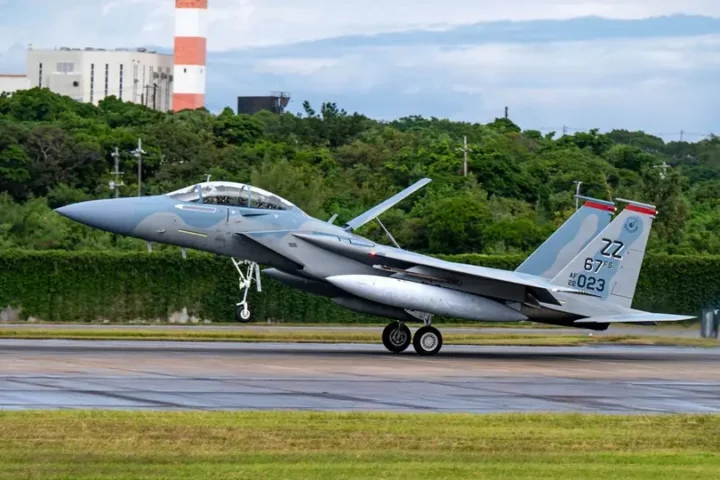
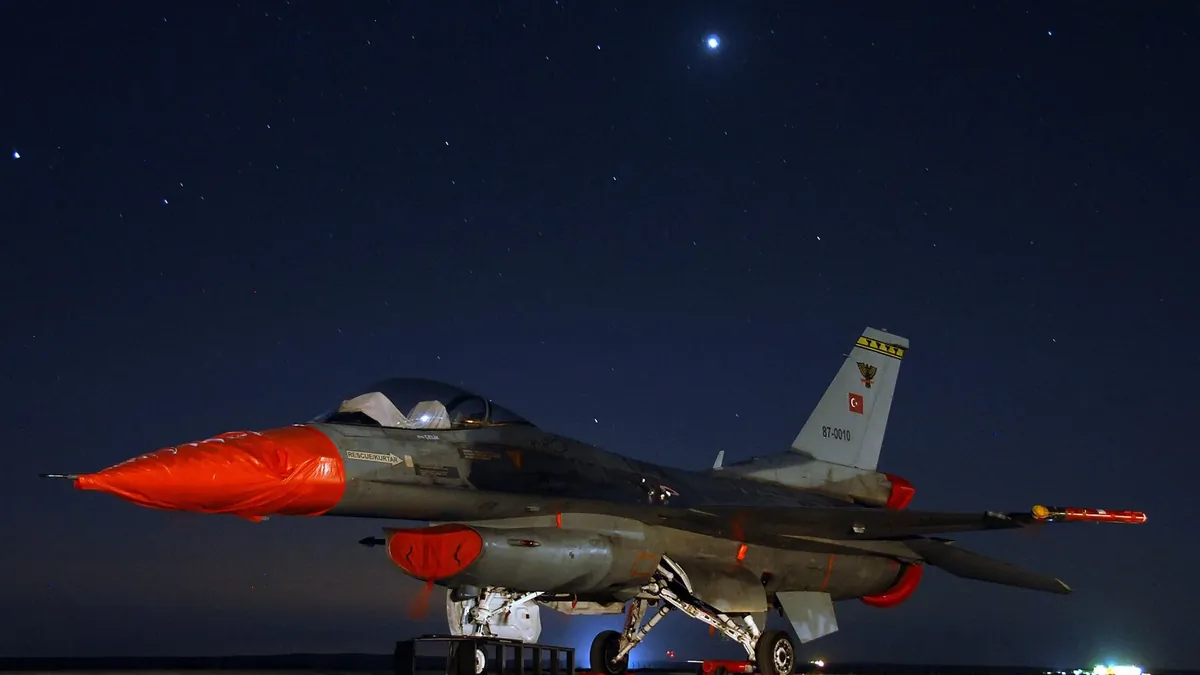
A Turkish F-16 at Muwaffaq Salti air base in Jordan, 2007. Photo: US Air Force / Wolfram M. Stumpf, Public Domain.
The Turkish Air Force lost in a single summer something that no contract can buy: years of accumulated experience in the cockpit. Ankara has never published, in any official announcement we have been able to find, how many pilots it dismissed after the coup attempt of July 15, 2016. Its own legislation, however, speaks more clearly than any announcement. Within thirteen months the Turkish government issued a series of decrees with the force of law that recalled pilots from civil aviation, allowed those who had resigned to return, lengthened the years of compulsory service and opened the Air Force Academy to students of civilian universities. The damage was never “a few aircraft on the ground” but a gap in the middle of the experience pyramid, and that gap takes on new significance now that Turkey is preparing to move to the Eurofighter, the F-16 Block 70 and the KAAN.
For the Greek reader the question is not whether Turkish pilots are “useless”, an easy and dangerous assumption that our own Air Force avoids. The question is how much depth Turkish air power has when it must sustain operations, the training of new pilots and the transition to new aircraft types at the same time. Turkey’s air force commander, General Rafet Dalkıran, flew the first sortie of the new training year, and Ankara now gives great public emphasis to training. That emphasis has its own explanation, which begins with the night of July 2016.
The July 15, 2016 coup: why the Turkish Air Force was at the centre of the attempt
Of all the branches of the Turkish Armed Forces, the Air Force was the one most directly linked to the operation of July 15. The centre of the plotters was Akıncı air base (4th Main Jet Base), north-west of Ankara, where the then Chief of the Turkish General Staff, Hulusi Akar, was held hostage. F-16s took off from that base and flew low over the capital, while the building of the Grand National Assembly of Turkey came under fire from the air during the night. The very image of the country’s own fighter aircraft flying against its government explains why, in the following weeks, Ankara treated the Air Force as the branch with the biggest credibility problem.
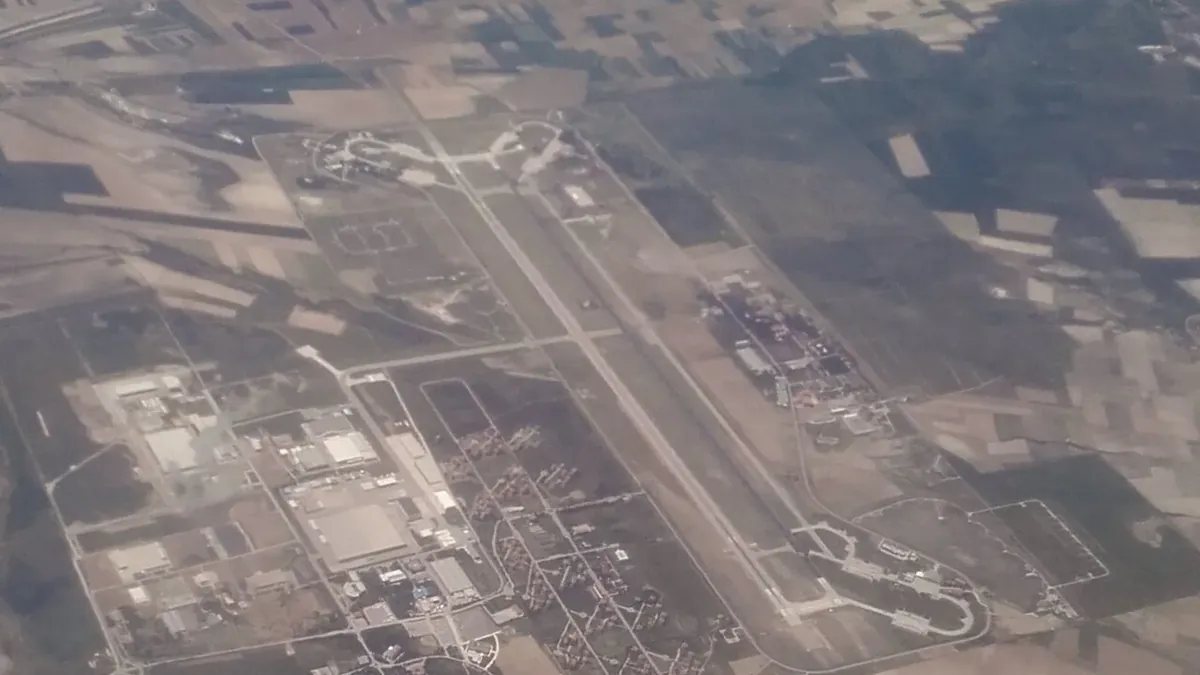
The involvement was not limited to one base. The commander of the İncirlik base, Brigadier General Bekir Ercan Van, was arrested for taking part in the attempt, and for about 24 hours the base, from which American aircraft also operate, stayed closed even to American flights. General Akın Öztürk, a former commander of the Turkish Air Force, was charged as a senior officer of the attempt and denied the charges. On June 20, 2019, a Turkish court sentenced him to life imprisonment along with 150 other defendants. When the top of the command and an entire fighter base are tied to a coup, the purge that follows cannot be surgical.
Greece found itself on the margins of the crisis from the first night. At 00:50 on July 16 a Turkish Black Hawk helicopter landed at Alexandroupolis’ Dimokritos airport, escorted by two Greek F-16s, carrying eight Turkish servicemen who requested asylum. The Supreme Court (Areios Pagos) rejected their extradition request in January 2017, and the case has since remained a constant source of friction in bilateral relations, as have repeated Turkish calls for the extradition of members of the Gülen movement. That political dimension often overshadows the substance that interests defence analysis: what happened next to the human potential of an air force that is one of the most numerous in Europe.
The purges in numbers: what Ankara has said officially and what it has never said
On July 20, 2016, Erdoğan declared a state of emergency, which allowed the government to legislate by decrees with the force of law (KHK, Kanun Hükmünde Kararname) without prior parliamentary vote. Tens of thousands of civil servants, police officers and military personnel were dismissed by these decrees, with lists of names published in the Official Gazette (Resmî Gazete). The first big list of military personnel was published on July 27, 2016, and many more followed until the state of emergency ended in July 2018. After that the dismissals continued through administrative decisions of the Defence Minister, according to the Turkish ministry itself.
The fullest official figures come from the Turkish Ministry of National Defence. In December 2021 the ministry said that since July 15, 2016, 24,256 personnel had been removed from the Turkish Armed Forces, among them 150 generals and 10,528 officers, while in a written statement of July 2022 the number had risen to 24,395, with a further 2,567 personnel stripped of their rank. These figures are not broken down by branch or specialty. Nowhere in the announcements we examined does the number of dismissed fighter pilots, the number of flight instructors or the pilot-to-aircraft ratio before and after 2016 appear.
In the public debate that gap has been filled with numbers circulated in 2016 and 2017 by anonymous military sources and foreign analysts. We deliberately leave them out, because none has been confirmed by Ankara and several differ from one another. They are not needed to understand the size of the problem. A government that does not face a serious shortfall does not necessarily recall pilots from airlines, does not pay a monthly allowance to those who return and does not change four times in eighteen months the rules on who may fly a fighter. Turkish legislation from 2016 to 2019 is the best official testimony to the pilot crisis.
| Official data point | Value | Source |
|---|---|---|
| Date of the coup attempt | July 15, 2016 | Turkish government |
| State of emergency declared | July 20, 2016 | Presidency of Turkey |
| Armed Forces personnel removed (to Dec. 2021) | 24,256 | Turkish Ministry of National Defence |
| Of these: generals / officers | 150 / 10,528 | Turkish Ministry of National Defence |
| Personnel removed (to July 2022) | 24,395 | Turkish Ministry of National Defence |
| Personnel stripped of rank (to July 2022) | 2,567 | Turkish Ministry of National Defence |
| Number of dismissed fighter pilots | Not published | – |
Decrees KHK 671, 678 and 694: the legislation that reveals the size of the gap
The first and most revealing text is decree KHK 671 of August 15, 2016, published in the Turkish Official Gazette on August 17, just one month after the coup. It added to Law 926 on Armed Forces personnel a provision allowing any officer-pilot who had left for any reason to return with his rank, provided he met the flying requirements, on the proposal of the branch commander and the approval of the Defence Minister. Those who returned and left again before completing four years lost any entitlement to the new rank. The same decree allowed officers who had stopped flying to re-enter flight training within a year, with a fifteen-year service obligation.
KHK 671 also opened two new doors of entry. The first was the “external source” of officer-pilots: graduates of four-year civil pilot training schools, under 27, could become permanent officers and be trained on military aircraft. The second concerned the Air Force Academy (Hava Harp Okulu), where students of civilian universities could transfer, for one year, into the first, second and third years, with priority for those studying piloting. A few days earlier, decree KHK 669 of July 31, 2016 had founded the National Defence University (Milli Savunma Üniversitesi) and placed the military academies under it. The training of future Turkish pilots thus changed institutional framework at exactly the moment when part of its instructors was being lost.
In October 2016 decree KHK 676 extended the return provision to officers of other specialties who held a commercial pilot or airline transport pilot licence and at least 1,000 flight hours. Decree KHK 678 followed, published on November 22, 2016, creating the institution of the “reserve pilot” (ihtiyat pilot). Former pilots who had left of their own will could sign a contract and fly for their branch at least three working days a month and up to sixty days a year, with compensation per flight hour and per day of service. The text of the law sets as its purpose covering pilot needs “in cases of crisis or operations” with “war-ready pilots” outside the permanent staff.
The harshest measure came with decree KHK 694 of August 15, 2017, published in the Official Gazette on August 25. The new temporary provision 98 of Law 926 allowed the return to uniformed service of officer-pilots who had already completed their service obligation and had left lawfully, mainly for the airlines. Under the amendment of Law 7166 of February 21, 2019, as it stands today in the codified Law 926, those recalled serve for as long as the general obligation of pilots specifies, their flight pay is calculated as if they had 23 years of flying service, and they receive a monthly advance of 10,000 lira. Anyone who loses the ability to fly for reasons other than health is dismissed and his civil pilot licence is suspended for the rest of the obligation period.
| Measure | Date | What it provides |
|---|---|---|
| KHK 669 | July 31, 2016 (publication) | Founding of the National Defence University, military academies placed under it |
| KHK 671 | August 17, 2016 (publication) | Return of departed pilots, hiring of civil pilots under 27, transfers to the Air Force Academy |
| KHK 676 | October 2016 | Return of officers of other specialties with a professional licence and 1,000+ hours |
| KHK 678 | November 22, 2016 (publication) | “Reserve pilot” contract institution, up to 60 flying days a year |
| KHK 681 | January 2017 | Six more years of obligation after flight training |
| KHK 690 and 696 | April and November 2017 | Return deadline to 31/12/2017 and then to 31/12/2020 |
| KHK 694 | August 25, 2017 (publication) | Compulsory recall of pilots who had left lawfully |
| Law 7166 | February 2019 | Rewording of the recall, special flight compensation |
| Law 7517 | June 2024 | New compensation rules for those who complete the obligation |
Compulsory service and civil aviation: why Ankara “locked in” its pilots
The recall of former pilots was one side. The other was keeping the current ones from leaving. Law 926 has provided since 1982 that no permanent officer may resign before completing fifteen years of actual service. For pilots the obligation is longer, because their training costs far more than any other specialty. With decree KHK 681 of January 2, 2017, ratified by Parliament through Law 7073 in February 2018, the additional obligation for those completing flight training was set at six years. In practice a young Turkish fighter pilot is now bound to the Air Force for about two decades from his commissioning as an officer.
The logic is understandable. Turkish civil aviation, in constant expansion over the past twenty years, was, as in every country, the natural destination of military pilots who finished their obligation and sought better pay and a steadier life. After the purges, every such departure became an operational-readiness problem for Ankara. That is why the “reserve pilot” provision provides that the contract is concluded, with the pilot’s written consent, with the airline that employs him, and that his flight hours for the military are notified to his employer so that they are combined with civil aviation limits. Turkish civil aviation became, in other words, an institutional reserve pool for the Air Force.
The compulsory recall of 2017 also carried a cost that does not show in any table. A pilot who returns to a fighter after years in an airliner needs refamiliarisation training, instructors to certify him and flight hours that could have gone to younger pilots. He may also be unwilling. That the legislator had to rewrite the provision in 2019, adding a security check, special allowances and an explicit penalty of suspension of the civil licence for anyone who does not comply, shows that the first version did not deliver as expected. That the compensation arrangement was amended again with Law 7517 in June 2024 shows that the issue remains open almost eight years later.
What an air force loses when the experienced leave: instructors, flight leads and the experience pyramid
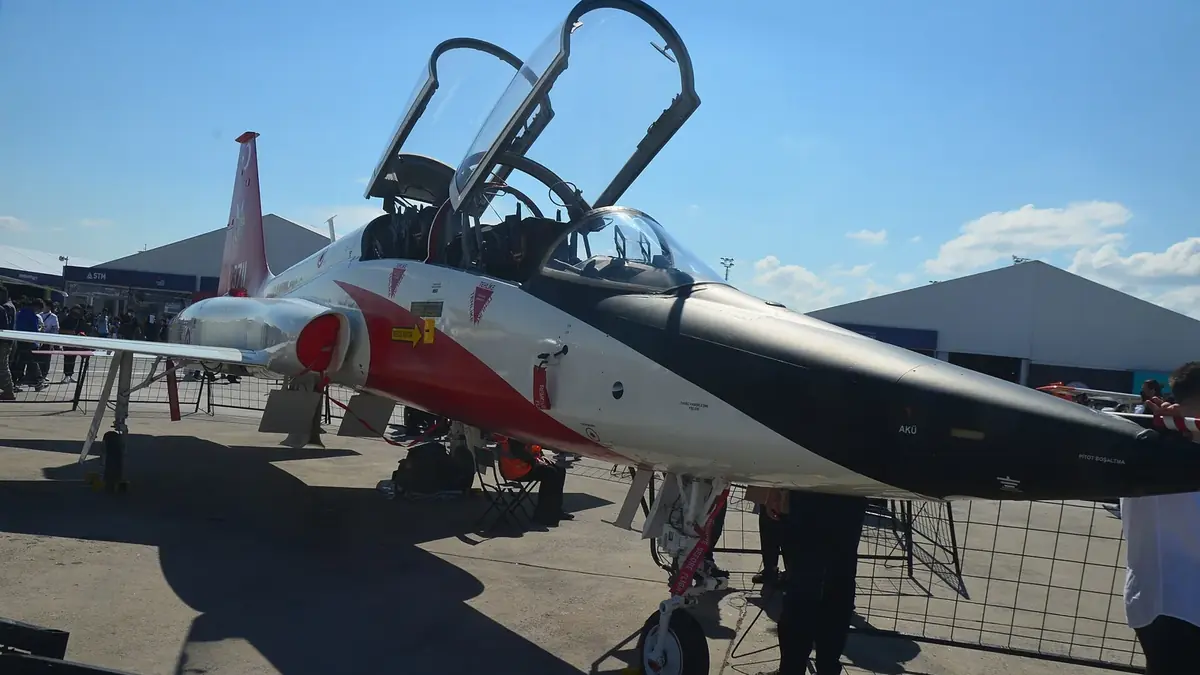
To understand why the purges had a greater effect than a dismissal percentage suggests, one must see how a fighter pilot is “built”. After the Air Force Academy come basic training on a propeller aircraft, advanced training on a jet trainer, such as the Turkish T-38M, and the transition to the combat type, where the new pilot flies for years as a wingman beside an experienced leader. Only after hundreds of hours and successive qualifications does he become a two-ship leader, then a four-ship formation leader and, for the best, an instructor or weapons tactics officer. Each step rests on the previous one and none is skipped.
The 2016 purges hit exactly the middle of this pyramid. Of the 24,256 personnel announced by the Turkish ministry, 10,528 were officers, and in the Air Force junior and mid-ranking officers are, as a rule, the captains, majors and lieutenant colonels with ten to twenty years of flying, that is, the formation leaders, the instructors and the squadron commanders. A new pilot can be trained in a few years, but the leader who will guide him needs a decade. The Turkish legal framework itself recognises this indirectly: KHK 696 provided that those returning to flight training would be credited with half of their time as officers, up to five years, as flying service. Ankara was trying to “manufacture” seniority where experience was missing.
There is also a less visible consequence, the quality of judgement in the air. The Turkish Defence Ministry says the fight will continue “until not a single member” with ties to the Gülen movement remains, so the criterion of political reliability entered, and remains, at the centre of personnel management. In an air force operating in one of the tensest air environments in NATO, where engagements over the Aegean are decided in seconds and where one mistake can cause a diplomatic crisis, the leader who knows when not to pull the trigger is as valuable as the one who knows how to hit a target. That ability is not taught in a classroom and cannot be recovered by decree.
None of this means the Turkish Air Force stopped being combat-capable. From 2016 to today it has carried out air operations almost without pause in Syria and northern Iraq, in Operations Euphrates Shield, Olive Branch, Peace Spring and Claw-Sword, it hosts the multinational Anatolian Eagle exercise at Konya every year and keeps an active F-16 fleet that TUSAŞ is modernising. Those operations, however, took place in an environment where the enemy air and air-defence threat was limited. An air force can carry out flawless precision strikes and at the same time have limited depth for a high-intensity conflict against an equal adversary.
F-35, Eurofighter Typhoon, F-16 Block 70 and KAAN: the pilot crisis meets the transition to new fighters
The loss of access to the F-35 came at the worst possible moment for the training of Turkish pilots. Turkey, a partner in the programme since 2002, had received four F-35As at Luke Air Force Base in Arizona between June 21, 2018 and April 5, 2019, where the first Turkish pilots and technicians were being trained. In June 2019 the Pentagon announced that their training would end by the end of July, and on July 17, 2019 the White House judged Turkey’s continued participation impossible because of the Russian S-400s. A group of pilots who would have formed the core of the 5th generation in the Turkish Air Force came back without an aircraft.
Today Ankara is attempting three transitions at once. In June 2024 it signed the FMS contract (LOA) for 40 new F-16 Block 70s, which have not yet been delivered. In October 2025 it signed with Britain a contract for 20 new Eurofighter Typhoons, the first of which is in assembly, as BAE Systems announced in November. And the domestic KAAN fighter, which first flew on February 21, 2024, is still in testing with American engines. Each new type needs conversion pilots, type instructors and test pilots, exactly the category of experienced pilots that thinned after 2016. For the differences between the newest F-16 and Greece’s Viper, see our analysis of the F-16 Block 70/72.
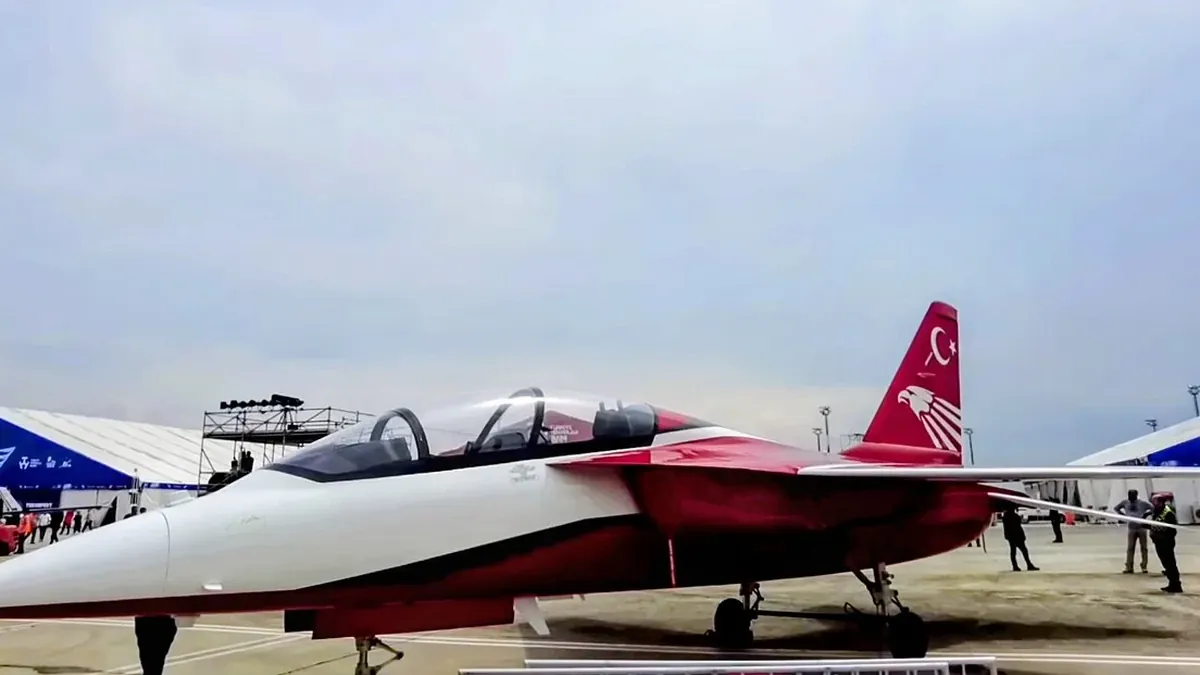
Into this equation comes TUSAŞ’s new jet trainer, the Hürjet, which first flew on April 25, 2023 and is meant to replace the ageing T-38Ms in advanced training. A modern trainer with a digital cockpit, similar to that of fighters, can shorten the time until a new pilot moves to a 4th or 5th generation fighter. It cannot, however, replace the instructor sitting in the back seat. For the next few years the Turkish Air Force will have to divide a limited number of experienced pilots among front-line squadrons, schools, the transition to Typhoon and F-16 Block 70, and KAAN testing. The weight of that decision will show in availability, not on parade.
The official Turkish narrative is the opposite: as Turkish defence ministry sources repeat, the more the Armed Forces are “cleansed” of the Gülen movement, the stronger they become. Part of that claim stands, since ten years of training have already produced pilots who entered the academies after 2016 and who today, at the usual rate of progression, are probably flying as two-ship or formation leaders. The Turkish ministry’s public messaging at the start of each training year is part of this narrative. But the time needed to turn a pilot into an instructor or squadron commander cannot be compressed. The first graduates of the post-2016 era are only now reaching the rank that was emptied then.
What the pilot crisis means for the Aegean and for the Hellenic Air Force
For Greece the first conclusion is negative in the good sense: it must not base itself on assumptions of “weak” Turkish pilots. As a reader with experience of real cockpits wrote in our opinion piece on the moment of decision in an F-16 over the Aegean, underestimating the adversary is one of the fastest ways to hand him an advantage he did not have. The Turkish Air Force has more aircraft, more bases and greater industrial support. If after 2016 it lost depth of experience, it lost it in a system that remains large and that now invests systematically in making it up.
The second conclusion is that the Greek advantage in this field is real, but it is not permanent. The Hellenic Air Force did not suffer a comparable break in continuity of command and training. Its pilots fly under conditions of constant operational activity in the Aegean, train in large multinational exercises and are already transitioning to the Rafale and the F-16 Viper, while the first for the F-35 are training in the US. In advanced training, the M-346s that landed at Kalamata in 2023 gave the Greek side a modern jet trainer in service, while the Hürjet is still at the introduction stage. Greece, however, has a smaller pool of personnel, and a gain that is not maintained is lost.
The third conclusion concerns time. The period to the end of the decade is the one in which the Turkish Air Force will be most exposed to what could be called “double pressure”: an experience gap since 2016 and, at the same time, a transition to three new fighter types. If Ankara receives the Typhoon and F-16 Block 70 with delays, and if the KAAN needs more time in testing, that window will widen. For Athens this means that the speed of bringing the F-35 into service, with first arrivals at Andravida from November 2029 according to the current schedule, as set out in our analysis of the F-35 timeline, and the full exploitation of the Rafale and the Viper have value precisely now, not after 2030.
The 2026 Confidence-Building Measures, with visits such as that of the Turkish delegation to the 115 Combat Wing at Souda, and the relative calm in the Aegean air in recent years do not change this reading. Contacts between the two air forces reduce the risk of an accident but do not change the structure of the forces. The pilot crisis in the Turkish Air Force is a wound that heals slowly and largely out of sight. Ankara knows it, which is why it was still legislating on it in 2024 and why it invests in training aircraft and in public projection of training.
Our assessment is that the 2016 purges did not “bring down” the Turkish Air Force, but they deprived it for a decade of its margin for error. A large air force can impress in exercises and counter-insurgency operations, but struggles to absorb losses, new aircraft and the pressure of a high-intensity conflict at the same time. Greece gains nothing by underestimating the adversary, but it gains a great deal by using this window to lock in its own qualitative lead, with flight hours, instructors who stay in the service and rapid introduction of the F-35. In the air over the Aegean, the balance is measured not in aircraft but in people who know how to fly them.
Frequently asked questions
How many Turkish Air Force pilots were dismissed after the 2016 coup?
Ankara has not published an official number of dismissed pilots. The Turkish Ministry of National Defence has announced only totals for the whole Armed Forces: 24,256 personnel removed by December 2021, among them 150 generals and 10,528 officers, and 24,395 by July 2022.
What measures did Turkey take to cover the pilot shortage?
With decrees of 2016 and 2017 it allowed departed pilots to return, created the reserve pilot institution, hired civil pilots under 27, opened the Air Force Academy to university students, lengthened pilots’ service obligation and, with decree KHK 694, provided for the compulsory recall of pilots who had moved to civil aviation.
Which base did the coup plotters use in 2016?
The centre of the attempt was Akıncı air base (4th Main Jet Base) near Ankara, from which F-16s took off and where the then Chief of the General Staff, Hulusi Akar, was held hostage. The commander of the İncirlik base was also arrested.
Does the pilot crisis affect the introduction of Eurofighters and F-16 Block 70s in Turkey?
Each new fighter type needs experienced conversion pilots and instructors. Turkey is called on to cover 20 new Typhoons, 40 F-16 Block 70s and the KAAN tests at the same time with a middle generation of pilots that thinned after 2016, so the allocation of experienced personnel is a critical constraint.
Does this mean Turkish pilots are inferior to Greek ones?
No. The Turkish Air Force remains large, carries out operations continuously and is making up its gaps. The Greek advantage concerns continuity in command and training and depth of experience, and it is maintained only if Greece keeps investing in flight hours, instructors and new aircraft.