Cyprus
On this day, November 15, 1967: the Kofinou operation and how the Greek Division left Cyprus
On November 15, 1967 the Cypriot National Guard under General Grivas attacked the Turkish Cypriot positions at Agios Theodoros and Kofinou. Under the threat of Turkish war, Athens withdrew its Division from the island, seven years before the invasion.

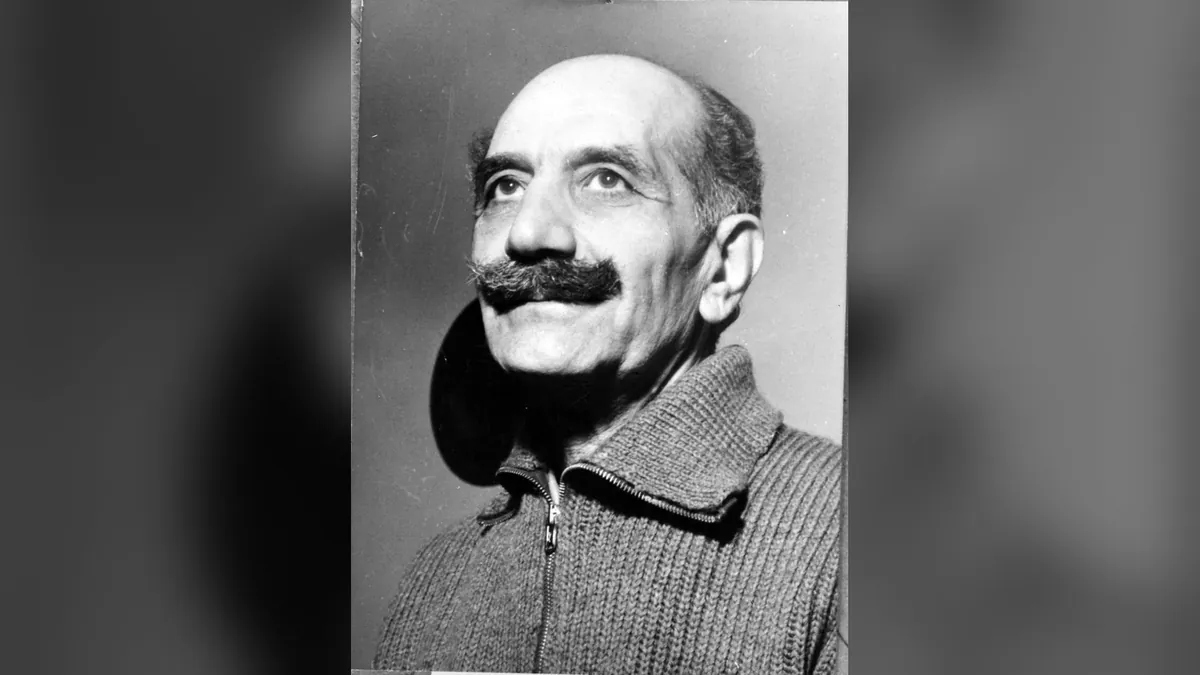
On November 15, 1967 the National Guard of Cyprus, under the command of General Georgios Grivas, attacked the fortified positions of the Turkish Cypriots at Agios Theodoros and Kofinou, two villages in Larnaca district near the Nicosia–Limassol road. Militarily the operation succeeded within hours. Politically the cost was heavy. Within three weeks, and under the threat of war from Turkey, the junta in Athens agreed to withdraw the thousands of Greek soldiers of the Division from the island, leaving Cyprus with a far smaller deterrent seven years before the Turkish invasion of 1974.
The Kofinou enclave and the police patrols
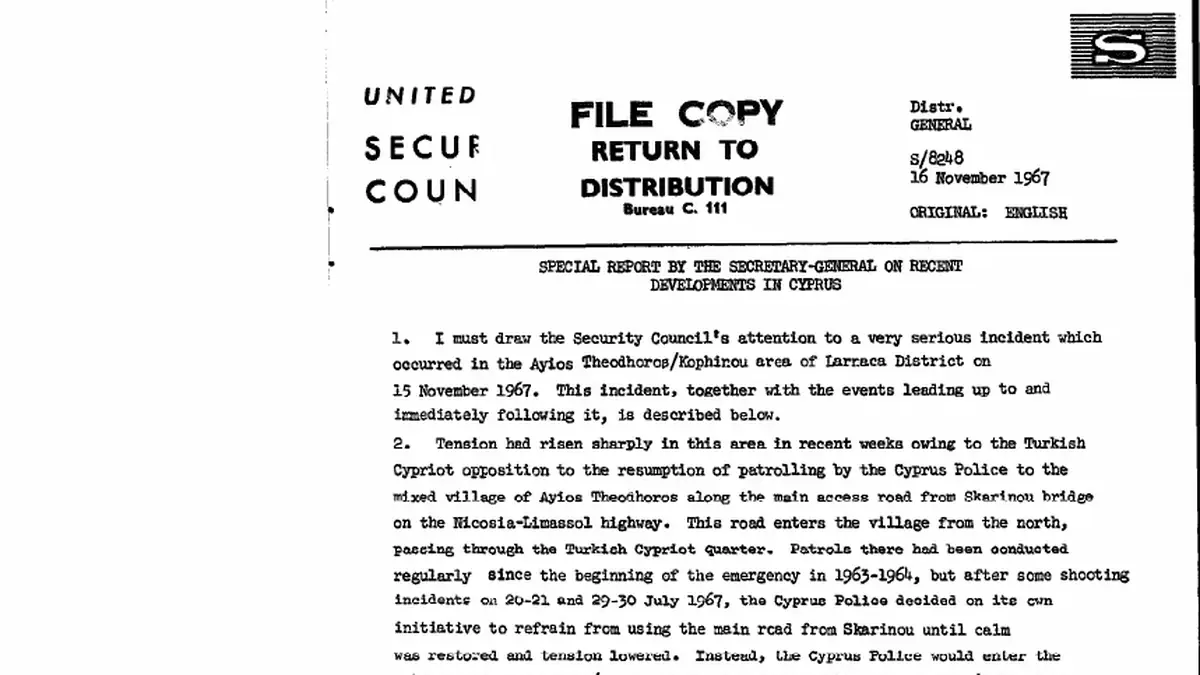
Since the intercommunal violence of 1963–1964, Kofinou and the Turkish Cypriot quarter of Agios Theodoros had been an enclave controlled by armed fighters of the Turkish Resistance Organisation (TMT). Kofinou lay beside the junction where the roads from Nicosia, Limassol and Larnaca meet, and Agios Theodoros was linked to the main road by the Skarinou bridge. According to the special report S/8248 that UN Secretary-General U Thant submitted to the Security Council on November 16, 1967, the Cyprus Police had patrolled through Agios Theodoros since the beginning of the crisis, along the main road that crossed the Turkish Cypriot quarter. After the shooting of July 20–21 and 29–30, 1967 the police stopped using that road on their own initiative and entered the village from the south, from the Greek Cypriot side.
In September the government in Nicosia decided to resume the patrols from the north. On September 7 and 16 the police reached the village, but the armed Turkish Cypriots would not let them return by the same road. The second time the escort of the UN Peacekeeping Force in Cyprus (UNFICYP) was threatened and manhandled, and the patrol passed only when the Turkish Cypriot leadership in Nicosia gave an order. UNFICYP had proposed a timetable for the gradual return of the patrols, which the Turkish side accepted in principle only on November 15, the very day the fighting began.
November 15, 1967, hour by hour
On November 13 Makarios, Grivas and Interior Minister Epameinondas Komodromos told the UN special representative of their concern over the patrols. Despite the UN advice to postpone them, the government decided to go ahead. The local National Guard commander told UNFICYP that, if it did not escort the patrols, the National Guard would, and would be “ready to face whatever consequences”. On November 14, at 13:30, two police patrols entered Agios Theodoros without incident, and shortly afterwards Grivas himself, the Supreme Commander of the armed forces of Cyprus, visited the village. The UN report notes that UNFICYP had already seen large movements and deployments of National Guard units in the area and had made clear that it would not take part in a show of force. On the morning of November 15, at 10:30, a new patrol escorted by the National Guard passed normally, and the Turkish Cypriots themselves moved a tractor that had been blocking the entrance to the village.
At 13:40 the local National Guard commander told the UN that patrols would follow from both directions at 14:00. At the northern entrance the tractor was back on the road, this time with a plough. The patrol from the Greek Cypriot side was far stronger than in the morning and included an infantry platoon. The soldiers got out of their vehicles, removed the obstacle and deployed at the crossroads. Shots were heard, which the UN assessed as coming from the Turkish Cypriots. The National Guard and the police opened fire immediately, and within an hour the National Guard was using armoured vehicles, heavy machine guns, mortars and artillery and attacked the village with a force of about a company. At the same time armoured vehicles and infantry moved against the positions around Kofinou, about four kilometres away, a village that according to the UN had nothing to do with the patrol issue.
National Guard commandos took part in the attack. By evening most of the Turkish Cypriot positions had been taken and the National Guard was inside Agios Theodoros. At Kofinou the last serious exchange of fire came at around 20:30. At 21:45 Cypriot Foreign Minister Spyros Kyprianou told the UN special representative that a ceasefire order had been given, but house-to-house searches went on through the night. At 03:00 on November 16 the UN representative learned that Grivas had been ordered to withdraw his forces before dawn, so that the situation would return to what it had been before 14:00 the previous day. The withdrawal was set for 04:45, and at 05:00 the residents who had been removed from their homes were handed over to UNFICYP, which took them back to the villages.
The casualties and the UN report
When the UN peacekeepers entered the two villages on the morning of November 16 they found seventeen dead and seven wounded. The report noted that there was no final figure yet, but according to the latest UNFICYP data the dead numbered 24, among them two Greek Cypriots, while nine wounded Turkish Cypriots were taken by the UN to the Turkish Cypriot hospital in Nicosia. U Thant described the events as “senseless and reprehensible” and wrote that the size and speed of the operation showed that the National Guard had planned it in advance, in case it met resistance. He also complained that National Guard soldiers had disarmed UNFICYP men and destroyed radio sets, and that UN positions came under mortar fire.
At 18:40 the same day Turkey’s chargé d’affaires in Nicosia had passed to the UN a message from Foreign Minister İhsan Sabri Çağlayangil: if UNFICYP did not stop the fighting and remove the Greek Cypriot and Greek forces from the Turkish Cypriot areas, “a crisis that will go beyond the borders of the island will be inevitable”. By referring to “Greek” forces Ankara was aiming directly at the Greek Division, the Greek officers and soldiers who had been sent secretly to Cyprus from 1964 and were serving within the National Guard.
Ultimatum, mediation and the agreement of December 3
In the following days the crisis moved from Cyprus to the Aegean and Thrace. On November 17 Ankara sent Athens an ultimatum that, as US State Department documents record, demanded the withdrawal of the Greek troops from Cyprus, the recall of Grivas, compensation for the victims and the lifting of restrictions on the Turkish Cypriots. The same day the Turkish National Assembly authorised the government to use armed force if the situation worsened. Grivas was recalled to Athens within a few days. U Thant addressed three successive appeals to the President of Cyprus and the prime ministers of Greece and Turkey, on November 22, November 24 and December 3, and on November 25 the Security Council unanimously approved a statement calling for moderation and restraint. On November 23 the Secretary-General’s personal representative José Rolz-Bennett arrived in the region, while President Lyndon Johnson’s envoy Cyrus Vance also travelled the region with the task of preventing a clash between two NATO allies.
The Secretary-General’s third appeal asked Greece and Turkey, as a first step, to withdraw quickly the forces that exceeded the official contingents provided for by the 1960 Treaty of Alliance, that is 950 Greeks of ELDYK and 650 Turks of TOURDYK. As recorded in addendum S/8248/Add.7, the same day the prime minister of the junta, Konstantinos Kollias, replied that Greece accepted the appeal and was ready to carry it out quickly. Turkish Prime Minister Süleyman Demirel also accepted it, but asked for a broader mandate for UNFICYP and for the disarmament of all forces formed on the island after 1963. War was avoided at the price of Cyprus’s defence.
The Division leaves and the road to 1974
The Greek troops left between December 8, 1967 and January 16, 1968. The Secretary-General’s report S/8446 of March 1968 notes that the operation was carried out under the responsibility of the two governments and not under UN supervision, but that it was evident that several thousand Greek soldiers left the island, taking with them a considerable quantity of equipment and vehicles, among them tanks. Most belonged to organised units, while Greek officers and soldiers continued to serve individually in the National Guard and on its staff. To cover the gaps, the National Guard reorganised its units, abandoned or thinned out positions it had held for years, called up part of the 1950 class on January 22, 1968 and sped up the training of new officers.
Kofinou showed that a local incident in an enclave could become a Greek–Turkish crisis within hours, and that the defence of Cyprus depended heavily on the Greek military presence. With the withdrawal of the Division, Greece lost the main military counterweight it had on the island against the Turkish threat. Seven years later, in July 1974, the junta’s coup against Makarios gave Turkey the pretext it had been looking for to invade, and on the island there were only the National Guard and ELDYK, at the strength set by the Treaty of Alliance. The invasion brought the occupation of 37 percent of the territory of the Republic of Cyprus, which continues today, and the missing persons, refugees and illegal settlement that came with it. Our timeline of the coup, the Turkish invasion and the UN resolutions shows what this meant in practice.
Responsibility for Kofinou is still debated. One view holds that the junta in Athens pushed for the operation and then sacrificed the Division to close the crisis with Turkey. The other puts the decision on Nicosia and on Makarios, who wanted to impose the presence of the state in the enclaves. The UN documents record that the government in Nicosia went ahead with the patrols despite UNFICYP’s recommendations and that the operation had been planned in advance. They do not record who gave the political order. What is certain is that November 15, 1967 led to the withdrawal of the Greek forces, with consequences that showed in 1974.
Frequently asked questions
What happened at Kofinou on November 15, 1967? The National Guard of Cyprus, under General Georgios Grivas, attacked the fortified positions of the Turkish Cypriots at Agios Theodoros and Kofinou, after a disagreement over police patrols on the road that ran through the Turkish Cypriot quarter. The fighting lasted from 14:00 until the evening, and the National Guard withdrew in the early hours of November 16.
How many people were killed at Kofinou? The Secretary-General’s report of November 16, 1967, with the latest UNFICYP figures, recorded 24 dead, among them two Greek Cypriots, and nine wounded Turkish Cypriots.
Why did the Greek Division leave Cyprus? After Kofinou Turkey threatened war. Greece and Turkey accepted on December 3, 1967 the UN Secretary-General’s appeal to withdraw the forces that exceeded the limits of the Treaty of Alliance. The Greek troops left between December 8, 1967 and January 16, 1968.
How many Greek soldiers stayed in Cyprus after 1967? ELDYK remained, with the 950 men provided for by the 1960 Treaty of Alliance, as well as Greek officers and soldiers serving individually in the National Guard.