Military & Defense
North Korea says joint live-fire drill demonstrated destructive power
Pyongyang says its latest exercise combined short-range missiles, artillery and drones after a trilateral US–South Korea–Japan drill.

North Korea says a recent joint live-fire exercise involving missiles, artillery and drones demonstrated the concentrated destructive power of its forces and tested an integrated weapons-control system. The drill followed a trilateral military exercise by the United States, South Korea and Japan, which Pyongyang routinely describes as preparation for hostile action.
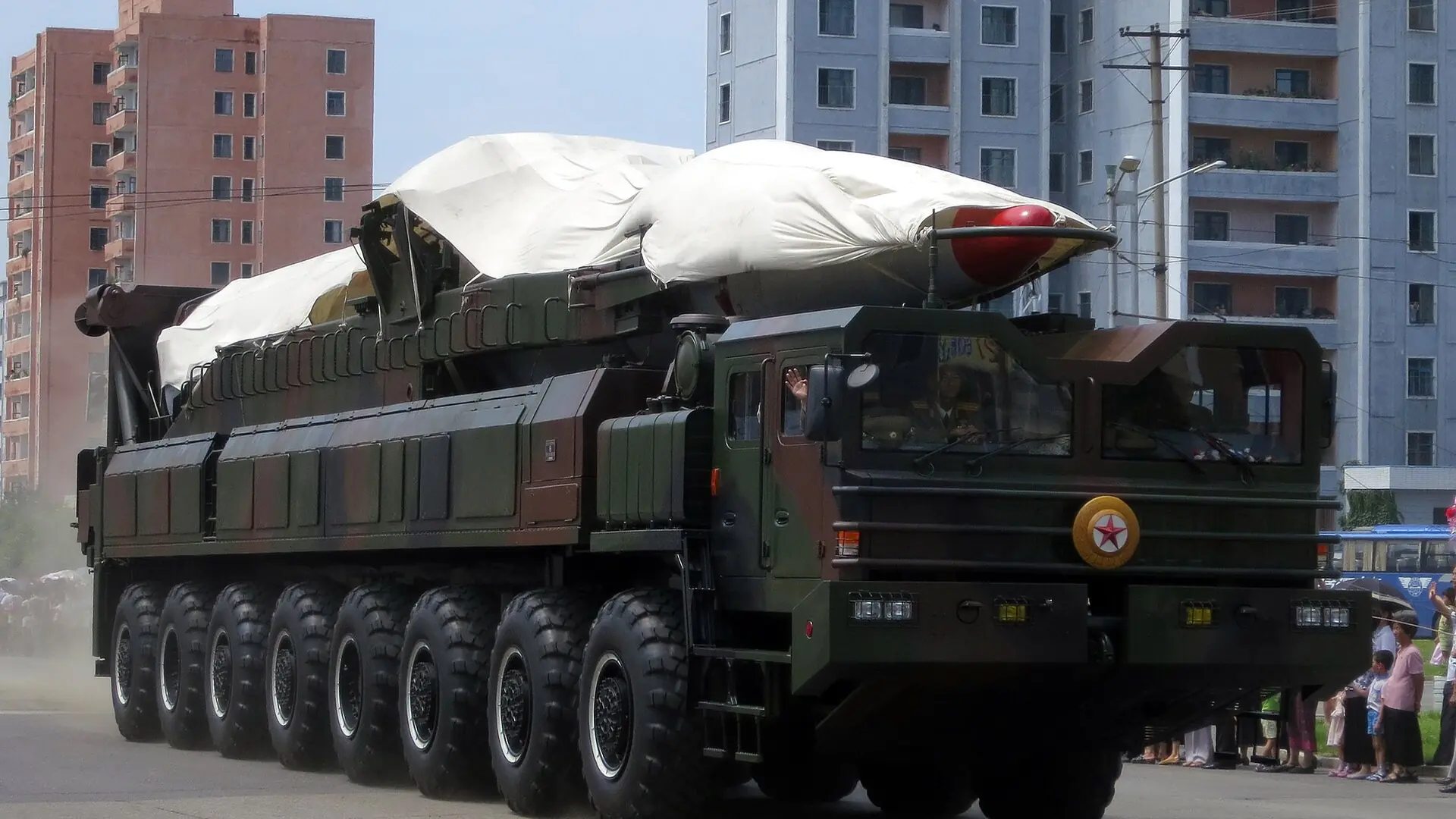
South Korea’s Joint Chiefs of Staff said North Korea launched several short-range ballistic missiles from its eastern coast. The missiles travelled about 250 kilometres, a distance that would place targets across much of South Korea within range, including areas hosting US military forces. Seoul monitored the launches and shared information with its allies.
North Korean state media presented the activity as a coordinated test rather than an isolated missile launch. Marshal Pak Jong Chon said the exercise was intended to improve the ability to deliver simultaneous fire against an adversary. The inclusion of drones and artillery alongside ballistic missiles points to an effort to connect different strike systems under common command and control.
The claims made by North Korean state media cannot be independently verified in full. South Korea confirmed the missile launches, but Pyongyang has not released technical data sufficient to establish the performance of every weapon or the effectiveness of the integrated control system. Public images and official statements therefore provide only a partial view of the exercise.
The drill occurred as Washington attempted to keep open the possibility of renewed diplomacy while adjusting some combined activities with South Korea. North Korea has dismissed limited changes in allied exercises as insufficient and continues to demand the end of what it calls a hostile US policy. It also insists that its status as a nuclear-armed state must be recognized in any future talks.
For Seoul and Tokyo, the immediate concern is the continued improvement of short-range systems designed to evade or saturate missile defences. Combining drones, artillery and missiles could complicate detection and response by presenting defenders with different flight profiles and warning times.
Integrated fire-control exercises are designed to shorten the time between detecting a target, selecting a weapon and authorizing a strike. North Korea’s presentation suggests that it wants missiles, guns and unmanned systems to operate as parts of one sequence. That objective is militarily plausible, but the exercise does not prove that every link worked under combat conditions or against electronic interference. South Korean and allied intelligence will compare launch timing, telemetry and imagery to assess what was genuinely tested and what was presented for deterrent effect.
No casualties or damage were associated with the drill, which took place inside North Korea and its adjacent waters. The launches nevertheless add to the sequence of weapons tests used by Pyongyang to signal readiness, refine operational procedures and answer allied exercises with demonstrations of its own strike capacity.