Drones
“Pyrpolitis”: the Hellenic Navy’s new Greek-made unmanned vessel, an Anduril underwater drone on show, and Dendias’s announcements
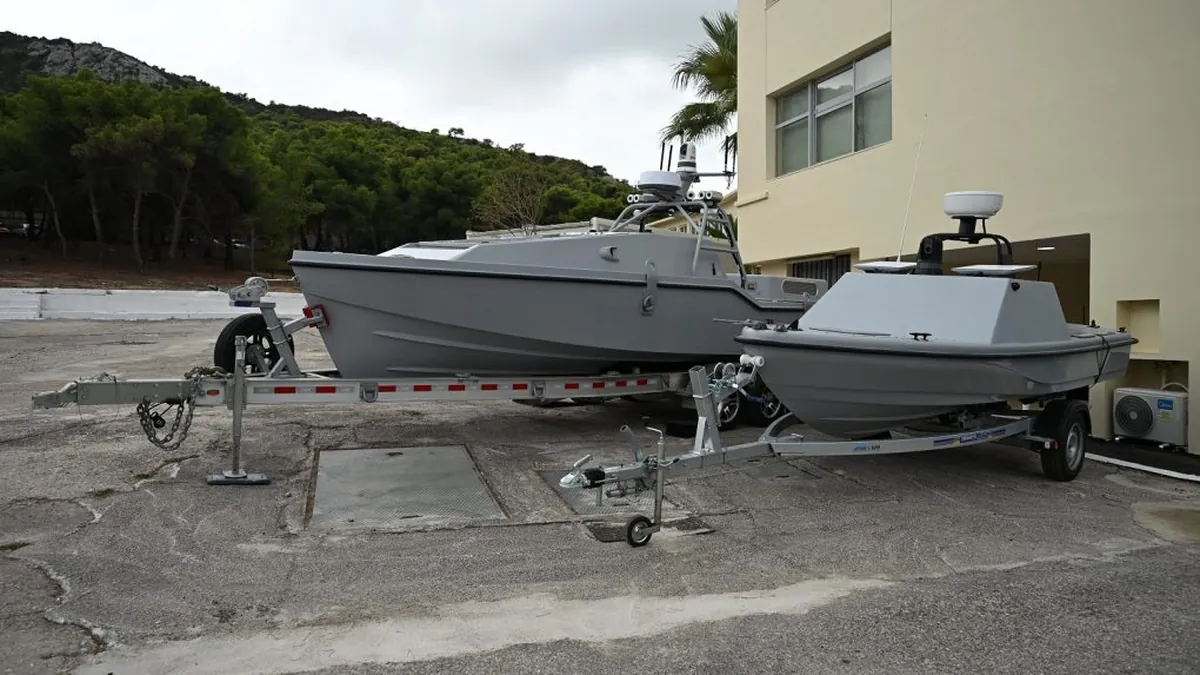
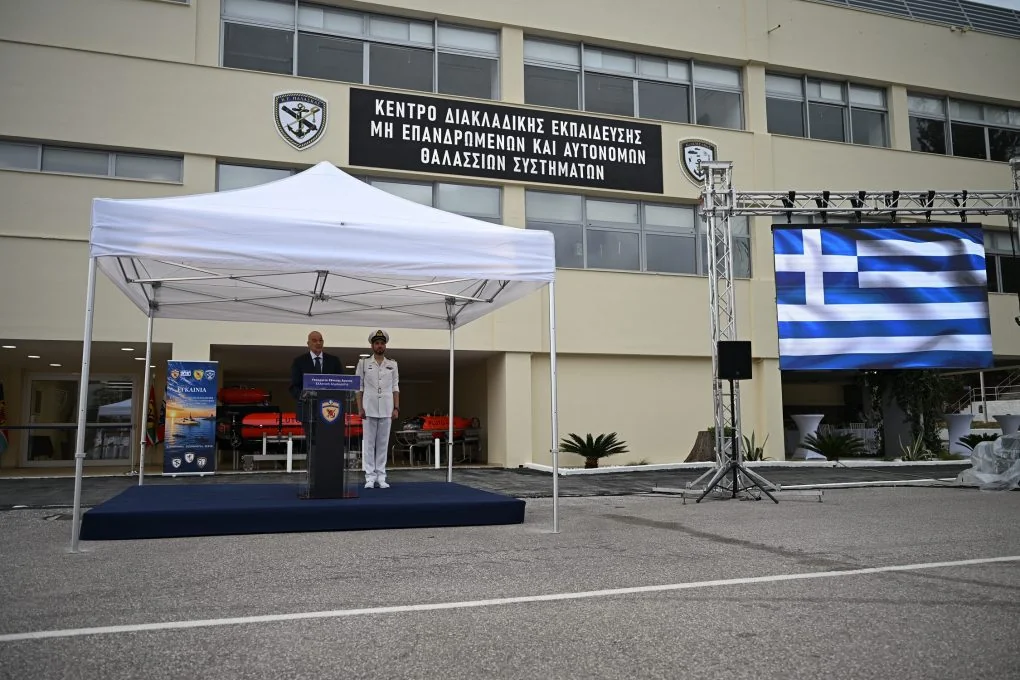
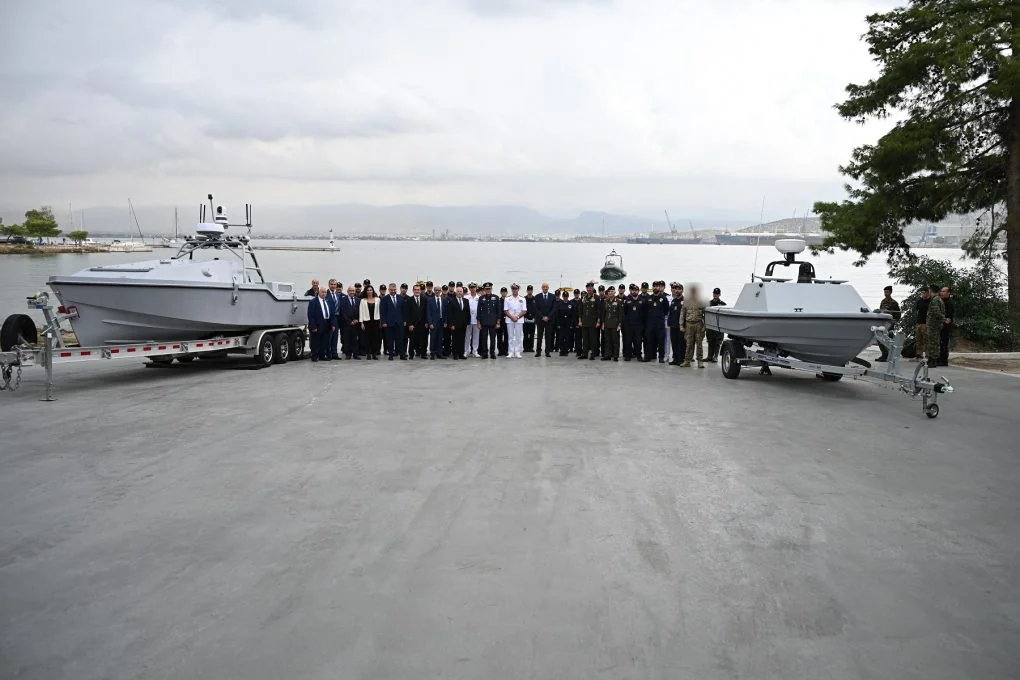
The “Pyrpolitis”, an unmanned surface vessel designed, developed and built entirely by the Hellenic Navy, was the star of the inauguration of the Joint Training Centre for Unmanned and Autonomous Maritime Systems at Skaramangas on Tuesday, October 13.

The “Pyrpolitis” (“Fire-raiser”), an unmanned surface vessel designed, developed and built entirely by the Hellenic Navy, was the real star of the inauguration of the Joint Training Centre for Unmanned and Autonomous Maritime Systems on Tuesday, October 13, 2026. The new centre operates at the Skaramangas Naval Fort (Kanellopoulos Naval Base), in the Palaskas Training Centre (KEPAL) of the Naval Training Command. Defence Minister Nikos Dendias announced that the next step is to produce the Pyrpolitis in large numbers, revealed an initial understanding with Italy on mine-countermeasure assets and previewed the raising of the flag on the frigate “Nearchos” in a few days.
“Pyrpolitis”: Greek design, Greek construction
“We cannot limit ourselves to the systems we can acquire,” Dendias said in his address. “We must develop the ability to design systems ourselves, to produce systems ourselves.” He presented the Pyrpolitis as an unmanned surface vessel of Greek design, a project of the Hellenic Navy General Staff, with built-in capability to operate also as an autonomous vessel, which is in the final stage of testing. “We made it,” he stressed.
According to the minister, the vessel can collect information, surveil and recognise, but also, as its name says, operate as an attack vessel against floating targets. After its production in large numbers to strengthen the Fleet, the plan also foresees the gradual design of larger autonomous and unmanned vessels. The Pyrpolitis is also the Greek answer to Turkey, which has invested for years in armed unmanned surface vessels and is already inducting them into its fleet.
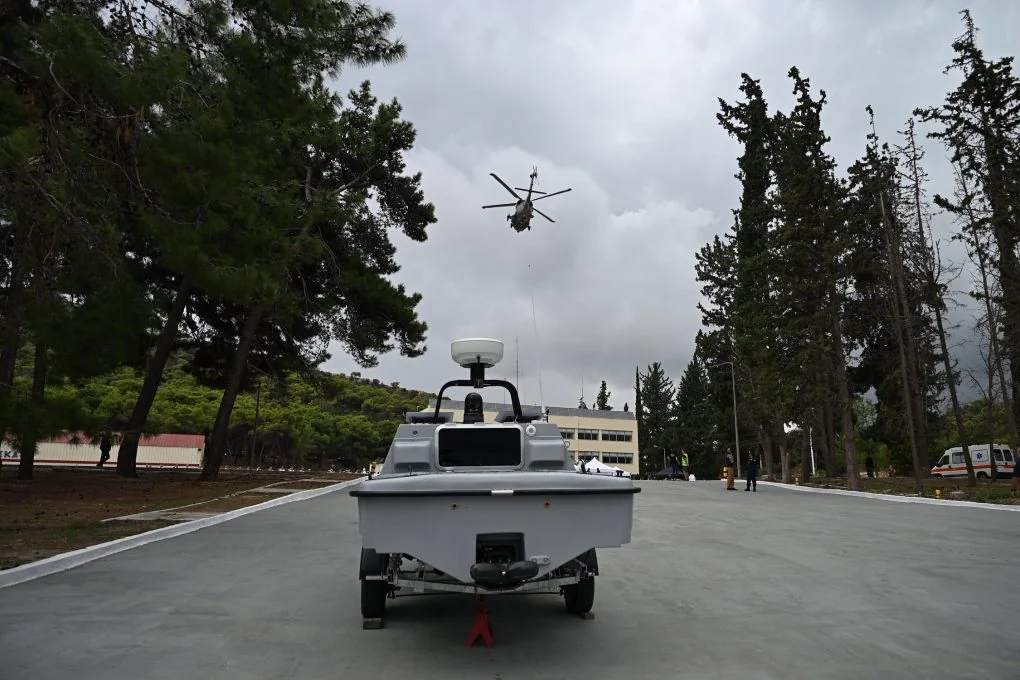
Corsair USV
Next to the Pyrpolitis, the Corsair was exhibited, the autonomous surface vessel of Saronic, with surveillance, reconnaissance and cooperative autonomous operation capabilities. Dendias emphasised the distinction between unmanned and autonomous systems: the autonomous one “is a further step”, using artificial intelligence “under the final control of the human factor”, with “huge potential” for an archipelagic environment such as the Aegean.
PLUTO: the “eyes” and “hands” of mine warfare
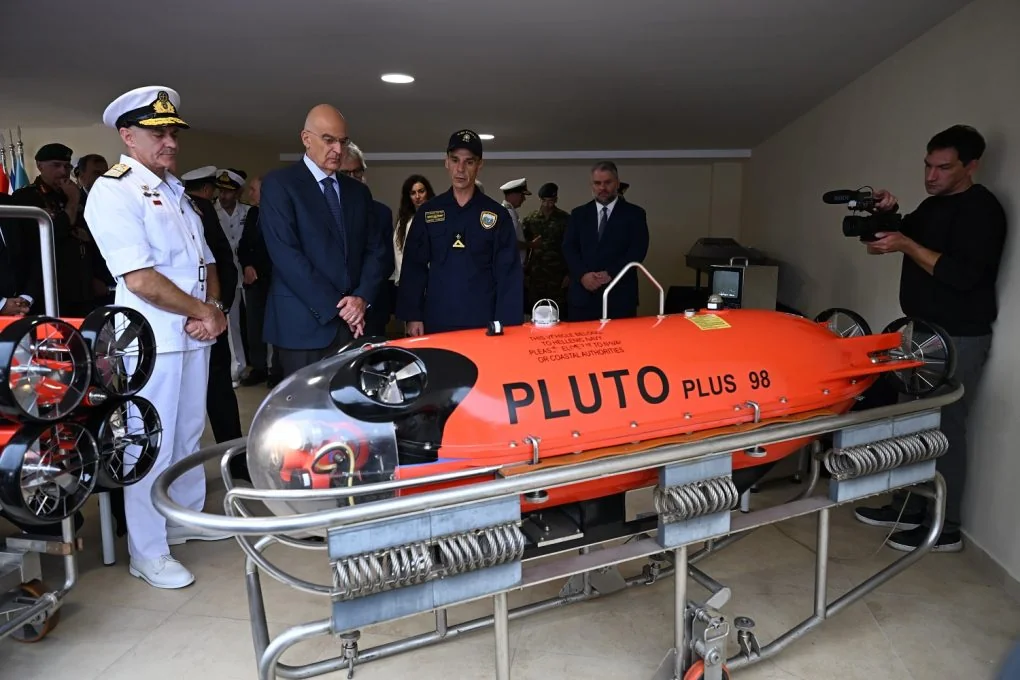
Below the surface, the static display showed the underwater vehicles of the Italian PLUTO family from Gaymarine, a key tool for mine hunters. The PLUTO PLUS is a medium-sized remotely operated underwater vehicle for mine reconnaissance and neutralisation: it weighs 320 kilograms, dives to 300 metres at a speed of 6 knots and works in currents of up to 3 knots and zero visibility. Next to it stood the larger PLUTO GIGAS, of 600 kilograms, which reaches 600 metres and 7.5 knots and works even in currents of 5 knots, as well as the smaller PLUTINO. Both large vehicles can carry out pre-programmed autonomous missions, with the operator taking control whenever needed.
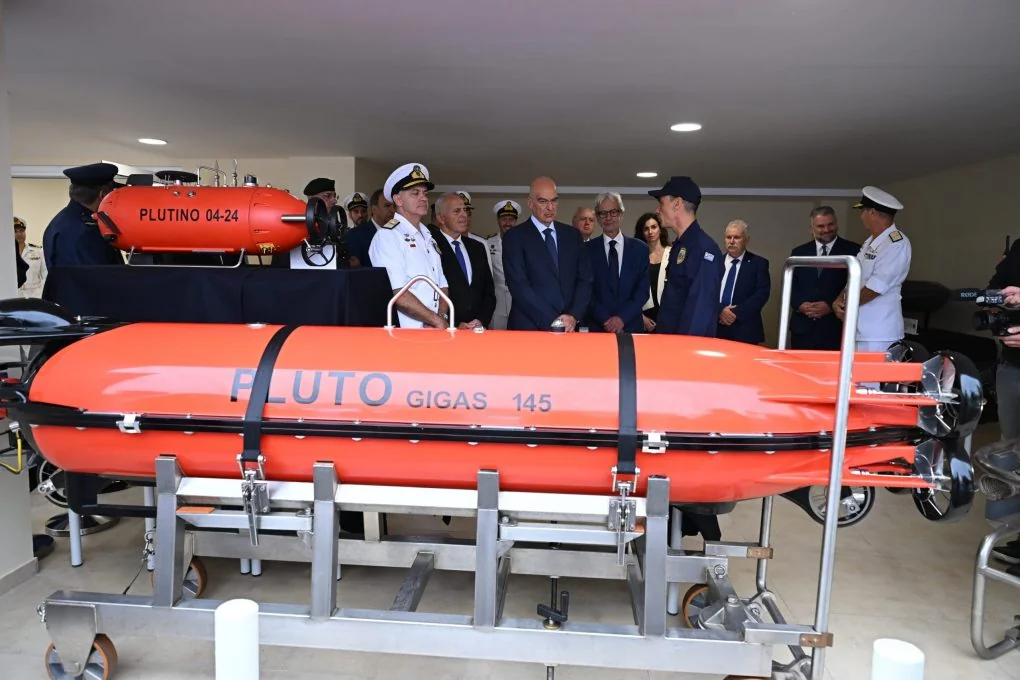
Their presence ties in with the other revelation of the day: Gaymarine is a supplier of the Italian Navy, with which Dendias discussed in Venice the transfer of minesweeping assets to Greece, as in the Hellenic Navy chief’s tour of the Italian minehunter Chioggia. Mine warfare is one of the fields where, as the minister said, autonomous systems will take over part of the Fleet’s burden.
Minesweepers from Italy and “Nearchos”
The minister revealed that in recent days in Venice there was an “initial understanding” with his Italian counterpart and the chief of the Italian Navy on the transfer to Greece of “a number of mine-countermeasure vessels”, to cover gaps in the Fleet. The development follows the request he had made to Italy on mine warfare. He also said that in a few days the flag will be raised on the frigate “Nearchos” in France.
What the new centre will do
The school will provide joint training in the use, maintenance and basic repair of unmanned and autonomous maritime systems, with simulators and hands-on training at the Naval Training Command’s Maritime Test Range. The minister was briefed by the commander of the Naval Training Command, Rear Admiral Stefanos Sarris, and the commander of KEPAL, Captain Eleftherios Zervas, and watched a demonstration of the main simulators and an operational scenario with unmanned vessels and underwater vehicles.
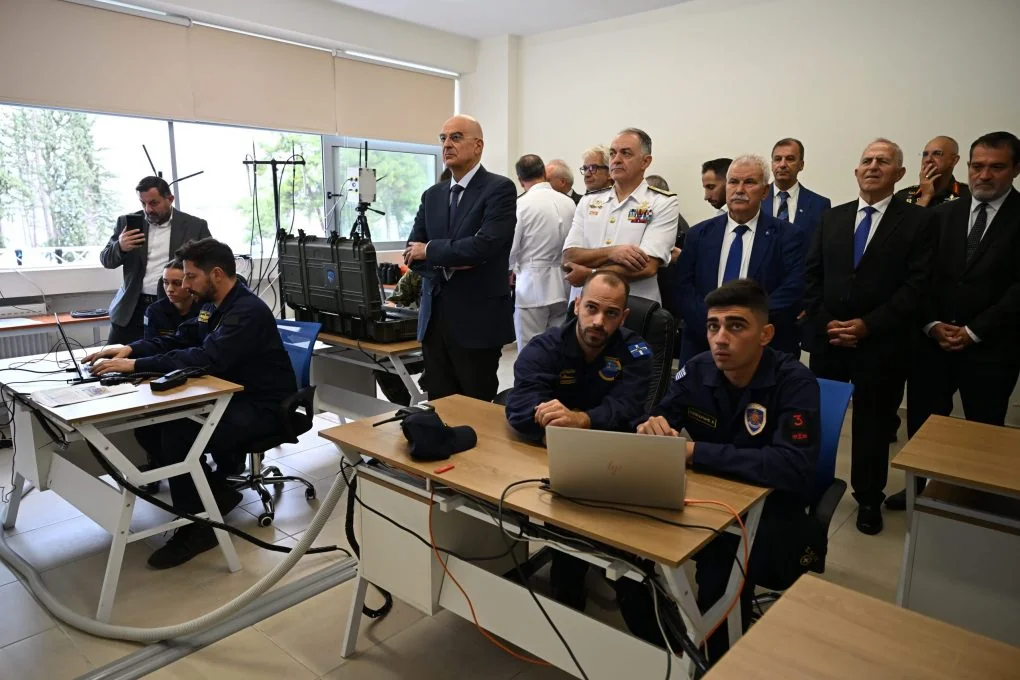
According to Dendias, autonomous systems offer capabilities in surveillance, reconnaissance, port protection, mine warfare and the security of energy and communications networks on the seabed. Part of the surveillance and patrol missions can pass to them, “resting our personnel, significantly reducing the days spent at sea”. The Navy has already tested such assets in exercises such as UVEX 1/26 in the Saronic Gulf.
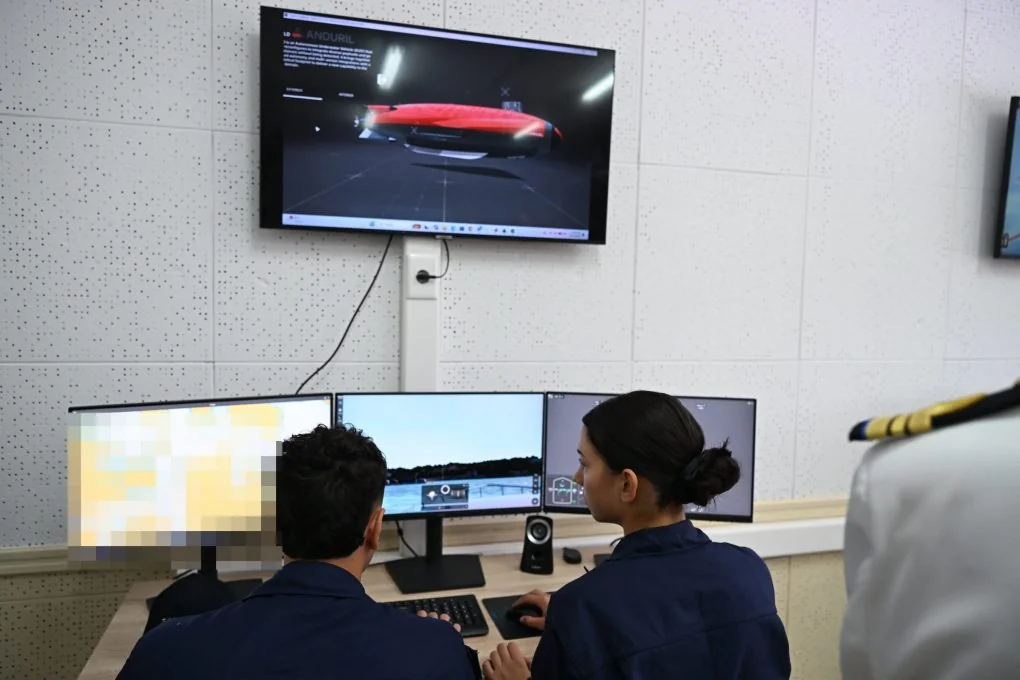
Anduril’s underwater drone in the simulator room
In the simulator room, one of the screens showed Anduril’s presentation of the Dive-LD, the American company’s large autonomous underwater vehicle. According to Anduril, the Dive-LD is about 5.8 metres long, carries out autonomous missions of up to 10 days and operates near the seabed at depths of up to 6,000 metres, for subsurface surveillance and reconnaissance, anti-submarine warfare, mine warfare and seabed mapping.
The ministry did not say whether the Dive-LD is part of a Greek programme or has already been acquired. Its image at a school that will train operators of systems “on and under the surface”, however, shows where the Navy is looking for the protection of seabed cables and pipelines.
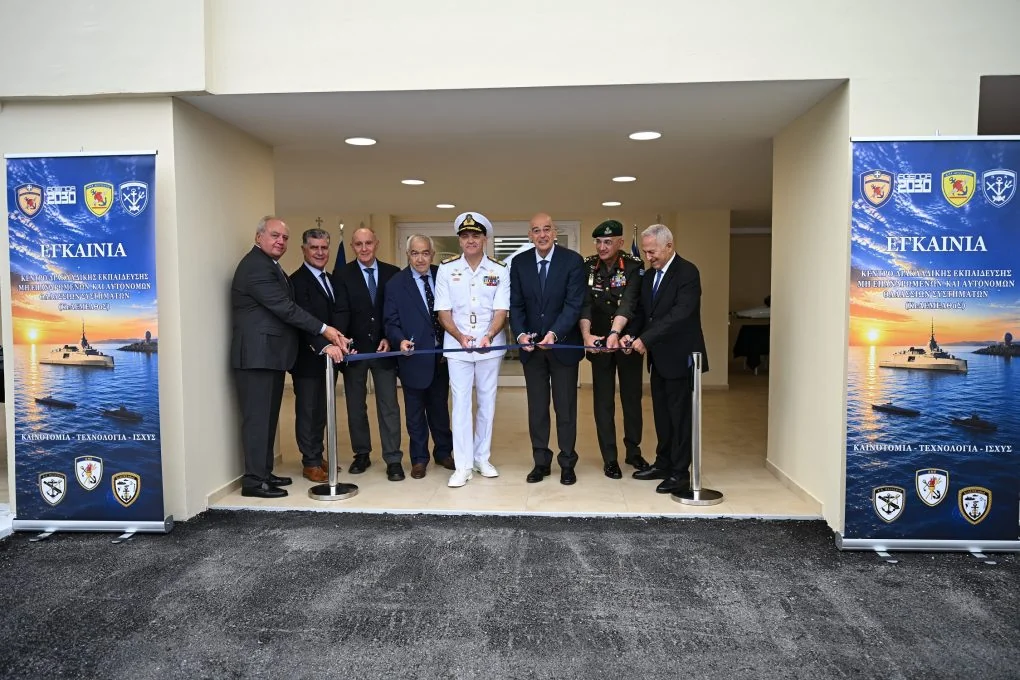
From Tripoli to Skaramangas: the 2030 goal
The minister placed the new centre in a series of steps of the “Agenda 2030”: in June the foundation was laid for the 309 Unmanned Systems Manufacturing Plant, in July the Joint Training Centre for Unmanned Aerial Vehicles was inaugurated in Tripoli, and today the corresponding school for the sea, on and under the surface. Drone production at the 306 Military Factory (306 EVT) had come first. The goal, he said, is for Greece in 2030 to be “the strongest power in the European Union in the operational use of autonomous vehicles” and for the Navy to be “the first in Europe in the development of autonomous platforms”. “We threaten no one. We defend only the constitutional and legal rights of our Homeland,” he added.
Photos from the demonstration
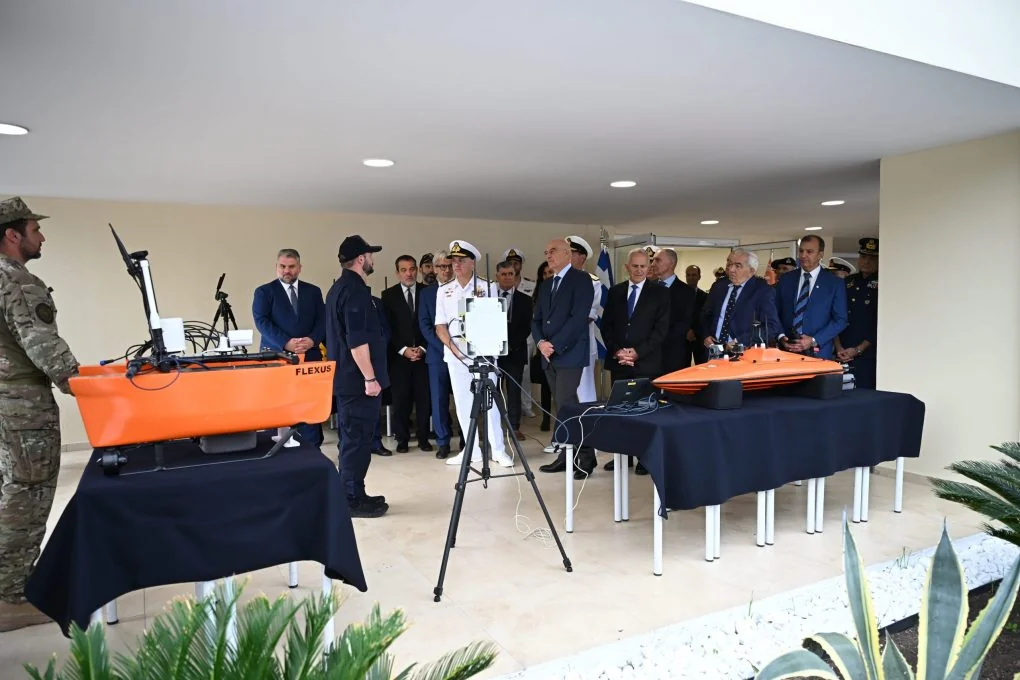
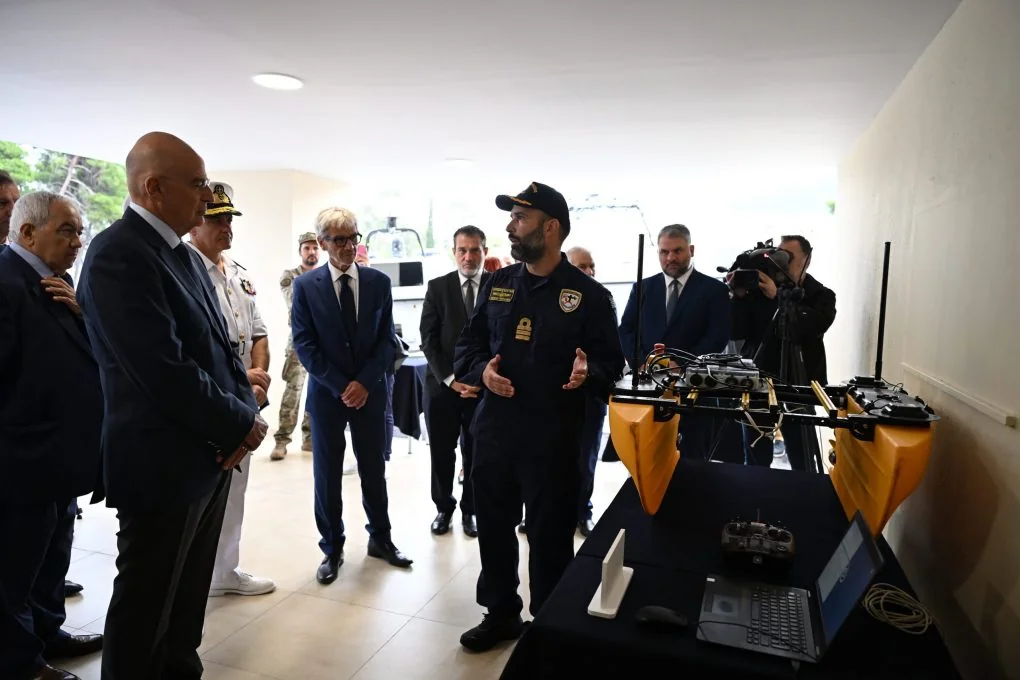
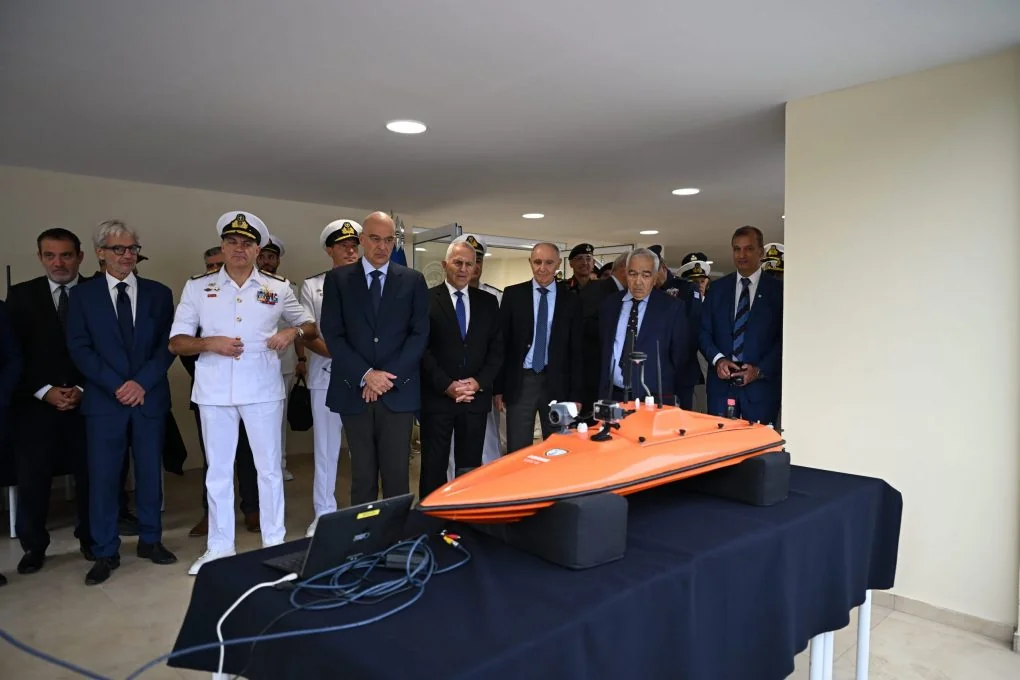
The ceremony opened with a blessing by Father Nikolaos Krassas, representative of the Metropolitan of Nikaia Alexios. Attending, among others, were the Chief of the Hellenic National Defence General Staff General Dimitrios Houpis, the Chief of the Army General Staff Lieutenant General Georgios Kostidis, the Chief of the Navy General Staff Vice Admiral Dimitrios-Eleftherios Kataras, the Chief of the Air Force General Staff Air Marshal Dimosthenis Grigoriadis, the First Deputy Chief of the Hellenic Coast Guard Vice Admiral Fotios Kiamos, the Special Adviser on National Security Vice Admiral (ret.) Athanasios Nasopoulos, members of parliament and honorary Navy chiefs.