Europe
UK cyber commander: offensive operations are under way against Russia, China, Iran and North Korea
General Sir Rob Magowan, head of the UK's Cyber & Specialist Operations Command, told Sky News that the National Cyber Force conducts offensive operations against four hostile states.

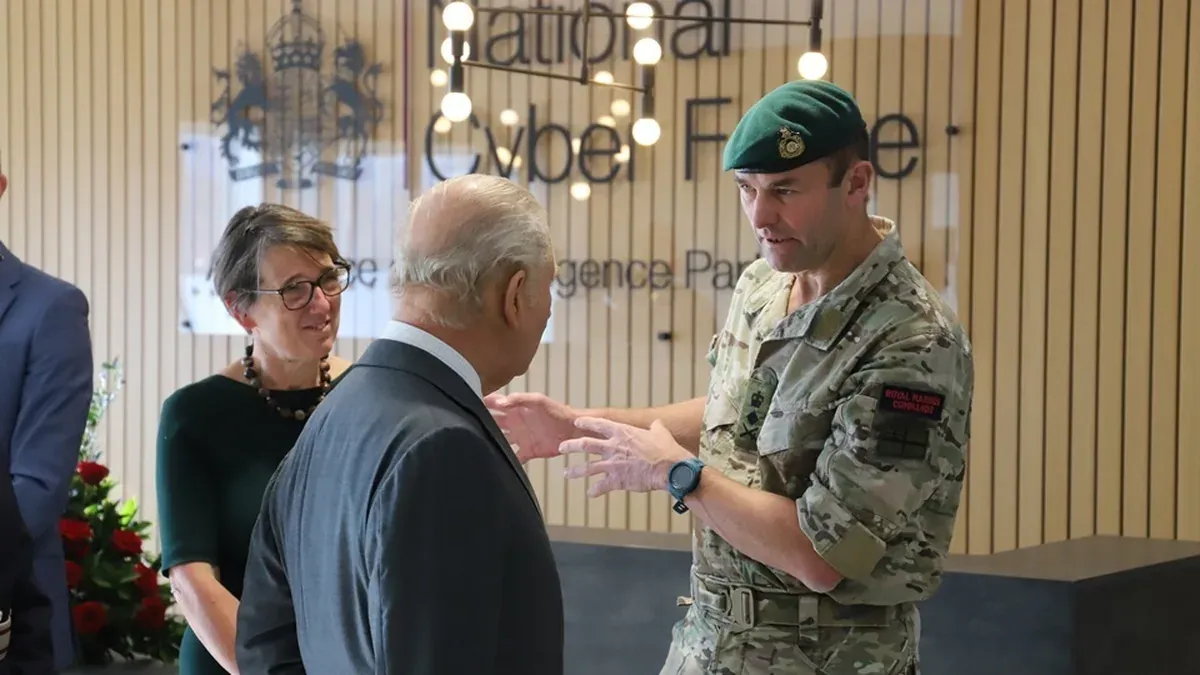
The head of Britain’s military cyber operations has publicly admitted that his country conducts offensive operations in cyberspace against Russia, China, Iran and North Korea. Royal Marines General Sir Rob Magowan, commander of the Cyber & Specialist Operations Command (CSOC), spoke in an interview with Sky News published in the early hours of Friday, November 20. The interview was given during Sky’s visit to the new headquarters of the National Cyber Force (NCF) in Samlesbury, Lancashire.
Asked whether the NCF carries out offensive operations, Magowan answered “Absolutely”. “There is a range of threats around the world and we have been very clear that Russia, China, Iran and North Korea pose a threat,” he said, calling the risk to the United Kingdom “significant”. He added that all four states conduct the same kind of cyber operations. “It must be absolutely clear to them that they will pay a price for their operations in cyberspace,” he stressed. Asked whether Britain is in a cyber war with Russia, Iran and China, he replied: “I wouldn’t say we are at war, but we are not at peace either.”
What is known about the force
The British commander named no specific targets and gave no results. He said British cyber forces can examine how adversaries’ networks are set up and operate inside them. Working with the intelligence and cyber security agency GCHQ, the NCF also targets organised crime groups, including criminals who harm children online.
The National Cyber Force was founded in 2020 and brings together GCHQ, the Ministry of Defence, the foreign intelligence service (SIS or MI6) and the Defence Science and Technology Laboratory (Dstl). It is jointly led by Magowan and GCHQ director Anne Keast-Butler. Its role is offensive. The Defence Cyber and Electromagnetic Force, which comes under CSOC, plans to send hunt forces abroad so that possible attacks can be prevented early.
The NCF’s new headquarters, Ribble House, was opened by King Charles on Monday, November 16. In its announcement of the opening, the British government quoted Magowan as saying the country must be ready “to confront, deter and prevail in cyberspace, taking the initiative against those who threaten our national security”. It added that the NCF does not as a rule publish details of its operations, because that would reduce their effectiveness. Defence Secretary Wes Streeting had said the NCF is on the front line of deterring and neutralising the country’s adversaries.
The remarks follow the recent cyberattack on supermarket refrigeration systems in France. Britain’s National Cyber Security Centre (NCSC) recorded 1,831 reports of cyberattacks in the United Kingdom over the past year, of which 80 were classed as nationally significant.