Politics & Diplomacy
Ryabkov on Article 5-style guarantees for Ukraine: Moscow’s condition after Kushner’s remarks
Russian Deputy Foreign Minister Sergey Ryabkov rejects any “quasi-membership” of Ukraine in NATO and says security guarantees can be discussed only if Kyiv accepts that its non-accession is irrevocable.

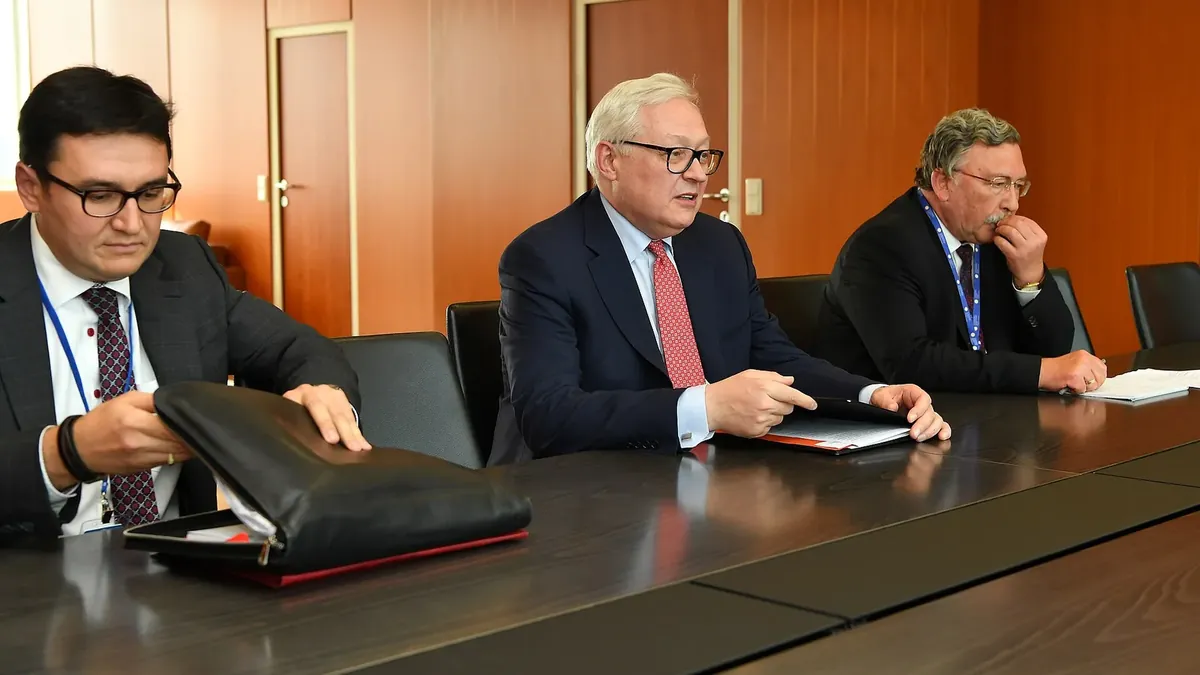
Russian Deputy Foreign Minister Sergey Ryabkov rejected on Friday, November 20, any scheme that would give Ukraine a form of “quasi-membership” in NATO. He was answering a question from the Russian news agency Interfax on whether Moscow would accept security guarantees for Kyiv based on Article 5 of the Washington Treaty, the Alliance’s collective defence clause.
“I want to say that finding even a formula of quasi-membership of Kyiv in NATO, and searching for some, in quotation marks, creative solution in this field, is for us an unacceptable option,” Ryabkov said. He added that Russia discusses security guarantees primarily from the standpoint of its own security.
The condition
For Ukraine he set a specific condition. Kyiv, he said, must recognise that the Russian demand that the country not join NATO is irrevocable. “When that happens, I think the question of security guarantees can be discussed in one way or another,” he noted. The Russian deputy minister said he did not want to prejudge decisions and that Moscow is not closing the door to dialogue, but not to dialogue on Ukraine’s accession to the Alliance. “I repeat, this is a completely unacceptable option,” he concluded. The Kremlin has also repeatedly said it opposes the presence of foreign troops in Ukraine.
The remarks came a day after the press conference of Jared Kushner in Berlin. Kushner, who represented the United States together with Steve Witkoff in the talks, said President Donald Trump is open to security guarantees for Ukraine based on NATO’s Article 5. He also claimed that Washington had made the Russians feel comfortable with the idea, while admitting that there is scepticism in Moscow.
War continues at high intensity
The question of guarantees arises while the war on the ground continues with intensity. Overnight into Friday, Russia launched a new ballistic missile attack on Kyiv, after Thursday’s drone strikes. The two attacks left four dead and damage to bridges, buildings and embassies in the capital.
Russia has also raised broader issues on European security architecture. Bloomberg had reported that Moscow proposes reducing its forces in Kaliningrad and Belarus if NATO commits not to deploy forces in the countries that joined the Alliance after 1997. These are the positions of the Russian side, as stated by its officials, and they run against the principle that every country is free to choose its own alliances.