Land Forces
U.S. Army says Project Convergence Capstone 6 was its largest yet: 9,700 soldiers tested 90 technologies for next-generation command and control
The U.S. Army has published its account of Project Convergence Capstone 6 at Fort Irwin, where thousands of soldiers and allied troops tested its new command-and-control architecture, with live multinational manoeuvre for the first time.

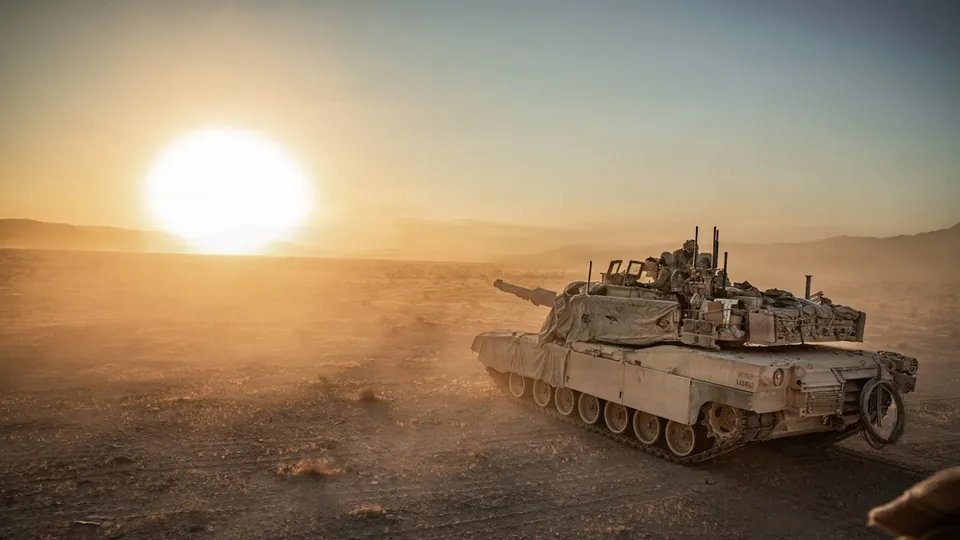
The U.S. Army has released its account of Project Convergence Capstone 6 (PC-C6), the experiment it ran at Fort Irwin, California, from 20 to 29 July. According to the Army, it was the largest iteration of the series so far, with more than 9,700 soldiers experimenting with over 90 new technologies. The main aim was to test the Next-Generation Command and Control system, known as Next-Gen C2.
The account, published on 30 October by the Army’s Futures and Autonomous Systems Command, says the event brought together the joint force, allies and industry. The Army added more than 2,000 extra personnel from other services and from the United Kingdom, Australia, New Zealand and Canada, and says PC-C6 included live multinational manoeuvre for the first time.
What Next-Gen C2 is meant to replace
The Army describes Next-Gen C2 as a replacement for older, fragmented mission-command systems. It combines an open set of warfighting applications and artificial-intelligence tools with a common data layer and more resilient communications. The stated goal is to give commanders integrated data across all warfighting functions, so that units can decide and act faster than an adversary.
Earlier Project Convergence events concentrated on validating individual technologies. This time, the Army says, the test moved to the division level: how well selected systems work together, and whether the architecture can link units across long distances and several domains. The 4th Infantry Division and the 25th Infantry Division took part, with independent testing by the U.S. Army Test and Evaluation Command.
“What we’re really looking to validate is how effectively we can close the digital kill chain, how fast can we close it and how we can leverage AI and machine learning to be able to sense and hit time-sensitive targets as efficiently as possible,” said Brig. Gen. Daniel Hibner, commander of the U.S. Army Joint Modernization Command, which planned and ran the experiment. Other objectives, he said, were to cut soldiers’ cognitive load at every level and to keep applications on one data layer rather than in a “siloed ecosystem of information”.
Free play and a new buying approach
The Army says previous experiments were tightly controlled, while PC-C6 added “free play” so that systems could be stressed in conditions closer to combat. More than 600 observers and over 100 operational assessors collected data. Maj. Gen. Patrick Ellis, commander of the 4th Infantry Division, singled out the common visualisation of friendly and perceived enemy positions as something that “really worked”.
The Army also ties the event to a “commercial-first” strategy for acquiring Next-Gen C2. Ingraham, the assistant secretary of the Army for acquisition, logistics and technology, said it lets the service modernise faster by working with industry. In the coming months the Army plans to open a platform where industry can reach the common data architecture and add third-party applications and AI models.
What happens next
Gen. Christopher LaNeve, the Army’s vice chief of staff and acting chief of staff, said the next step is to examine the results and take “a hard look at lessons learned”. The 4th and 25th Infantry Divisions will continue implementing the common data layer baseline in later exercises, named by the Army as Ivy Sting and Lightning Surge, and I Corps is due to begin fielding.
The announcement comes as the Army pushes several modernisation efforts at once. Geopolitiki recently reported on Future Interceptor: the US Army picks Lockheed Martin to develop its next-generation air-defence missile, a $1.08 billion effort. The results of PC-C6 described here are the Army’s own assessment; no independent evaluation has been published.
Source: U.S. Army account of Project Convergence Capstone 6 on DVIDS.