Asia-Pacific
Kim Jong Un tells ten new ambassadors in Pyongyang that North Korea’s arms build-up is defensive
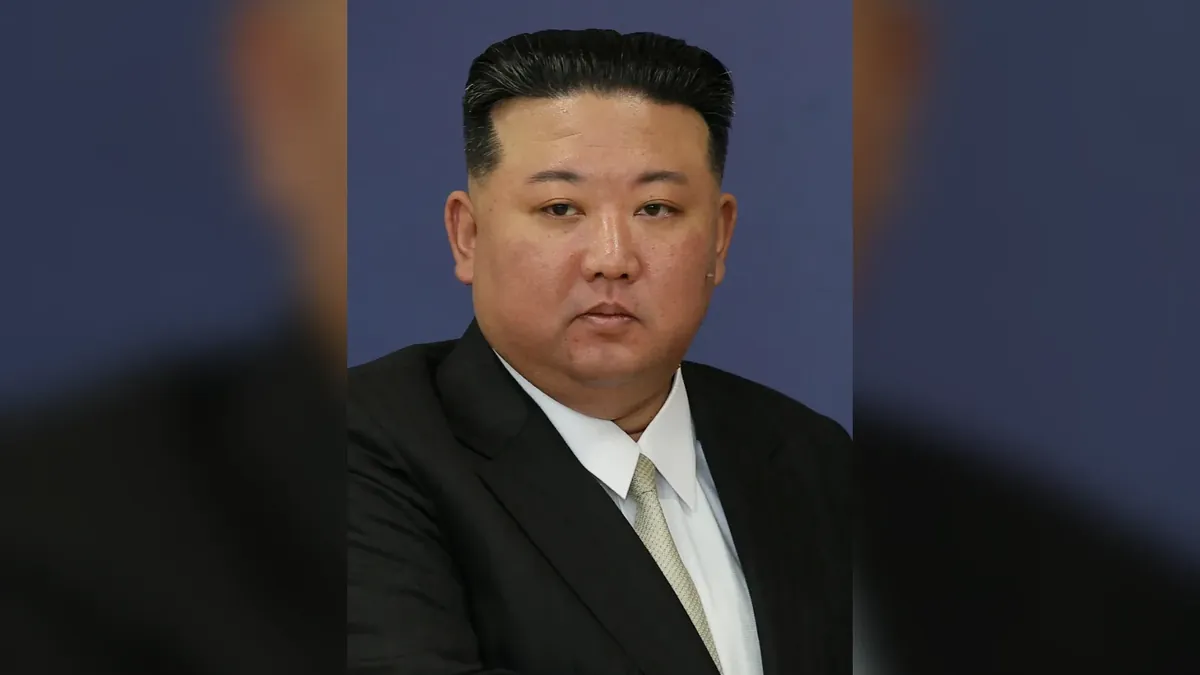
In his first personal reception of foreign envoys' credentials, Kim Jong Un described North Korea's military strengthening as a sovereign right of self-defence and said the country seeks neither domination nor expansion.

North Korean leader Kim Jong Un defended his country’s military strengthening as a sovereign right of self-defence, in a speech to ten new foreign ambassadors in Pyongyang on Sunday, November 22. The credentials ceremony was held at the headquarters of the Central Committee of the Workers’ Party of Korea and was announced by the state news agency KCNA on Monday, November 23. It was the first time Kim personally received the credentials of foreign diplomats. Foreign Minister Choe Son Hui was also in the room.
The new ambassadors represent Russia, Sweden, Indonesia, Vietnam, Brazil, the Czech Republic, India, the Philippines, Thailand and Bangladesh. They followed the speech with interpretation headsets, and Kim was photographed with each of them separately. The change in protocol stems from the constitutional revision of March, which gave the chairman of the State Affairs Commission, the post Kim holds, the authority to receive credentials. Until then it belonged to the president of the Standing Committee of the Supreme People’s Assembly. The regime’s founder Kim Il Sung received ambassadors himself, while under Kim Jong Il the duty passed to the Assembly.
In his speech Kim described an increasingly unstable and unpredictable world in which some countries put their own interests above international law and trample on the sovereignty of others. “The security situation of the DPRK and the political and military environment in East Asia urgently demand that we ourselves secure the strength and capabilities that give us full security and confidence in peace,” Kim said, in excerpts of the speech carried from KCNA by South Korea’s Yonhap news agency. DPRK stands for the Democratic People’s Republic of Korea, the country’s official name. Pyongyang’s priority, he said, is to firmly defend “national sovereignty, security interests and development rights”.
At the same time he insisted that his country has no designs beyond its borders and called its military and foreign policy “defensive”. “The DPRK seeks neither domination nor expansion,” he said, adding that “arbitrariness and pressure have nothing to do with the DPRK’s foreign policy”. Peace, development and prosperity, he said, are the core values of Pyongyang’s diplomacy. He also said he is ready to strengthen “ties of friendship and cooperation with all countries that respect the sovereignty of our state and are friendly toward us”.
The context
The remarks come days after IAEA Director General Rafael Grossi told the Board of Governors about a new expansion of the uranium enrichment facility at Yongbyon. In recent weeks North Korea has carried out a series of missile tests and continues to fortify the border line with mines and barbed wire. At the UN, the country was again in the spotlight with the annual resolution on human rights in North Korea.
A spokesperson for South Korea’s Ministry of National Defense declined to comment on Kim’s remarks, speaking to Stars and Stripes. In the same outlet, Andrei Lankov, a professor at Kookmin University in Seoul, noted that leaders usually present their arms as defensive, but for neighbours it is capabilities that count, not declared intentions. Professor Park Won-gon of Ewha University told the Korea Herald that closer ties with Russia and signs of improvement with China give Pyongyang more confidence for more active diplomacy.