Middle East & North Africa
Libya’s Tripoli government recalls its ambassador to Kyiv over the Ukrainian strike on Benghazi
Foreign Minister Taher al-Baour condemned the strike as a violation of Libyan sovereignty; the recall is for consultations and does not sever relations.

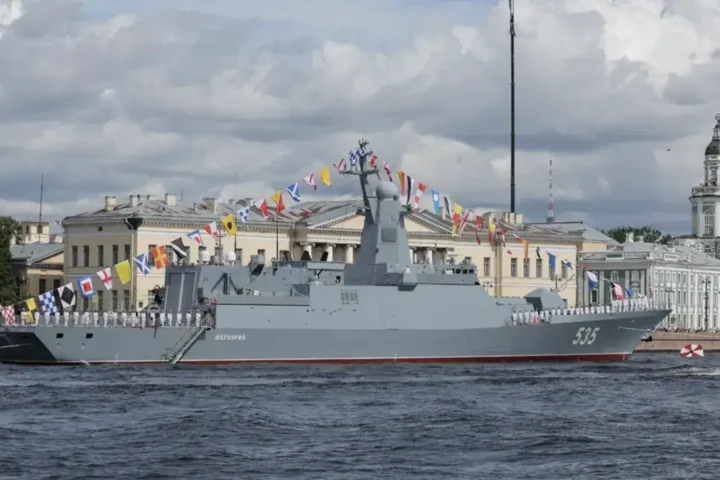
Libya’s Government of National Unity (GNU), based in Tripoli, on Sunday recalled for consultations its ambassador to Ukraine, Mohamed Abu al-Qasem, after the Ukrainian strike on Benghazi port. The move follows the November 22 attack, when Ukrainian sea drones hit the Russian corvette Merkury and the Russian cargo ship Angara in Benghazi.
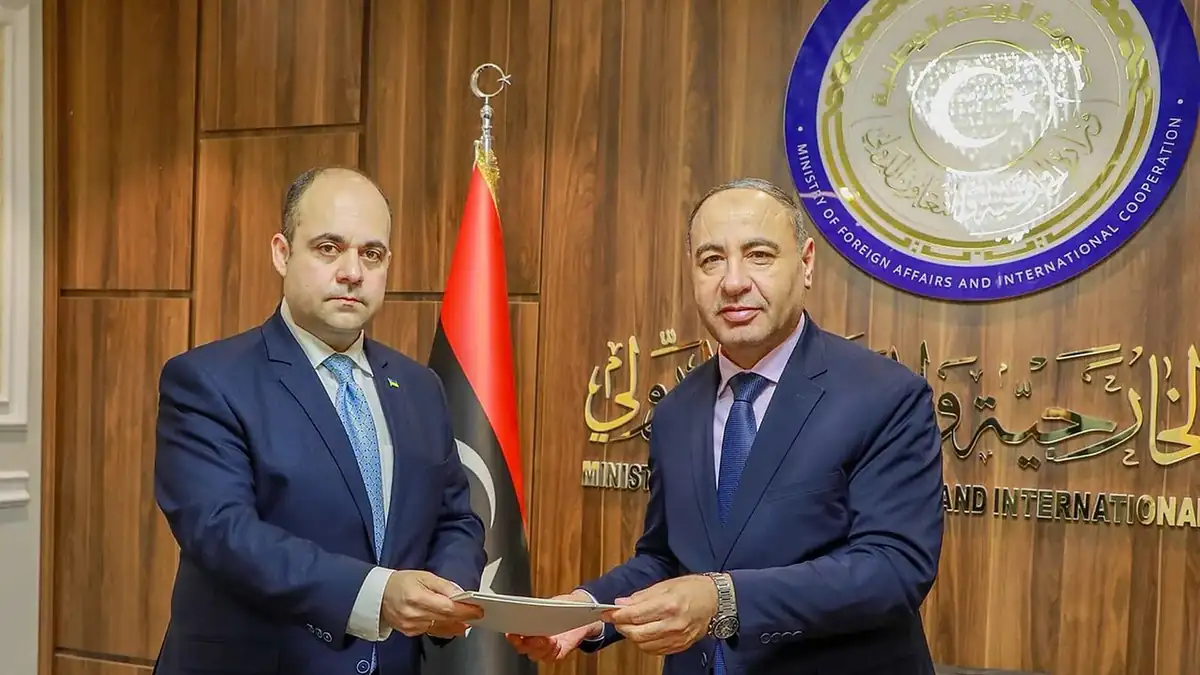
According to the Libyan foreign ministry, Foreign Minister Taher al-Baour met the ambassador and condemned the strike, calling it a violation of Libyan sovereignty and international law. Mr. al-Baour said the attack undermines the country’s security and stability and affects Libya-Ukraine relations. The ministry’s director of European affairs, Abu Bakr al-Tawil, also took part.
The ambassador briefed the minister on the situation of the Libyan diplomatic mission in Kyiv and the conditions the Libyan community in Ukraine faces because of the war. A recall for consultations does not mean a break in diplomatic relations, but it is one of the strongest signals of displeasure a government can send.
Tripoli’s reaction matters because Benghazi is not controlled by the Tripoli government but by the rival authorities of eastern Libya. Despite the country’s division, both sides condemned the strike. The eastern administration’s foreign minister, Abdul Hadi al-Huwaij, announced on Saturday that Benghazi will seek financial compensation from Ukraine. Satellite images also show permanent anti-sea-drone barriers placed at the harbor entrance.
Kyiv argues the strike was an act of “self-defense” under the UN Charter, as it targeted a Russian warship and a Russian cargo vessel, and insists that Russian warships carrying weapons are legitimate targets. The operation, more than 1,600 kilometers from Ukrainian territory, drew reactions in Europe too: Italy summoned Ukraine’s military attaché for explanations and Prime Minister Giorgia Meloni conveyed her concerns to Volodymyr Zelensky, while France defended Kyiv’s right to target Russian warships and arms shipments.
The decision comes during a period of intense diplomatic activity around Libya. Presidential Council head Mohamed al-Menfi recently announced the postponement of the Africa-Turkey summit due to be held in Tripoli in December, while Turkish President Recep Tayyip Erdogan received eastern Libya’s forces commander Khalifa Haftar in Ankara. Benghazi is a critical hub for the Russian military presence in Libya and Africa.