Asia-Pacific
UN First Committee opens debate with Ukraine, Iran, Japan and others split over nuclear deterrence
Delegations from Europe, the Middle East and East Asia clashed over nuclear sharing, extended deterrence and arms control as the UN General Assembly's First Committee opened its general debate.

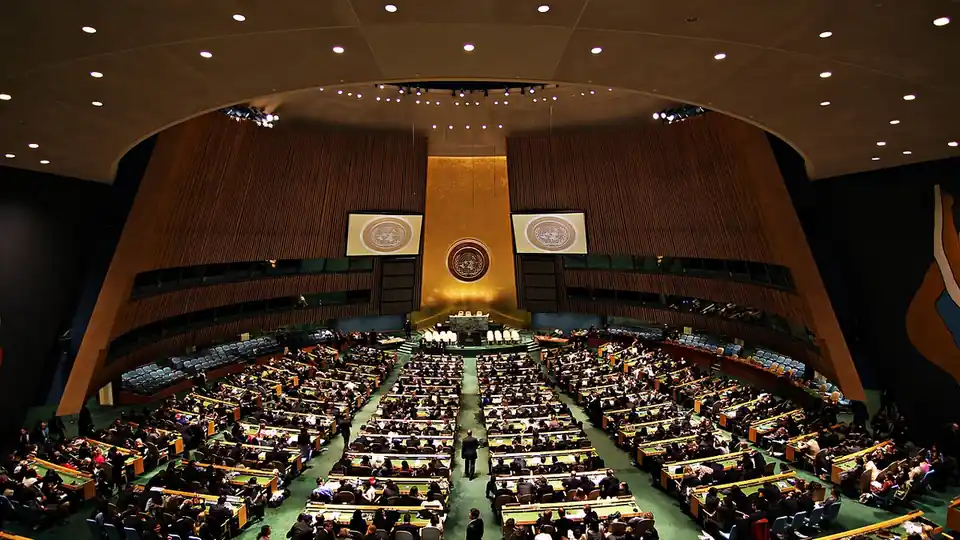
The UN General Assembly’s First Committee, which deals with disarmament and international security, opened its general debate this week with delegations split over nuclear deterrence. According to the UN’s official meetings coverage of the sessions held on 14 October, speakers from Europe, the Middle East and East Asia traded sharply different readings of the same security problems.
Europe: deterrence and Russian weapons in Belarus
Ukraine recalled that it gave up what it described as the world’s third-largest nuclear arsenal in 1994 in exchange for security assurances from Russia, the United Kingdom and the United States. It criticised Russia’s nuclear threats and its revised doctrine, and pointed to the deployment of Russian tactical nuclear weapons in Belarus.
Hungary backed NATO’s nuclear-sharing arrangements, arguing that “nuclear deterrence effectively ensures the security of the Euro-Atlantic region”, and urged Iran and North Korea to meet their non-proliferation obligations. North Macedonia also supported nuclear sharing and described EU enlargement as “an investment in regional peace and stability”. NATO’s annual nuclear exercise is covered separately in NATO opens annual Steadfast Noon nuclear exercise in Italy with 17 nations.
Middle East and East Asia
Iran said states raising proliferation concerns had not condemned attacks on facilities under IAEA safeguards, and argued that nuclear sharing and extended deterrence violate the Non-Proliferation Treaty. It said five NATO states host US nuclear weapons and that more than 30 countries fall under US extended deterrence. It also accused Israel of expanding an arsenal outside any comprehensive verification regime. “These double standards are particularly evident in the Middle East,” the Iranian delegate said, according to the UN summary.
North Korea described US nuclear assurances to allies as an effort to encircle a rival, said NATO’s expansion into Asia-Pacific and Europe had created serious crises, and said it would keep nuclear forces central to its deterrent. Japan urged Pyongyang to halt its nuclear and missile activities, voiced concern about its military cooperation with Moscow, and said “the tragedies of Hiroshima and Nagasaki must never be repeated”. India restated its policy of credible minimum deterrence and no first use, and said it supports universal, non-discriminatory and verifiable disarmament while noting strain on the arms control architecture. Mongolia pointed to its Ulaanbaatar Dialogue as an example of sustained engagement.
Victims and new technologies
Kiribati said 33 nuclear tests were carried out near its reefs, lagoons and fishing grounds between 1957 and 1962, and backed an international trust fund for victims. It said it co-chairs, with Kazakhstan, the first international meeting on victim assistance and environmental remediation convened by the Secretary-General. Suriname cited the Treaty of Tlatelolco, which created a nuclear-weapon-free zone in Latin America and the Caribbean, as proof that security can rest on dialogue. The Holy See warned that adding artificial intelligence and other emerging technologies to nuclear systems raises the risk of catastrophic miscalculation, calling deterrence “the flawed logic of nuclear deterrence”.
The general debate is the opening stage of the committee’s work in the 81st session. The positions above are those of the delegations as recorded by the UN, and they are not agreed conclusions.