Technology
HypAIRion: France brings AI to Rafale as combat drone flight is planned for 2028
France’s HypAIRion programme brings sovereign AI into Rafale operations, with collaborative combat-drone flight planned for 2028 and an AI-enabled TALIOS pod due from 2027.

France’s HypAIRion programme will bring artificial intelligence into combat aviation, with Rafale fighters expected to fly alongside collaborative combat drones in a full-scale experiment planned for 2028. The French Air and Space Force launched the experimental effort in July 2026 with the Directorate General of Armaments (DGA) and the Defence Artificial Intelligence Agency (AMIAD).
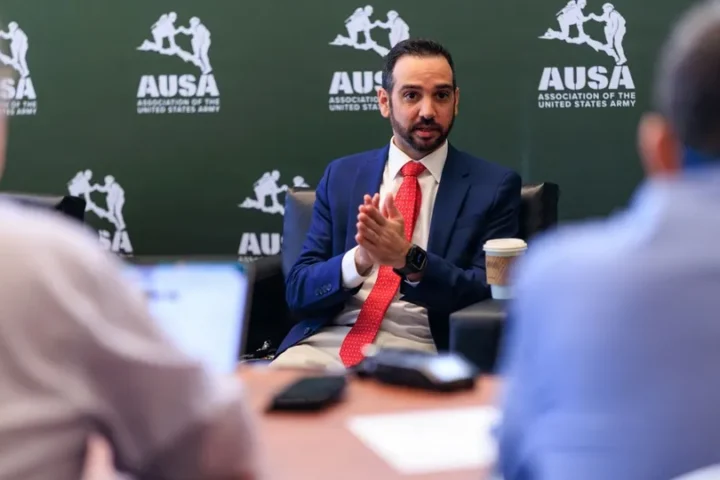
French officials outlined the work at a briefing in Paris on 1 October. HypAIRion is intended to bring together the Air and Space Force’s existing AI initiatives as it modernises fighter operations. Two Mirage 2000 aircraft have already been adapted as airborne test beds at Mont-de-Marsan air base, the French defence ministry said.
Rafale and collaborative combat drones
The Rafale will remain central to French air combat, according to Colonel Cédric, who heads capability development on the Air and Space Force staff. France wants to add simpler and less costly uncrewed combat aircraft to a formation, extending its view of the battlespace and exposing drones rather than crews to some of the danger. In high-intensity warfare, he argued, the quality of individual platforms cannot entirely replace quantity.
The service also wants to shorten the time between detecting a threat, understanding it, making a decision and acting. AI is expected to turn the growing volume of sensor data into an operational advantage. Open, modular architectures are another priority so that equipment can change as threats evolve. The ministry cited the successive versions of Russia’s Geran drone as an example of that pace.
Sovereign AI and aircraft systems
AMIAD will contribute French-controlled AI technologies for platform autonomy and command and control. Colonel Thibault, the agency’s deputy director for AI employment, described the aim as assisting pilots’ cognitive work so they can stay ahead of threats. The agency will draw on its Pendragon project with the French army, which has been under way for about 18 months.
The ministry identified three technical challenges: training models with operational data, distributing computing across aircraft and other platforms, and securing the AI itself. It said pilot involvement and repeated experiments will be central to the programme.
From TALIOS to Rafale F5
For the crewed fighter, DGA Rafale programme director Sébastien wants to reduce the crew’s workload while improving effectiveness. The first concrete application described by the ministry is an AI-enabled TALIOS targeting pod from Thales that automatically detects and classifies ground targets. Deliveries are planned from 2027.
The experience is expected to inform the Rafale F5 standard, planned for 2033. The DGA describes it as a midlife upgrade with more computing capacity, an open architecture and greater control of data. The ministry identified only the first names of the officers it quoted.