Politics & Diplomacy
Ukraine to Musk: it is “technically impossible” that its army violated the Starlink terms of use in drone strikes
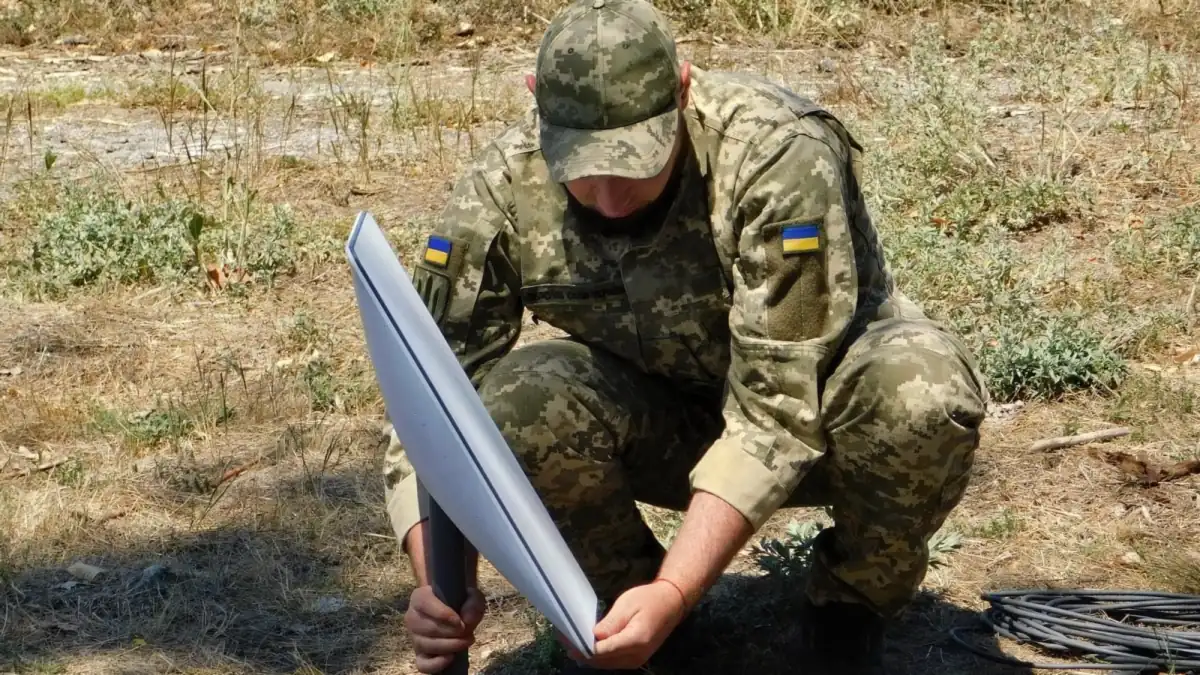
Elon Musk said on October 24 that Ukraine’s army broke the Starlink terms of use by using it in offensive drone strikes. Former Ukrainian defence ministry advisers answered that this was technically impossible because of the whitelists and speed limits.

A few hours after Kyiv announced that Starlink and Starshield are working again at the speeds they had before the restrictions, Elon Musk opened a new front with Ukraine. The Ukrainian army, he wrote on X on the evening of Saturday, October 24, violated the Starlink terms of use and used it “in offensive drone strikes to kill people”. “That loophole was closed last week,” he added.
In the same post the owner of SpaceX distinguished the two systems. Using Starlink, “a commercial civilian service”, for offensive strikes “was never allowed and should not be”, while Starshield is a “different system” controlled by the US government. “Whatever they decide to do is their business,” he noted. Musk also argued that Starlink remains critical to Ukraine’s defence, as the only system that “cannot be jammed or blown up, at least for now”, and that if it were shut down “the Ukrainian front line would collapse immediately”. “This is NOT a threat, it is merely an observation,” he wrote, before closing with a direct attack on the “warmongers” who, he said, push for “endless slaughter” without a realistic solution.
Kyiv’s answer within an hour
The reply from Ukraine came within an hour. Serhiy Sternenko, a former adviser to the defence ministry on drones, wrote that, as someone who was “inside the process” at the ministry, he could say with certainty that the claim is untrue. In February, he explained, “whitelists” came into effect. Fixed terminals could be registered by both military and civilians, but for any satellite terminal to operate on the move it had to be entered on a special list and linked to the military Starshield. “That is, it was technically impossible to use civilian Starlink on drone missions,” he stressed, adding that Ukraine is grateful to the US and SpaceX for access to satellite communications and “did not violate the terms of use”.
Serhii Beskrestnov, known as “Flash”, who also worked at the defence ministry in early 2026, took the same line. “It is very strange that Elon Musk does not know the restrictions on Starlink’s operation in Ukraine,” he commented. Since winter 2026, all terminals over Ukrainian territory, and the occupied regions, have a movement speed limit of 70-90 km/h, while over Russia Starlink does not work. “So we PHYSICALLY cannot use commercial Starlink for deep and medium-range strikes,” he concluded.
A distinction Musk has made before
The distinction between the two systems is not new for Musk. On October 14, when Mykhailo Fedorov announced that Starlink connectivity was returning at speeds of up to 160 km/h and asked for the speed limit on Starshield to be lifted entirely, Musk replied that Starshield’s speed or usage limits are decided by the US military and, ultimately, the US president. Starlink, he added then, is limited to non-military or defensive use and cannot be used for offensive military action.
Satellite networks were one of three problems Zelensky had tied to the Oslo talks, together with air defence and intelligence sharing. Meanwhile Kyiv is opening other routes, with a letter of intent with Nokia and ICEYE for satellite communications.