Asia-Pacific
European Parliament trade delegation ends China visit: Lange says the EU expects more sectors to follow the hybrid car deal
After three days in Beijing, Hangzhou and Shanghai, the European Parliament’s trade committee says it expects more sectors to follow the recent hybrid car agreement and warns that the EU deficit with China is growing.

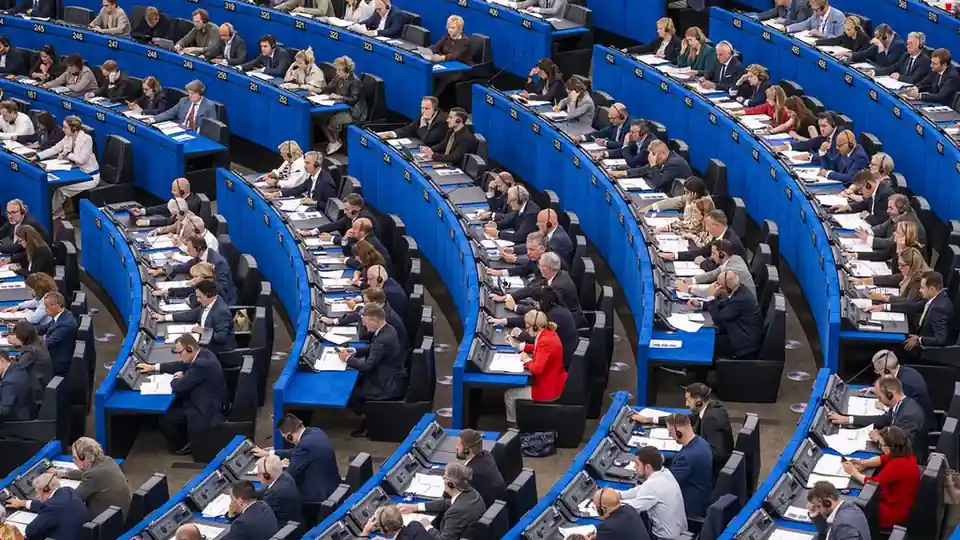
A delegation of the European Parliament’s Committee on International Trade (INTA) has concluded a three-day visit to China, telling its Chinese hosts that the EU expects further trade agreements of the kind recently reached on hybrid cars. The delegation was in Beijing, Hangzhou and Shanghai from 27 to 29 October, and the Parliament published its account of the trip on 29 October (European Parliament press release).
The head of the delegation, committee chair Bernd Lange (S&D, Germany), said the world had “drastically changed” since the committee’s previous visit to China in 2018. He described the talks on continuing the Trade and Investment Consultation (TIC) framework as coming at “a pivotal moment in EU-China relations”. He called the recent TIC agreement on hybrid car imports “a good starting point” for stabilising fair trade, but said the delegation had made clear it wanted more sectors to follow the same approach, together with credible implementation of existing commitments.
Imbalance and the “urgency” message
Pascal Canfin (Renew, France), the committee’s standing rapporteur for trade relations with China, said the mission was meant to convey a sense of urgency. He said the Chinese export model “is simply not sustainable for the EU” and that the EU can trigger measures once an imbalance appears on one side, while stressing that the EU’s strategy rests on dialogue. According to the Parliament, the EU’s trade deficit with China has been growing steadily and recently reached €1 billion a day, and the Parliament describes the relationship as unbalanced because of a significant asymmetry in market openness. China is the EU’s third largest trading partner for goods and services combined.
The Parliament says the MEPs told their counterparts that more frequent dialogue is essential to build trust and that neither side would gain from a trade conflict. They raised obstacles facing EU companies in China, unpredictable supply chains, access to critical raw materials, excess production capacity and Chinese decrees that hurt foreign firms. They also discussed the EU regulations now in preparation to strengthen the bloc’s industrial capacity, greater transparency on subsidies and supply chains, and the strengthening of the multilateral trade framework within the WTO.
Who the delegation met
In Beijing the MEPs met Commerce Minister Wang Wentao, Cai Dafeng and Li Hongzhong, vice-chairs of the Standing Committee of the National People’s Congress, and Zhong Shan, who chairs the congress’s financial and economic affairs committee, according to the Parliament’s list. They also exchanged views with the EU Chamber of Commerce in China on the growing barriers facing European companies. In Hangzhou they visited the robotics company Unitree and the neurotech company BrainCo, and in Shanghai they met the city’s vice-mayor, Lu Shan.
The Parliament notes that this was only the second INTA visit to China since 2018 and the fourth European Parliament delegation to travel there in 2026. Lange was accompanied by eleven other MEPs from across the political groups. On the broader state of the relationship, see our earlier report Wang Yi in Zagreb: China readouts cite Croatian backing on Taiwan and talks on EU trade imbalances.