Greece
Battle of Crete explained: Operation Mercury, 20 May to 1 June 1941
How German paratroopers and glider troops attacked Crete on 20 May 1941, who defended the island, and what the battle cost, based on a U.S. Army study and the Congressional Record.

The Battle of Crete was the German airborne invasion of the island that began on 20 May 1941 and ended on 1 June, when German forces reached the south coast. A U.S. Army study based on German reports calls it “the first major military operation that was executed by airborne forces acting independently of regular ground forces”. The island was held by British and Commonwealth troops, about 14,000 Greek soldiers and Cretan civilians, and it fell weeks after the Germans had conquered mainland Greece.
Key points
- Operation Mercury (MERKUR in the German papers) opened on 20 May 1941 with bombing, gliders and parachutists at Maleme, Canea, Retimo and Heraklion.
- By the evening of the first day, according to the U.S. Army study, “not a single airfield was securely held by the Germans”.
- The garrison numbered about 27,500 British and Imperial troops and 14,000 Greeks under General Bernard Freyberg; most Greek and Cretan soldiers were inadequately armed recruits.
- German air power then drove the Royal Navy out of the waters north of Crete, and the British evacuated about 14,800 men to Egypt over four nights.
Why did Germany want Crete?
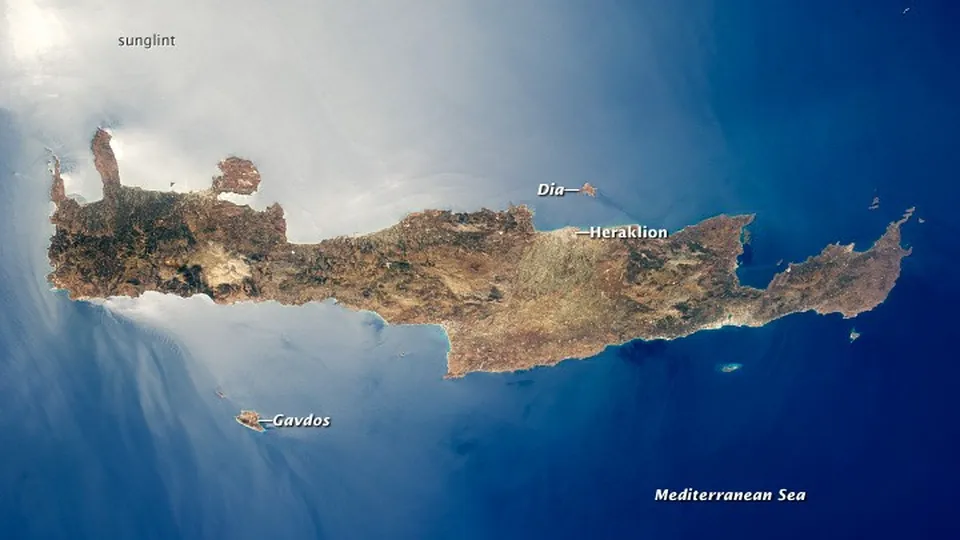
After Italy attacked Greece in October 1940, the British occupied Crete and garrisoned it with about one brigade in addition to some Greek units. They improved the island’s three airfields and the harbour at Suda Bay, which became a naval refuelling base. The U.S. Army study says Crete was first the main supply base for British operations in the Balkans and then the collecting point for most of the troops evacuated from mainland Greece. For the Germans, it adds, as long as the British held the island they kept naval and air superiority in the eastern Mediterranean and had a potential air base from which the Romanian oil fields could be attacked.
The plan came from the German airborne commander, Lieutenant General Kurt Student, who submitted it on 15 April 1941. On 20 April Hitler chose Crete rather than Malta, and Directive No. 28 followed five days later. For the background to the campaign that preceded it, see Geopolitiki’s Ohi Day explained: how Greece answered Italy’s ultimatum in 1940.
Who defended the island?
According to the study, the garrison at the start of the invasion was about 27,500 British and Imperial troops and 14,000 Greeks. Only the original garrison of roughly 5,000 men was fully equipped; the troops evacuated from Greece were tired, disorganised and carried only the small arms they had saved. Freyberg’s forces had eight medium and sixteen light tanks, some captured Italian guns and a few anti-aircraft batteries. British air strength on the island never exceeded 36 aircraft, fewer than half of them operational, and the last were withdrawn the day before the invasion.
The Cretans, the study says, offered their help to the defenders “even though they had suffered heavily from air raids and most of their young men had been taken prisoner during the Greek campaign”. It also records that “armed bands of Cretans fought fiercely in the mountains”. Addressing the U.S. House of Representatives in 2002 on the anniversary of the battle, Representative Bilirakis said that although the Allied forces had decided not to arm the population, “old men, women and children used whatever makeshift weapons they could find”. That is a statement by a member of Congress rather than a documented count.
What happened between 20 May and 1 June 1941?
| Date | Event |
|---|---|
| 20 May | Dive bombers strike the defences; at 08:00 the first gliders land and about 2,000 parachutists jump near Maleme and Canea; a second wave follows at Retimo and Heraklion |
| 21 May | German aircraft sink a British destroyer and damage two cruisers; paratroopers and then mountain troops reach Maleme, and the airfield is used by transport planes from the afternoon |
| 22 May | The German VIII Air Corps attacks the British fleet, which withdraws from the Aegean after heavy losses |
| 27 May | Churchill telegraphs: “Victory in Crete essential at this turning-point in the war. Keep hurling in all you can.” |
| 28 May | Freyberg orders the bulk of the ground forces to fight their way to the south coast for evacuation |
| 1 June | German forces reach the south coast; the struggle for Crete ends |
The first day went badly for the attackers. At Maleme, the study says, the parachutists jumped into strong fire and many were killed during the descent or soon after landing; most could not recover their weapons containers. It describes the German situation as “almost hopeless” and says that while the attacker had met unexpectedly strong resistance, “the defender was surprised by the fury and strength of the onslaught”. The turning point came on 21 May, when German troops dislodged the defenders from the town of Maleme and the hills around the airfield and transport planes began landing the 5th Mountain Division, after which, in the study’s words, “the fate of Crete was sealed”.
What did the battle cost?
The study says German casualties “remain a matter of conjecture”. German after-action reports give total losses between 3,986 and 6,453 men, while Churchill, whom it cites, wrote that more than 4,000 graves had been counted around Maleme and Suda Bay and another thousand at Retimo and Heraklion, and believed the Germans suffered well over 15,000 killed and wounded. About 350 German aircraft, more than half of them troop carriers, were lost or damaged.
On the Allied side, the Royal Navy embarked about 14,800 men from the south coast and took them to Egypt, suffering severe losses in the process. The study states that the 14,000 Greek troops were “left behind”, dead or captured, and that the Royal Navy had nearly 2,000 casualties and losses that forced its withdrawal from the Aegean. The study also draws a lesson about the contest: “air power won a decisive victory over a naval force maneuvering in restricted waters”.
What did occupation mean for Crete?
The German reports behind the U.S. Army study treat the battle as a military operation, but for Crete it was the beginning of occupation. In the same 2002 House debate Representative Maloney said that thousands of civilians died from executions, starvation and imprisonment and that entire communities were burned as punishment for the resistance, while Representative Bilirakis said the Germans spread “punishment, terror and death” on the island’s civilians. These are statements by members of Congress on the record, not findings of a tribunal, and Geopolitiki has not relied on any casualty figure for the reprisals.
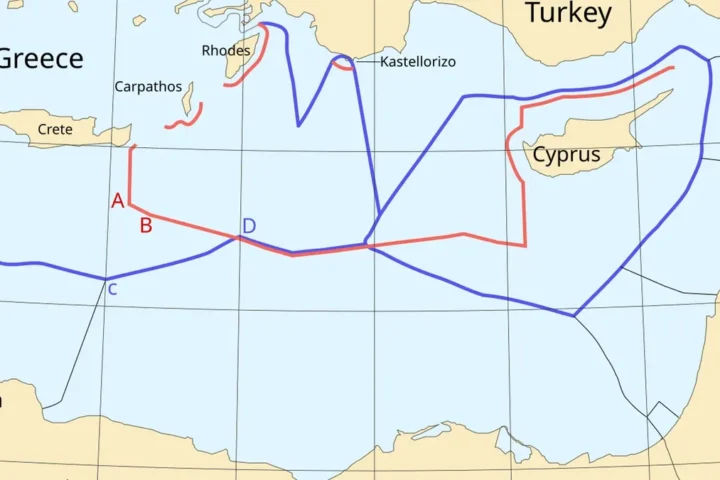
Crete remains strategically central to Greece. Geopolitiki has explained two modern disputes in which its position south of the Aegean matters: Greece-Egypt EEZ agreement explained: what the 2020 deal says and The Turkey-Libya maritime memorandum explained.
Sources: U.S. Department of the Army, Pamphlet 20-260, The German Campaigns in the Balkans (Spring 1941), 1953, chapters 20 to 22, a study compiled from German reports; Congressional Record, House, 21 May 2002, pages H2806 to H2807.